TEKS ELAR 7.6.D
The Standard
paraphrase and summarize texts in ways that maintain meaning and logical order
Texas Essential Knowledge and Skills for English Language Arts and Reading · Response skills: listening, speaking, reading, writing, and thinking using multiple texts
Teacher's field guide
What This Standard Means
What Students Need to Do
- Students put ideas from a source into their own words without changing the meaning. They also shorten a text by selecting key ideas and presenting them in logical order.
What Mastery Looks Like
- Students restate a passage using new wording and sentence structure while keeping the original meaning. They summarize the central idea and key details in a clear, logical order.
Common Misconceptions
- Students may replace only a few words while copying the original sentence structure. They may also add opinions, omit key ideas, or present events out of order.
How to Assess It
- Give students a short paragraph. Ask them to paraphrase one sentence, then summarize the full paragraph in two sentences without changing its meaning.
Lesson moves
Ways to Teach It
Cut a short article into sections, then have groups arrange them logically and write a one-sentence summary for each section.
Ask students to explain how a paraphrase differs from a summary, then revise an example that copies too much from the source.
Play Summary Relay, where teams read a paragraph and reduce it to 30 words, then 20 words, without losing the main idea.
Have students paraphrase a school announcement and summarize a news report for a class bulletin. Both versions must remain accurate.
Free download
Printable 7.6.D Worksheet
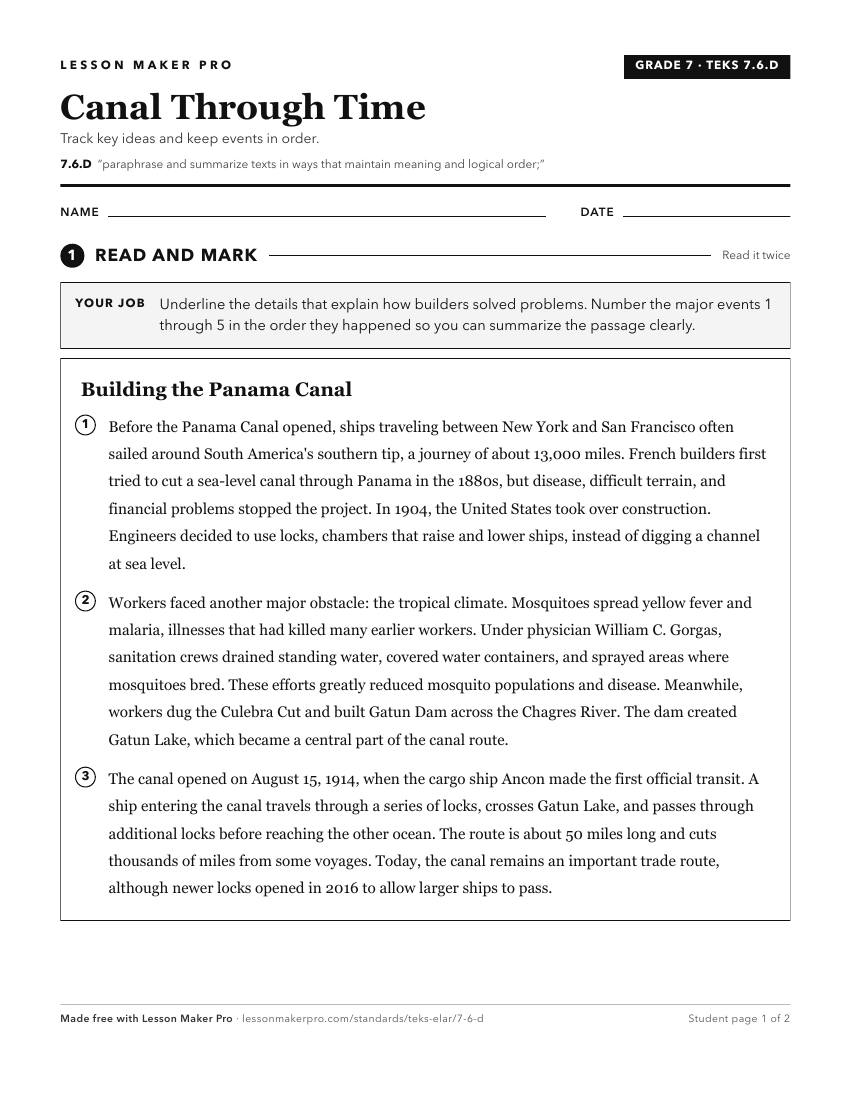
A ready-to-print activity worksheet aligned to 7.6.D, with an answer key for the teacher on its own page. No account needed.
PDF, US Letter, prints cleanly in black and white.
Download the worksheetKeep exploring
Related Standards
- 6.6.D
paraphrase and summarize texts in ways that maintain meaning and logical order;
- 5.7.D
retell, paraphrase, or summarize texts in ways that maintain meaning and logical order;
- 4.7.D
retell, paraphrase, or summarize texts in ways that maintain meaning and logical order;
- 8.6.D
paraphrase and summarize texts in ways that maintain meaning and logical order;
Turn this exact standard into a lesson
Grade, subject, topic, and the complete standard are prefilled. Create one free, no account needed.
Also for this standard:Make a WorksheetMake a QuizMake a Sub Lesson