TEKS ELAR 7.6.C
The Standard
use text evidence to support an appropriate response
Texas Essential Knowledge and Skills for English Language Arts and Reading · Response skills: listening, speaking, reading, writing, and thinking using multiple texts
Teacher's field guide
What This Standard Means
What Students Need to Do
- Students make a clear claim or answer about something they read, hear, or view. They select a relevant quotation or detail and explain how it supports that response.
What Mastery Looks Like
- A student gives an accurate response, chooses specific evidence that directly fits it, and connects the evidence with clear reasoning. The student can cite details from print, audio, or video sources.
Common Misconceptions
- Students often copy a quotation without explaining how it supports their response. They may choose an interesting detail that does not match their claim or summarize the whole source instead.
How to Assess It
- Give students a short paragraph and ask, “What can you infer about the speaker’s attitude?” Require one cited detail and one sentence explaining the connection.
Lesson moves
Ways to Teach It
Give pairs claim and evidence cards from a short story, then have them match each claim with the strongest supporting detail.
After a podcast clip, ask students to write one claim about the speaker’s purpose and defend it with a specific moment.
Play Evidence Relay: teams race to locate the best line for a posted claim, then earn a point by explaining the match.
Show two product reviews and have students decide which recommendation is better supported, citing details that make it more trustworthy.
Free download
Printable 7.6.C Worksheet
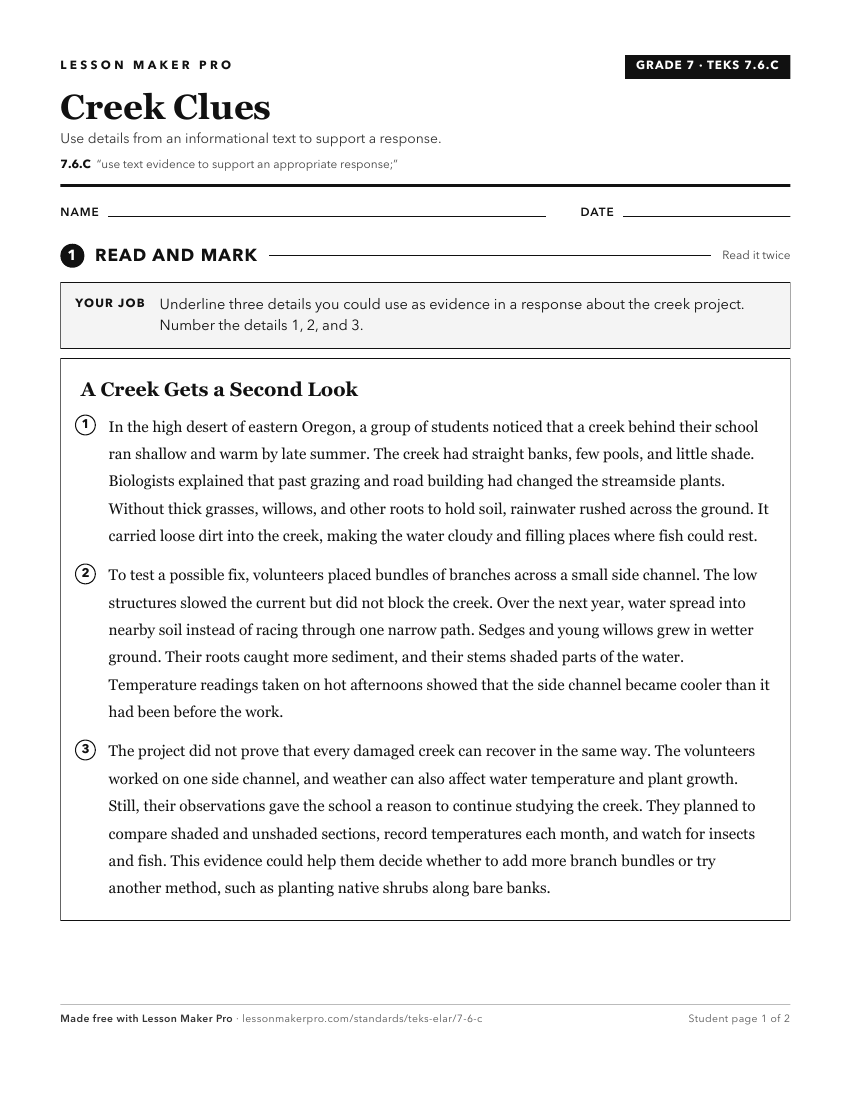
A ready-to-print activity worksheet aligned to 7.6.C, with an answer key for the teacher on its own page. No account needed.
PDF, US Letter, prints cleanly in black and white.
Download the worksheetKeep exploring
Related Standards
Turn this exact standard into a lesson
Grade, subject, topic, and the complete standard are prefilled. Create one free, no account needed.
Also for this standard:Make a WorksheetMake a QuizMake a Sub Lesson