TEKS ELAR 6.9.A
The Standard
explain the author's purpose and message within a text
Texas Essential Knowledge and Skills for English Language Arts and Reading
Teacher's field guide
What This Standard Means
What Students Need to Do
- Students identify why an author wrote a text and what idea, lesson, or action the author wants readers to take away. They use details, examples, tone, and word choice to support their explanation.
What Mastery Looks Like
- Students state a specific purpose and a clear message for a grade-level text. They cite two relevant details and explain how each detail supports their answer.
Common Misconceptions
- Students often confuse the topic with the message. They may name a broad purpose, such as inform or persuade, without explaining the author's specific goal. Some treat the narrator's opinion as the author's message without checking other text evidence.
How to Assess It
- Give students a short editorial and ask: “What does the author want readers to think or do, and which two details show that?”
Lesson moves
Ways to Teach It
Give pairs sentence strips from two texts on the same topic, then have them sort clues by author purpose and message.
Read a short school editorial, then discuss which sentence best reveals the author's message and why.
Play Purpose Detective: teams identify purpose, message, and one supporting clue from brief passages for one point each.
Compare a cereal advertisement with its nutrition label, then explain how each creator's purpose shapes the message and details.
Free download
Printable 6.9.A Worksheet
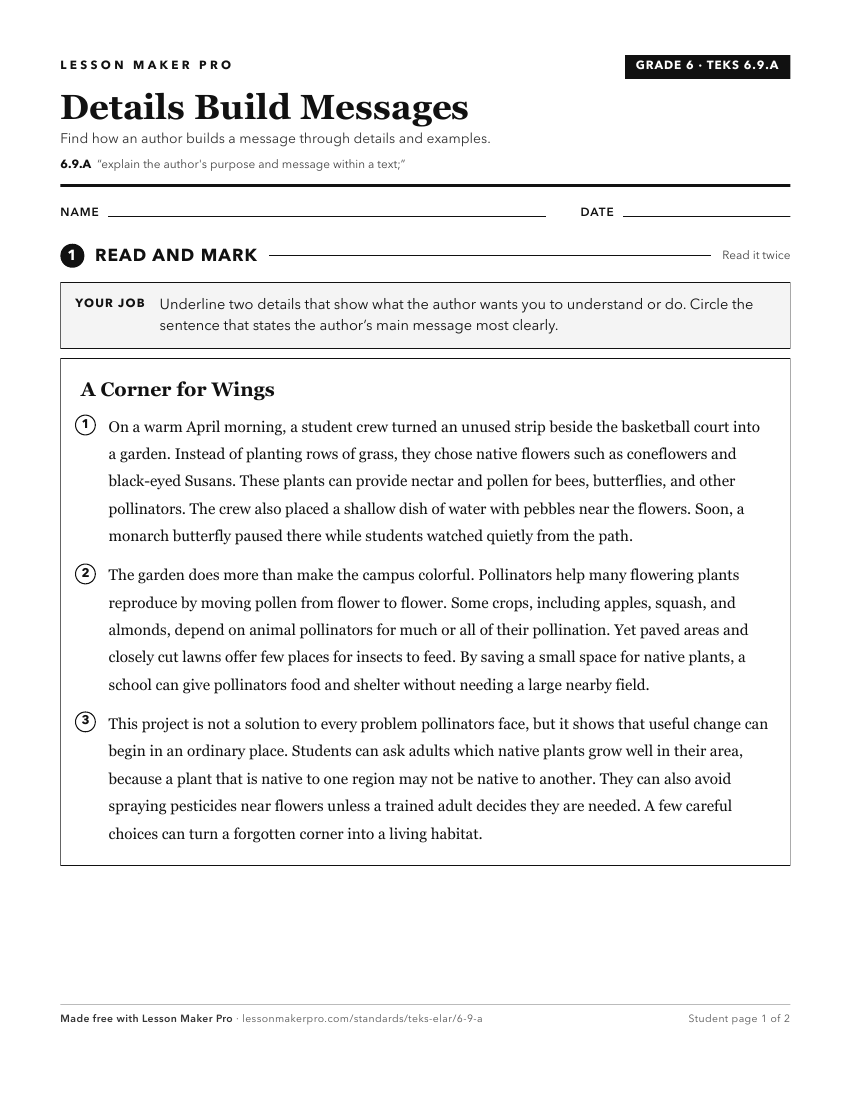
A ready-to-print activity worksheet aligned to 6.9.A, with an answer key for the teacher on its own page. No account needed.
PDF, US Letter, prints cleanly in black and white.
Download the worksheetKeep exploring
Related Standards
Turn this exact standard into a lesson
Grade, subject, topic, and the complete standard are prefilled. Create one free, no account needed.
Also for this standard:Make a WorksheetMake a QuizMake a Sub Lesson