TEKS ELAR 6.11.C
The Standard
compose multi-paragraph argumentative texts using genre characteristics and craft
Texas Essential Knowledge and Skills for English Language Arts and Reading
Teacher's field guide
What This Standard Means
What Students Need to Do
- Students write an argument across several paragraphs. They make a clear claim, support it with reasons and evidence, explain their thinking, and end with a conclusion.
What Mastery Looks Like
- A student writes a clear claim, organizes reasons into focused paragraphs, and supports each reason with relevant evidence. The conclusion follows the argument, and transitions connect ideas clearly.
Common Misconceptions
- Students may state an opinion without making a debatable claim. They may list evidence without explaining it, ignore the opposing view, or organize ideas as one long paragraph.
How to Assess It
- Use this exit ticket: Write a claim about school start times, then add one evidence sentence and two sentences explaining how it supports the claim.
Lesson moves
Ways to Teach It
Give groups claim, reason, evidence, and explanation cards to sort into a logical multi-paragraph argument on school uniforms.
Ask students to write which is more convincing, facts or personal stories, then defend their answer with an example.
Play Evidence Match by having teams pair claim cards with relevant evidence cards and reject evidence that does not fit.
Have students write a letter to the principal arguing for one realistic change to a school rule or campus space.
Free download
Printable 6.11.C Worksheet
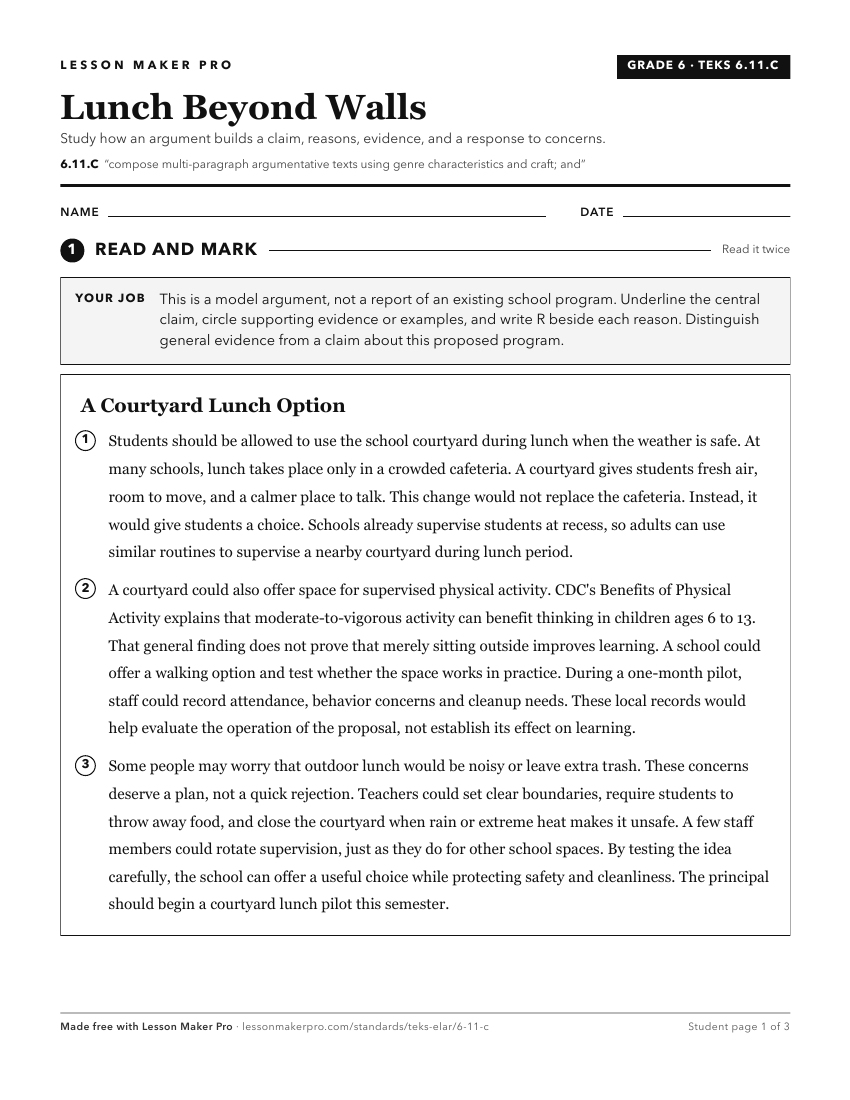
A ready-to-print activity worksheet aligned to 6.11.C, with an answer key for the teacher on its own page. No account needed.
PDF, US Letter, prints cleanly in black and white.
Download the worksheetKeep exploring
Related Standards
- 4.12.C
compose argumentative texts, including opinion essays, using genre characteristics and craft; and
- 3.12.C
compose argumentative texts, including opinion essays, using genre characteristics and craft; and
- 7.11.C
compose multi-paragraph argumentative texts using genre characteristics and craft
- 8.11.C
The 8th Grade version of this standard.
Turn this exact standard into a lesson
Grade, subject, topic, and the complete standard are prefilled. Create one free, no account needed.
Also for this standard:Make a WorksheetMake a QuizMake a Sub Lesson