TEKS ELAR 5.7.G
The Standard
discuss specific ideas in the text that are important to the meaning.
Texas Essential Knowledge and Skills for English Language Arts and Reading
Teacher's field guide
What This Standard Means
What Students Need to Do
- Students identify ideas that shape a text's message, conflict, or lesson. They explain why each idea matters and support their thinking with details from the source.
What Mastery Looks Like
- A student identifies an idea that affects the text's message, conflict, or lesson. The student points to a relevant detail and clearly explains the connection.
Common Misconceptions
- Students may choose an exciting detail instead of an idea that shapes the meaning. They may name an important idea but give no text evidence or explanation.
How to Assess It
- Use this exit ticket: "Name one important idea from the text. Give one supporting detail and explain how the idea shapes the text's meaning."
Lesson moves
Ways to Teach It
Give pairs a printed passage and sticky notes. They mark three important ideas, then label how each affects the message.
Ask, "Which idea could the author remove without changing the meaning, and which idea must stay?" Students defend both choices.
Play an importance sort. Teams place idea cards under "central," "supporting," or "interesting but minor," then justify one disputed card.
Show a public service announcement and have students identify the idea viewers must understand before deciding whether to act.
Free download
Printable 5.7.G Worksheet
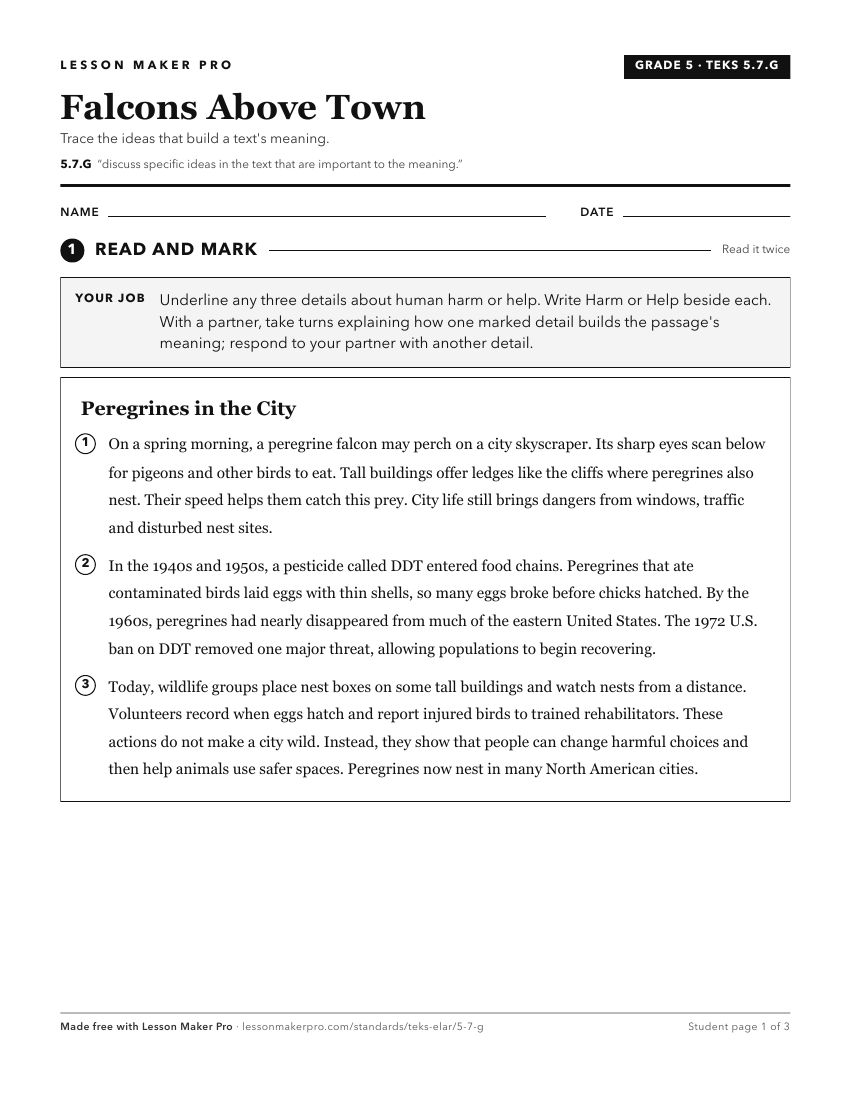
A ready-to-print activity worksheet aligned to 5.7.G, with an answer key for the teacher on its own page. No account needed.
PDF, US Letter, prints cleanly in black and white.
Download the worksheetKeep exploring
Related Standards
Turn this exact standard into a lesson
Grade, subject, topic, and the complete standard are prefilled. Create one free, no account needed.
Also for this standard:Make a WorksheetMake a QuizMake a Sub Lesson