TEKS ELAR 4.7.C
The Standard
use text evidence to support an appropriate response
Texas Essential Knowledge and Skills for English Language Arts and Reading
Teacher's field guide
What This Standard Means
What Students Need to Do
- Students answer questions or make claims about something they read, hear, or view. They select a relevant detail and explain how it supports their response.
What Mastery Looks Like
- A student gives a clear answer that fits the source. The student quotes or paraphrases a relevant detail and explains the connection between that evidence and the answer.
Common Misconceptions
- Students may retell the whole source instead of selecting one relevant detail. They may copy a sentence without explaining how it supports their answer, or choose evidence based only on a matching word.
How to Assess It
- Give students a short passage and ask, “What lesson does the character learn? Use one detail from the passage and explain how it supports your answer.”
Lesson moves
Ways to Teach It
Give pairs claim and evidence sentence strips from a shared story, then have them match each claim to the strongest supporting detail.
After a read-aloud, ask, “Was the character’s choice fair?” Students answer, cite one detail, and explain their reasoning.
Play Evidence Detective: teams draw question cards, find a matching passage detail, and earn a point only after explaining the connection.
Show a school lunch menu and nutrition chart, then ask students to recommend one meal using two facts from the sources.
Free download
Printable 4.7.C Worksheet
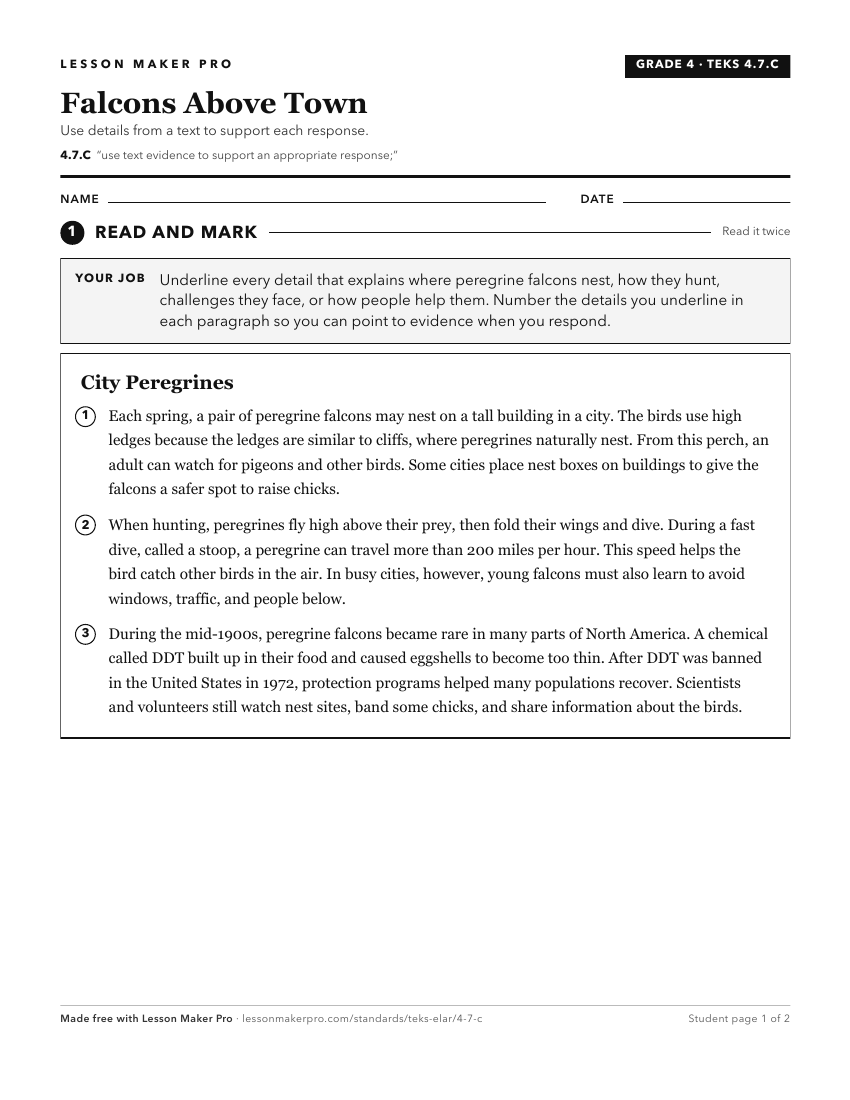
A ready-to-print activity worksheet aligned to 4.7.C, with an answer key for the teacher on its own page. No account needed.
PDF, US Letter, prints cleanly in black and white.
Download the worksheetKeep exploring
Related Standards
Turn this exact standard into a lesson
Grade, subject, topic, and the complete standard are prefilled. Create one free, no account needed.
Also for this standard:Make a WorksheetMake a QuizMake a Sub Lesson