TEKS ELAR 4.6.F
The Standard
make inferences and use evidence to support understanding
Texas Essential Knowledge and Skills for English Language Arts and Reading
Teacher's field guide
What This Standard Means
What Students Need to Do
- Students figure out ideas the author suggests but does not state directly. They combine text clues with what they already know, then explain how those clues shaped their conclusion.
What Mastery Looks Like
- Students draw a reasonable conclusion from details, dialogue, or character actions. They point to exact clues and explain how each clue led to their thinking.
Common Misconceptions
- Students may guess based only on personal experience instead of using clues from the text. They may copy an unrelated detail or include a quote without explaining how it supports their conclusion.
How to Assess It
- Use this exit prompt: “What can you tell about the character that the author does not say directly? Use two text details and explain each.”
Lesson moves
Ways to Teach It
Give pairs envelopes with character clues to sort, then have them write one inference and explain how each clue supports it.
Read a short scene and ask, “What is the character feeling, and which words or actions led you to that conclusion?”
Play Inference Detective by awarding points for a sound conclusion, two accurate clues, and a clear explanation of the connection.
Examine three customer reviews and infer each reviewer’s opinion using specific words, ratings, and details as clues.
Free download
Printable 4.6.F Worksheet
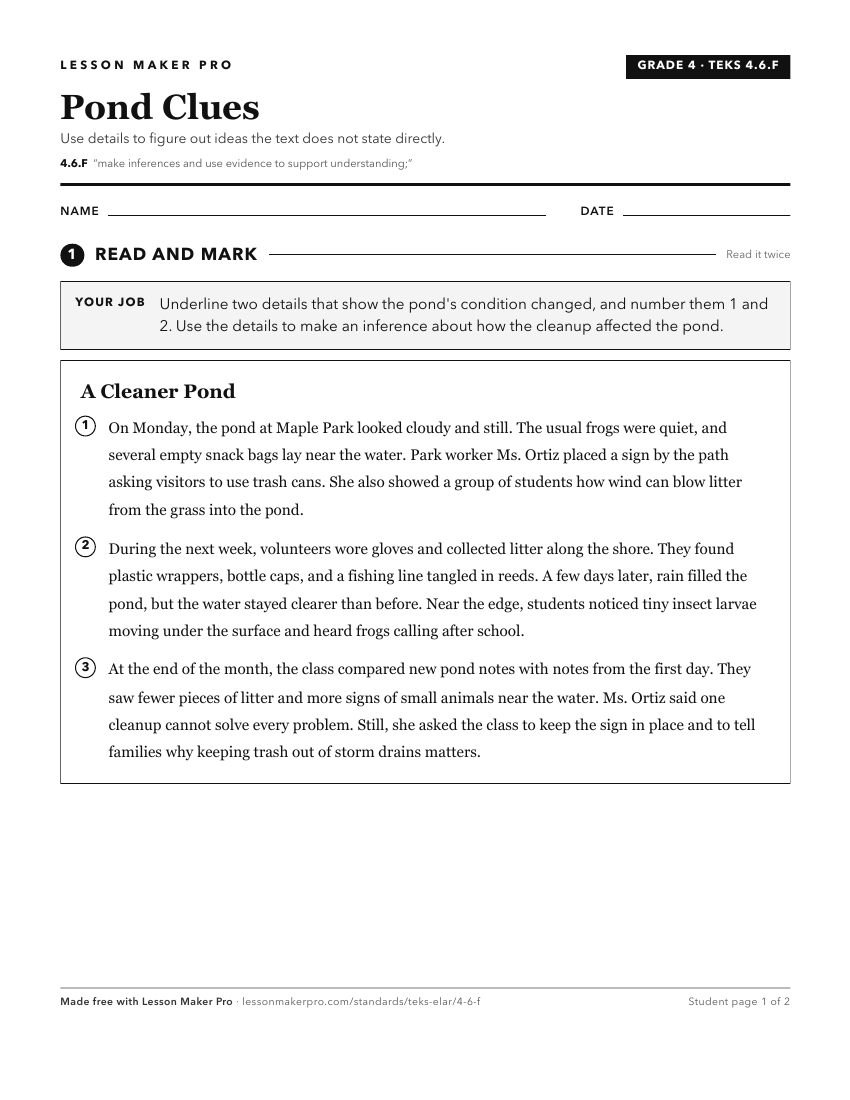
A ready-to-print activity worksheet aligned to 4.6.F, with an answer key for the teacher on its own page. No account needed.
PDF, US Letter, prints cleanly in black and white.
Download the worksheetKeep exploring
Related Standards
Turn this exact standard into a lesson
Grade, subject, topic, and the complete standard are prefilled. Create one free, no account needed.
Also for this standard:Make a WorksheetMake a QuizMake a Sub Lesson