TEKS ELAR 4.6.C
The Standard
make, correct, or confirm predictions using text features, characteristics of genre, and structures
Texas Essential Knowledge and Skills for English Language Arts and Reading
Teacher's field guide
What This Standard Means
What Students Need to Do
- Students predict what may happen or what information may come next. They use headings, illustrations, genre clues, and text organization as evidence, then keep or change their prediction while reading.
What Mastery Looks Like
- Students make a reasonable prediction before or during reading and name the clue that supports it. As they read, they explain whether new details confirm the prediction or require a change.
Common Misconceptions
- Students may treat predictions as random guesses or refuse to change them. They may use only pictures and ignore headings, genre patterns, sequence, cause and effect, or other text clues.
How to Assess It
- Give students a one-page text with a title, subheading, and first paragraph. Ask them to write a prediction, cite one clue, then confirm or revise after reading.
Lesson moves
Ways to Teach It
Give pairs clue cards from a short text, then have them sort the cards into supports, changes, or does not affect our prediction.
After reading halfway through a story, ask, "What will happen next, and which genre pattern or story detail supports your thinking?"
Play Prediction Pause by stopping at three marked points, awarding a point when teams revise a prediction using a new text clue.
Read a weather forecast or event announcement, predict what information will appear next, then check the full page for supporting clues.
Free download
Printable 4.6.C Worksheet
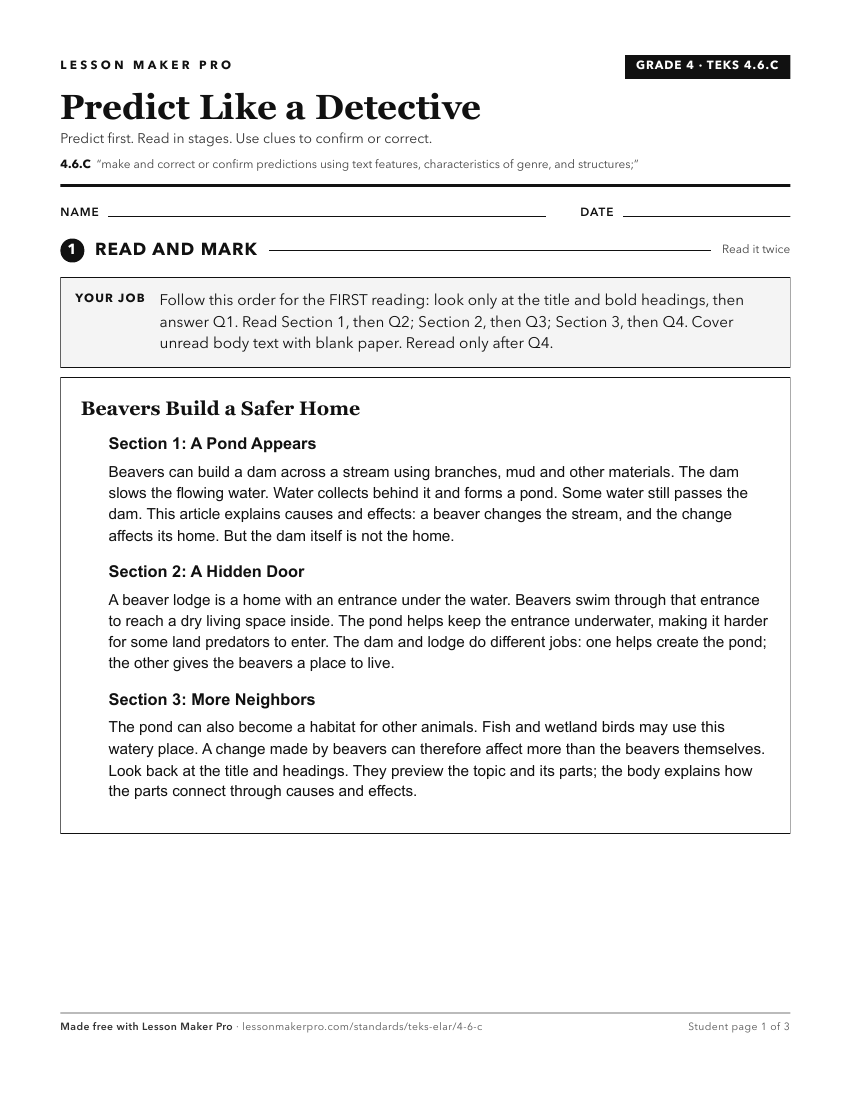
A ready-to-print activity worksheet aligned to 4.6.C, with an answer key for the teacher on its own page. No account needed.
PDF, US Letter, prints cleanly in black and white.
Download the worksheetKeep exploring
Related Standards
Turn this exact standard into a lesson
Grade, subject, topic, and the complete standard are prefilled. Create one free, no account needed.
Also for this standard:Make a WorksheetMake a QuizMake a Sub Lesson