TEKS ELAR 3.8.A
The Standard
infer the theme of a work, distinguishing theme from topic
Texas Essential Knowledge and Skills for English Language Arts and Reading
Teacher's field guide
What This Standard Means
What Students Need to Do
- Students identify what a story is mostly about, then infer the broader message the author communicates about that topic. They support that theme with details from characters, events, and the resolution.
What Mastery Looks Like
- Students state the theme as a complete sentence and support it with a character’s actions, problem, or resolution. They clearly explain how the theme differs from a one-word topic.
Common Misconceptions
- Students may give a one-word topic, such as friendship, instead of stating a message about friendship. They may also retell the plot or choose a lesson that the story details do not support.
How to Assess It
- Give students a short fable. Ask them to write the topic, state the theme in one sentence, and cite one event that supports it.
Lesson moves
Ways to Teach It
Give groups topic, theme, and story-event cards to sort into matching sets, then have them explain each match.
Read a short story and ask, "What message does the character’s experience teach, and which event best supports your answer?"
Play Theme Detective by revealing story clues one at a time while teams revise their proposed theme after each clue.
Use a familiar movie or television episode to identify its topic, theme, and one scene that supports the theme.
Free download
Printable 3.8.A Worksheet
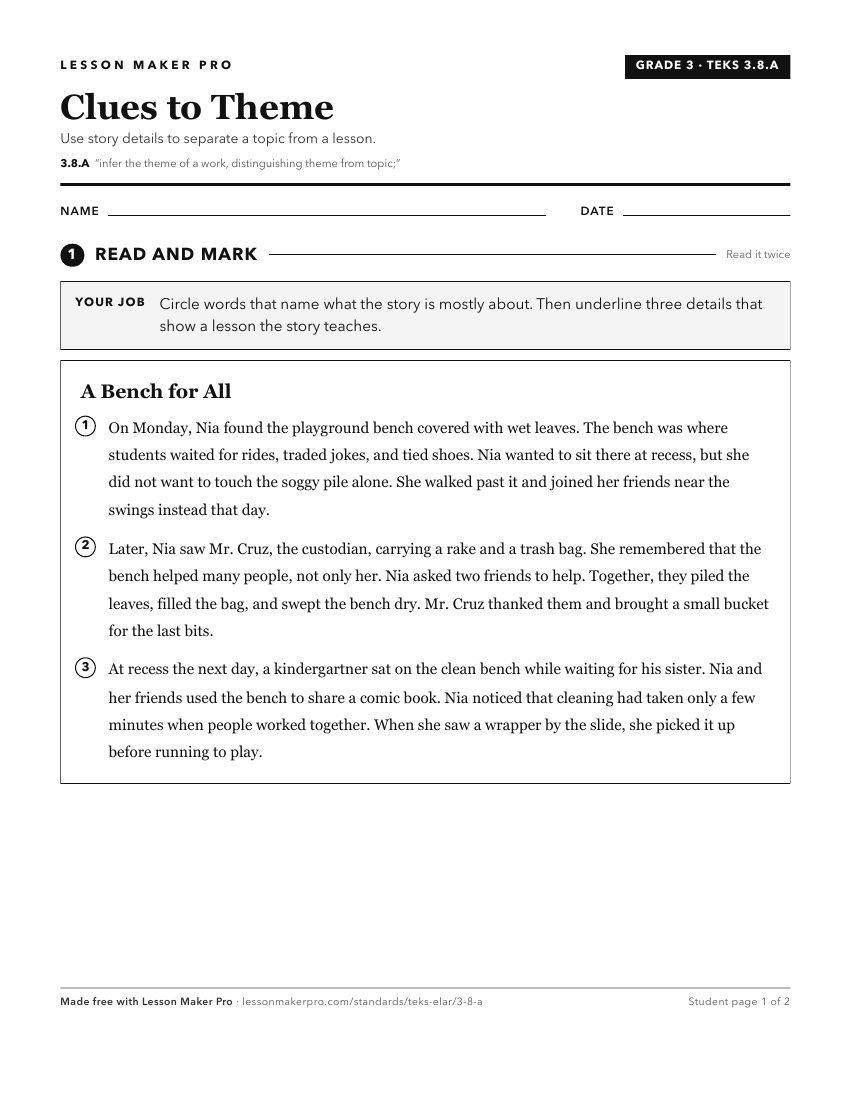
A ready-to-print activity worksheet aligned to 3.8.A, with an answer key for the teacher on its own page. No account needed.
PDF, US Letter, prints cleanly in black and white.
Download the worksheetKeep exploring
Related Standards
Turn this exact standard into a lesson
Grade, subject, topic, and the complete standard are prefilled. Create one free, no account needed.
Also for this standard:Make a WorksheetMake a QuizMake a Sub Lesson