TEKS ELAR 3.2.B.ii
The Standard
spelling homophones
Texas Essential Knowledge and Skills for English Language Arts and Reading · The student develops word structure knowledge through phonological awareness, print concepts, phonics, and morphology to communicate, decode, and spell.
Teacher's field guide
What This Standard Means
What Students Need to Do
- Students choose and write the correct spelling for words that sound alike but have different meanings. They use sentence context to decide which word fits.
What Mastery Looks Like
- Students spell common homophones correctly in sentences and explain how the sentence meaning guided their choice. They check surrounding words before selecting a spelling.
Common Misconceptions
- Students may think words that sound alike share the same spelling. They often confuse pairs such as to and too or here and hear, especially without sentence context.
How to Assess It
- Give an exit ticket with these blanks: “Put the books over ___,” “___ dog is brown,” and “___ reading now.” Students write there, their, or they’re.
Lesson moves
Ways to Teach It
Sort word cards for pair and pear, right and write, and hear and here, then match each card to a picture or sentence.
Write two sentences using one homophone pair, then explain to a partner which meaning fits each spelling.
Play homophone bingo by calling a meaning or sentence while students cover the correctly spelled word on their boards.
Examine a menu, flyer, or text message for homophones, then correct one sentence and explain the spelling choice.
Free download
Printable 3.2.B.ii Worksheet
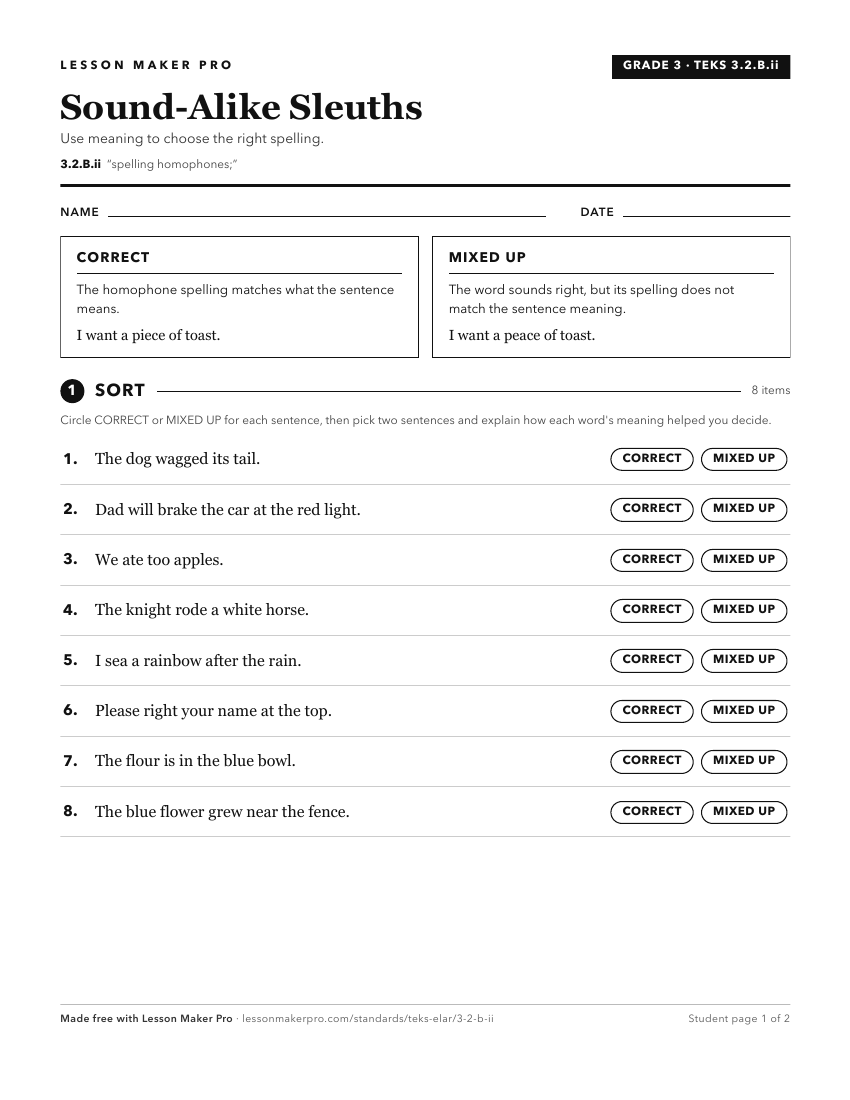
A ready-to-print activity worksheet aligned to 3.2.B.ii, with an answer key for the teacher on its own page. No account needed.
PDF, US Letter, prints cleanly in black and white.
Download the worksheetKeep exploring
Related Standards
Turn this exact standard into a lesson
Grade, subject, topic, and the complete standard are prefilled. Create one free, no account needed.
Also for this standard:Make a WorksheetMake a QuizMake a Sub Lesson