TEKS ELAR 3.2.A.iii
The Standard
decoding compound words, contractions, and abbreviations
Texas Essential Knowledge and Skills for English Language Arts and Reading · The student develops word structure knowledge through phonological awareness, print concepts, phonics, and morphology to communicate, decode, and spell.
Teacher's field guide
What This Standard Means
What Students Need to Do
- Students read longer words by finding two familiar words joined together. They also read forms with missing letters or shortened labels, using punctuation and context to identify the full words.
What Mastery Looks Like
- Students read words such as “sunflower,” “they'll,” and “Jan.” without guessing. They identify the word parts and explain what each shortened form means.
Common Misconceptions
- Students may split a compound word in the wrong place or miss the meaning of its smaller words. They may confuse contractions with possessives or read abbreviations exactly as printed instead of saying the full word.
How to Assess It
- Have each student read, “Dr. Lee couldn't find the playground on Oak Ave.” Ask the student to explain “couldn't,” “Dr.,” and “Ave.”
Lesson moves
Ways to Teach It
Give students word-part cards to build and read compounds such as “raincoat,” then use letter cards to build contractions such as “cannot” and “can't.”
Ask students to write three sentences using one compound word, one contraction, and one abbreviation, then explain how each word was formed.
Play word sort relay with cards labeled “compound,” “contraction,” or “abbreviation,” and have teams read each card before placing it.
Have students find shortened words on calendars, maps, mail, and signs, then record each example beside its full form.
Free download
Printable 3.2.A.iii Worksheet
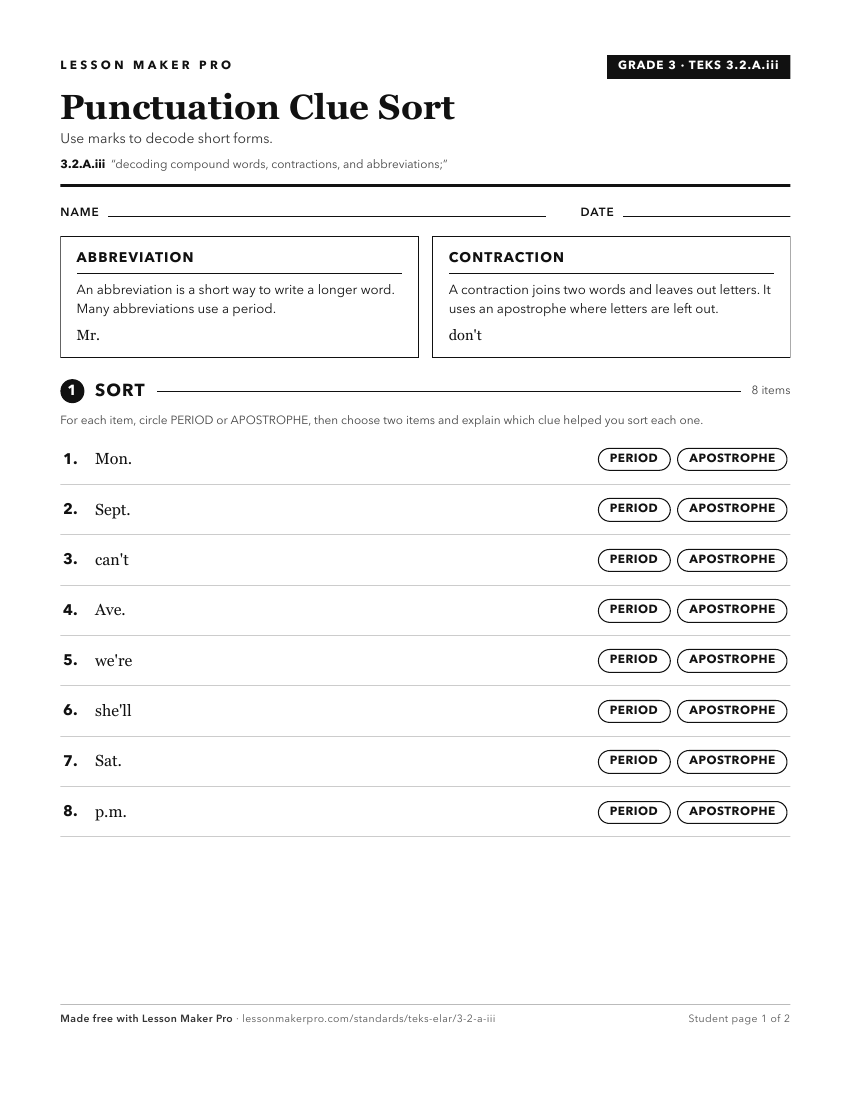
A ready-to-print activity worksheet aligned to 3.2.A.iii, with an answer key for the teacher on its own page. No account needed.
PDF, US Letter, prints cleanly in black and white.
Download the worksheetKeep exploring
Related Standards
Turn this exact standard into a lesson
Grade, subject, topic, and the complete standard are prefilled. Create one free, no account needed.
Also for this standard:Make a WorksheetMake a QuizMake a Sub Lesson