TEKS ELAR 2.8.D
The Standard
describe the importance of the setting.
Texas Essential Knowledge and Skills for English Language Arts and Reading
Teacher's field guide
What This Standard Means
What Students Need to Do
- Students tell where and when a story happens. They explain how that place or time shapes what characters do and what happens next.
What Mastery Looks Like
- Students identify where and when a story happens. They explain how that setting affects a character’s choices, the events, or the feeling of the story.
Common Misconceptions
- Students may name the place and time but not explain why they matter. They may confuse setting with characters or assume changing the setting would not affect events.
How to Assess It
- Exit ticket: Where and when does the story happen? Name one event that would change in a different setting, and explain why.
Lesson moves
Ways to Teach It
Give pairs setting cards, such as beach, school, or snowy forest, and have them retell one scene in each place.
Ask students to write: How would the story change if it happened at night instead of during the day?
Play Setting Switch: draw a new setting card, then explain one story event that must change and why.
Compare preparing for school with preparing for a camping trip, then list how each place changes clothing, tools, and actions.
Free download
Printable 2.8.D Worksheet
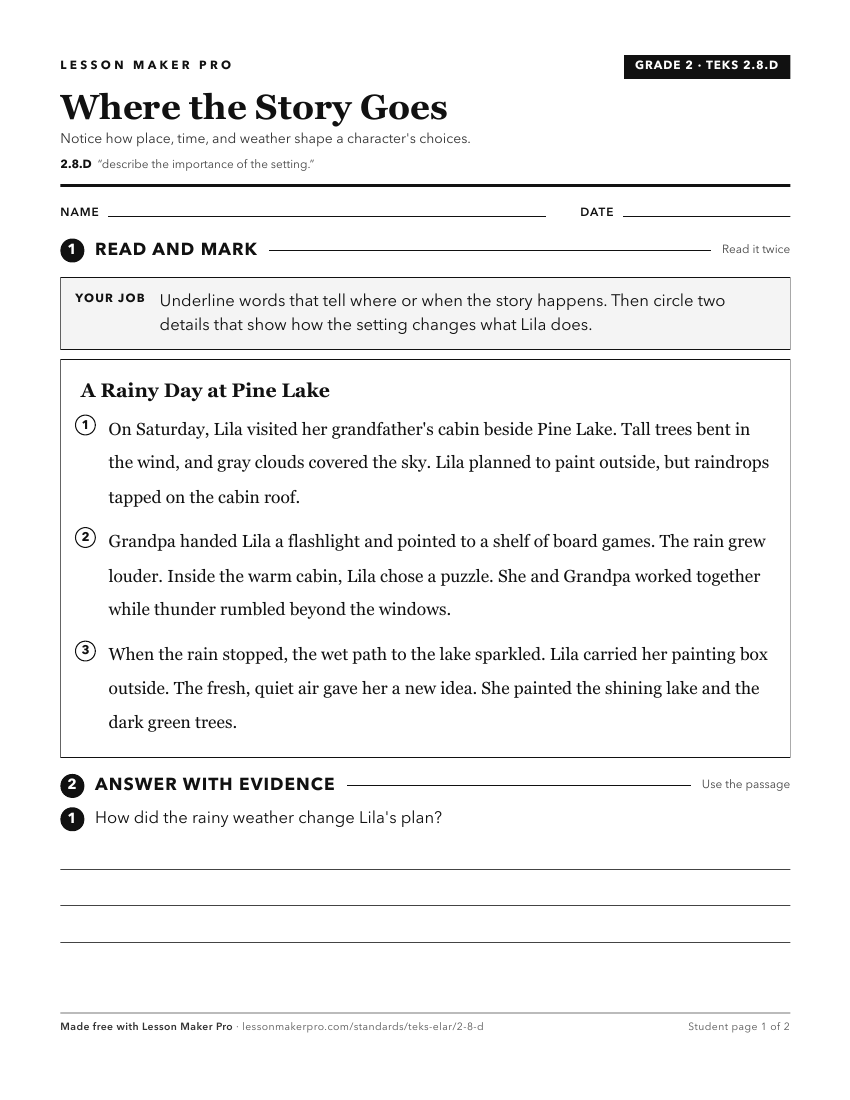
A ready-to-print activity worksheet aligned to 2.8.D, with an answer key for the teacher on its own page. No account needed.
PDF, US Letter, prints cleanly in black and white.
Download the worksheetKeep exploring
Related Standards
Turn this exact standard into a lesson
Grade, subject, topic, and the complete standard are prefilled. Create one free, no account needed.
Also for this standard:Make a WorksheetMake a QuizMake a Sub Lesson