TEKS ELAR 2.11.B.ii
The Standard
developing an idea with specific and relevant details
Texas Essential Knowledge and Skills for English Language Arts and Reading · The student uses the writing process recursively to compose multiple texts that are legible and uses appropriate conventions.
Teacher's field guide
What This Standard Means
What Students Need to Do
- Students choose one clear idea for a piece of writing. They add facts, actions, descriptions, or examples that help the reader understand it and leave out unrelated information.
What Mastery Looks Like
- A student can write a focused paragraph or short narrative with a clear main point and several details that fit. Each detail adds useful information rather than repeating the same thought.
Common Misconceptions
- Students may list random facts, switch topics, or add details only because they sound interesting. They may also repeat the main idea instead of explaining who, what, where, when, why, or how.
How to Assess It
- Exit ticket: Write three sentences about your favorite recess activity. Underline the main idea, then circle two details that help a reader understand it.
Lesson moves
Ways to Teach It
Give pairs a topic card and detail cards, then have them sort details into “fits” and “does not fit” piles.
Read a short paragraph aloud and ask, “Which detail helps most, and which detail should be removed? Explain why.”
Play Detail Detective: teams earn a point by adding a new who, what, where, when, why, or how detail to a topic.
Have students write a lost-pet notice with the animal’s name, appearance, location, and one identifying behavior.
Free download
Printable 2.11.B.ii Worksheet
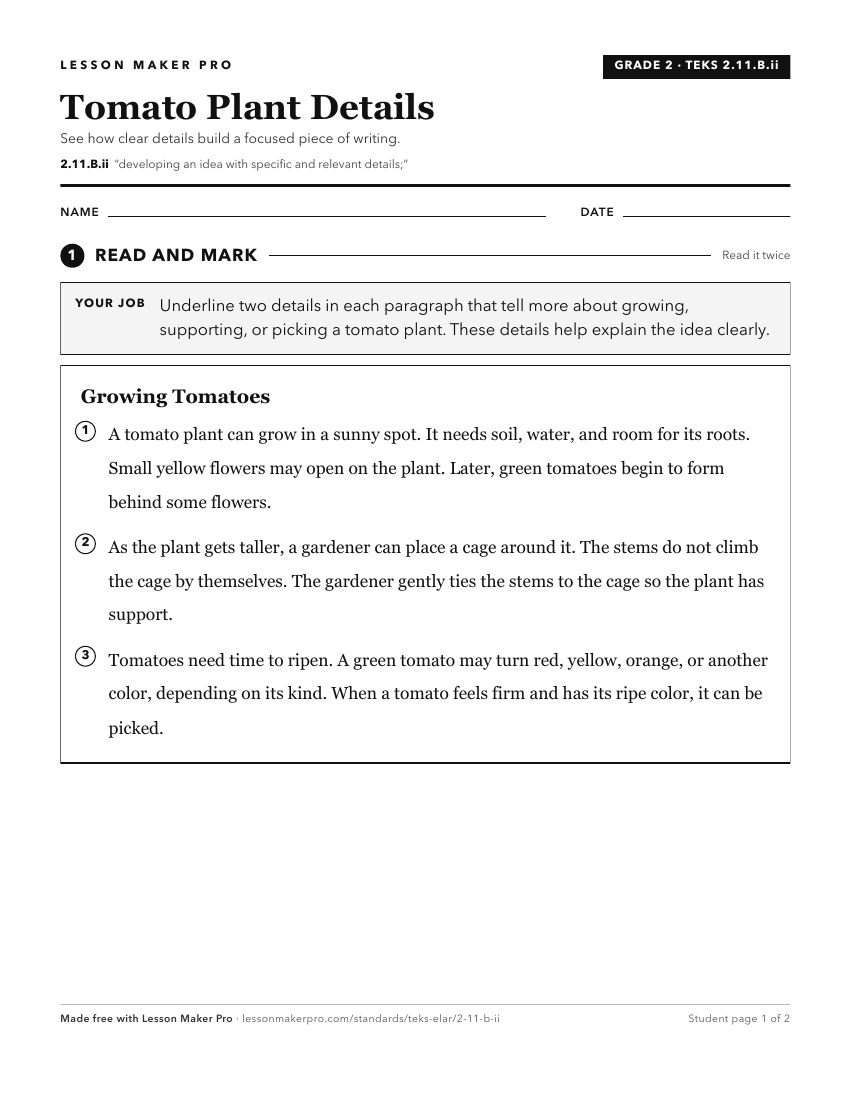
A ready-to-print activity worksheet aligned to 2.11.B.ii, with an answer key for the teacher on its own page. No account needed.
PDF, US Letter, prints cleanly in black and white.
Download the worksheetKeep exploring
Related Standards
Turn this exact standard into a lesson
Grade, subject, topic, and the complete standard are prefilled. Create one free, no account needed.
Also for this standard:Make a WorksheetMake a QuizMake a Sub Lesson