South Dakota Science MS-PS3-3
The Standard
Design, construct, and test a device that either minimizes or maximizes thermal energy transfer. (SEP: 6; DCI: PS3.A, PS3.B, ETS1.A, ETS1.B; CCC: Energy/Matter) May include alignment to MS-ETS1-1 and MS-ETS1-2
South Dakota Science Standards (2024) · Energy
Teacher's field guide
What This Standard Means
What Students Need to Do
- Students design and build a device to slow or speed heat transfer. They measure temperature changes over time and compare their device with a plain cup under the same conditions.
What Mastery Looks Like
- A student sets a goal, such as keeping 100 mL of warm water above 50°C for 15 minutes. They test a cup wrap against an uncovered cup using equal water volumes and starting temperatures. They use the readings to explain a material choice or suggest a change.
Common Misconceptions
- Students may think a wrap creates heat or that cold flows into a cup. They may call one design better even when the cups start at different temperatures or hold different amounts of water.
How to Assess It
- Exit ticket: Two cups of water start at 60°C. After 10 minutes, a wrapped cup reads 52°C and a bare cup reads 44°C. Which cup slowed heat transfer, and what two conditions should stay the same in a retest?
Lesson moves
Ways to Teach It
Give pairs identical cups, felt, foil, and rubber bands; have them build wraps and record warm-water temperatures every three minutes for 15 minutes.
Ask, 'Why did the wrapped cup cool more slowly than the bare cup?' Have students cite two temperature readings.
Post four cup designs with temperature tables; teams rank them by heat loss and explain which comparison is fair.
Bring a lunch thermos and an uninsulated metal bottle; students sketch features that limit heat transfer and predict which keeps soup warmer.
Free download
Printable MS-PS3-3 Worksheet
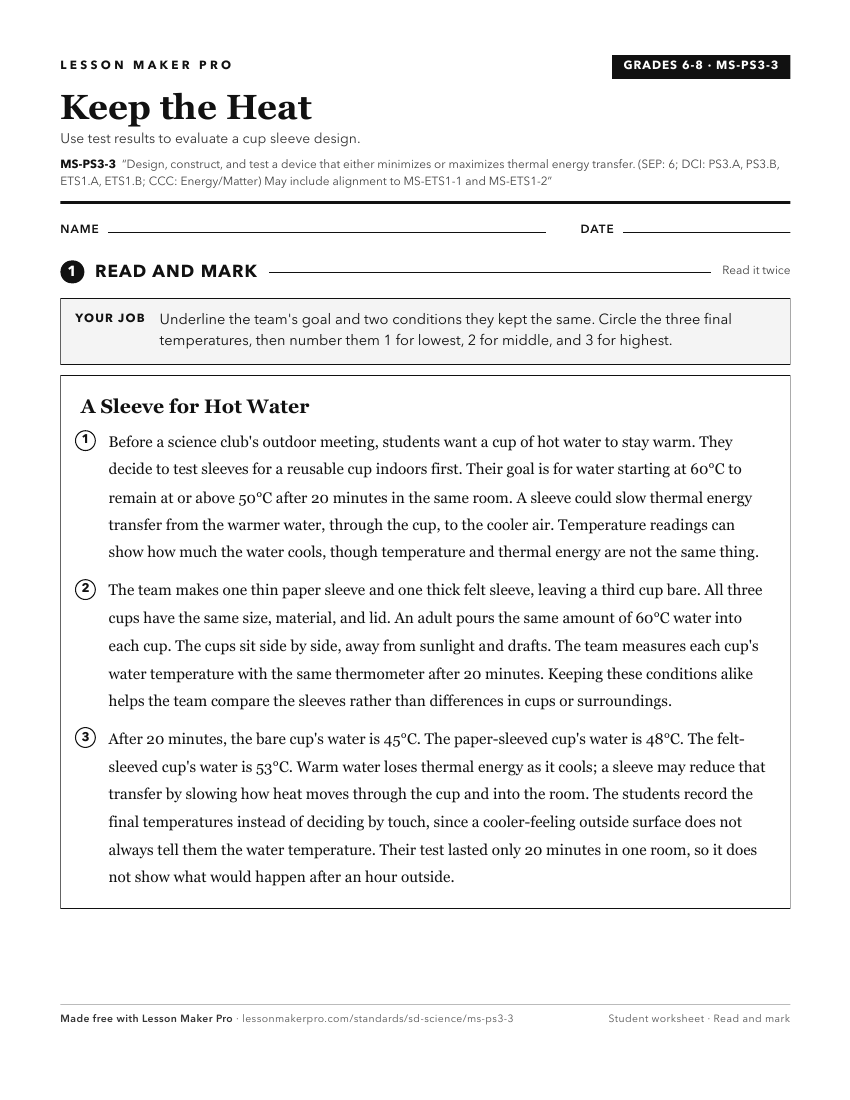
A ready-to-print activity worksheet aligned to MS-PS3-3, with an answer key for the teacher on its own page. No account needed.
PDF, US Letter, prints cleanly in black and white.
Download the worksheetKeep exploring
Related Standards
Turn this exact standard into a lesson
Grade, subject, topic, and the complete standard are prefilled. Create one free, no account needed.
Also for this standard:Make a WorksheetMake a QuizMake a Sub Lesson