South Dakota Science K-ESS3-1
The Standard
Use a model to represent the characteristics of and the relationship between various plants and animals in the places they live. (SEP: 2; DCI: ESS3.A; CCC: Systems)
South Dakota Science Standards (2024) · Earth and Human Activity
Teacher's field guide
What This Standard Means
What Students Need to Do
- Students draw a place with plants and animals that live there. They use the drawing to show where the plants get water or sunlight and where the animals find food, water, or shelter.
What Mastery Looks Like
- A student draws cattails and a frog by a pond, and a tree and squirrel in a yard. They point to pond water for the cattails and frog, and to the tree for the squirrel's food or shelter.
Common Misconceptions
- Students may place a frog in a dry place without showing where it gets water. They may draw an animal beside a plant without showing how the plant helps it. Some think plants do not need water or sunlight.
How to Assess It
- Ask students to draw a pond with a cattail and a frog. Have them point to where the cattail gets water and where the frog finds water and cover.
Lesson moves
Ways to Teach It
Give pairs pond and yard mats plus cutouts of cattails, a frog, a tree, and a squirrel; have them place and explain each.
Show photos of a cattail pond and a paved lot; ask, 'Which place gives a frog water and cover?'
Play a matching game with pond, yard, plant, and animal cards; partners explain each match using water, food, or shelter.
At a schoolyard tree, have children point to sunlight for the tree and branches where a bird could shelter.
Free download
Printable K-ESS3-1 Worksheet
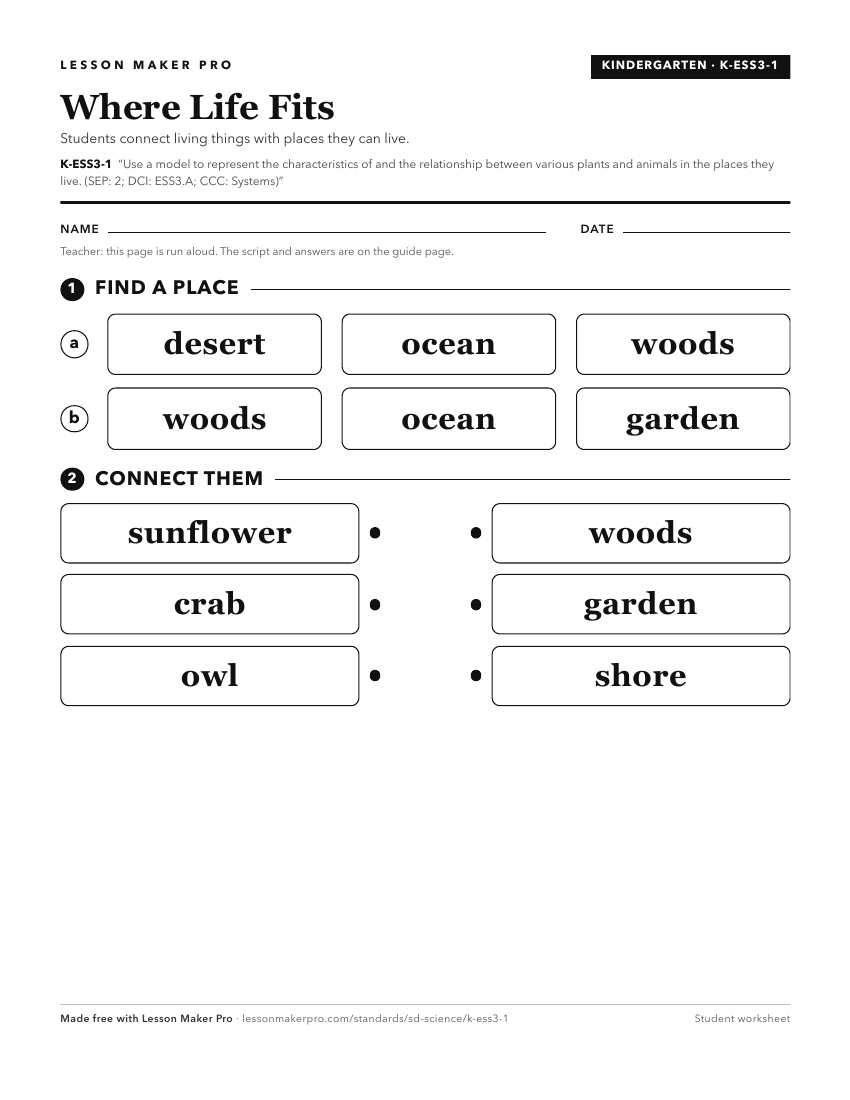
A ready-to-print activity worksheet aligned to K-ESS3-1, with an answer key for the teacher on its own page. No account needed.
PDF, US Letter, prints cleanly in black and white.
Download the worksheetTurn this exact standard into a lesson
Grade, subject, topic, and the complete standard are prefilled. Create one free, no account needed.
Also for this standard:Make a WorksheetMake a QuizMake a Sub Lesson