South Dakota Science 2-ESS2-1
The Standard
Compare multiple solutions to develop a model designed to slow or prevent wind or water from changing the shape of the land. (SEP: 6; DCI: ESS2.A, ETS1.C; CCC: Stability/Change) Alignment may include K-2-ETS1-3
South Dakota Science Standards (2024) · Earth’s Systems
Teacher's field guide
What This Standard Means
What Students Need to Do
- Students test how wind or water moves sand. They compare at least two barriers, then build a small land model using a barrier that kept more sand in place.
What Mastery Looks Like
- A student tests two barriers with the same amount of water and identifies which tray lost less sand. They build a slope model with the better barrier and explain their choice using the test results.
Common Misconceptions
- Students may think a wall stops all erosion, even when water flows around its ends. They may compare trays poured with different amounts of water and credit the barrier for the difference.
How to Assess It
- Exit ticket: A rock wall kept most sand in place, while a sponge strip let more sand wash away. Draw a slope with the better barrier and explain your choice.
Lesson moves
Ways to Teach It
Build three tilted sand trays: bare sand, a pebble wall, and a sponge strip; add equal water and compare soil lost.
Ask, 'Which barrier kept more sand in place? What did you see?' Have partners write two sentences naming their choice and evidence.
Give teams before-and-after tray pictures; have them rank barriers by sand lost, then sketch a stronger barrier.
Show a photo of a washed-out playground slope; students draw where to place rocks or grass and explain how it would slow runoff.
Free download
Printable 2-ESS2-1 Worksheet
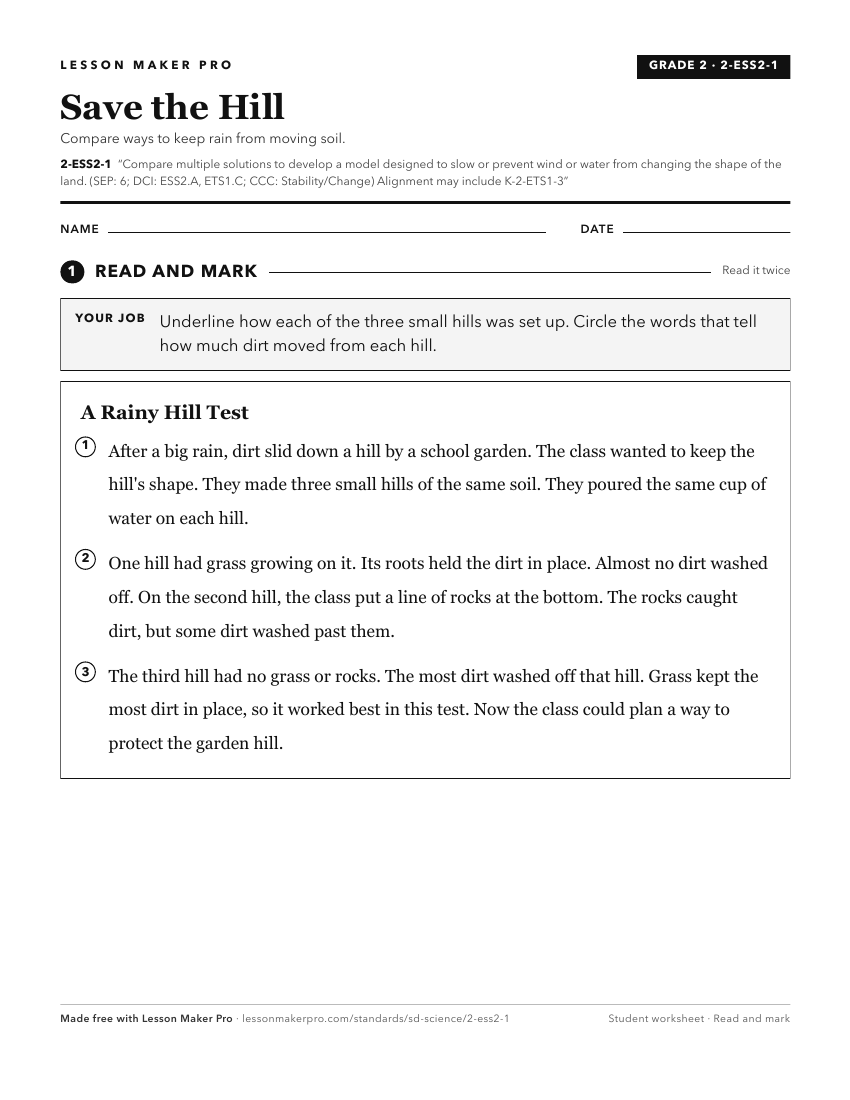
A ready-to-print activity worksheet aligned to 2-ESS2-1, with an answer key for the teacher on its own page. No account needed.
PDF, US Letter, prints cleanly in black and white.
Download the worksheetKeep exploring
Related Standards
Turn this exact standard into a lesson
Grade, subject, topic, and the complete standard are prefilled. Create one free, no account needed.
Also for this standard:Make a WorksheetMake a QuizMake a Sub Lesson