South Dakota ELA 9-10.L.5
Standard Cluster
Demonstrate understanding of semantics. Interpret figurative language (e.g., euphemism, oxymoron) in context and analyze its role in the text. Analyze word relationships (morphology, etymology, and linguistics) and their role in creating nuanced meaning. Analyze connotative meanings of words with similar denotations.
South Dakota English Language Arts Standards (2025)
Cluster contents
Standards in This Cluster
9-10.L.5 is a cluster heading. These are the individual standards under it.
Teacher's field guide
What This Cluster Means
What Students Need to Do
- Students explain what figurative phrases mean in a passage and why the writer chose them. They use word parts and word origins to work out shades of meaning. They compare the tone of words with similar definitions.
What Mastery Looks Like
- Students explain how 'passed away' softens news of death and how 'deafening silence' makes a scene tense. They use the Latin root spect, meaning 'look,' to connect inspect and spectator without treating them as interchangeable. They explain why 'pre-owned' sounds more appealing than 'used' in an ad.
Common Misconceptions
- Students may read 'deafening silence' literally and miss the tension in the contradiction. They may think 'passed away' describes something different from dying, or that 'used' and 'pre-owned' sound equally appealing. They may assume words with the same root mean the same thing.
How to Assess It
- Exit ticket: 'After Dad passed away, I inspected the vacant room. The silence was deafening.' Ask students to explain both figurative phrases, define spect in inspected, and compare vacant with empty.
Lesson moves
Ways to Teach It
Hand out strips reading 'He died,' 'He passed away,' and 'The silence was deafening'; students sort them as literal or figurative and annotate tone.
Ask: 'Why might a narrator call the silence deafening after bad news? What changes if they write quiet instead?'
Play a root match with inspect, spectator, and retrospect; students match each to the Latin root spect, meaning 'look,' and explain the differences.
Show mock car ads labeled 'used' and 'pre-owned'; students choose which sounds more appealing and explain how the wording changes their impression.
Free download
Printable 9-10.L.5 Worksheet
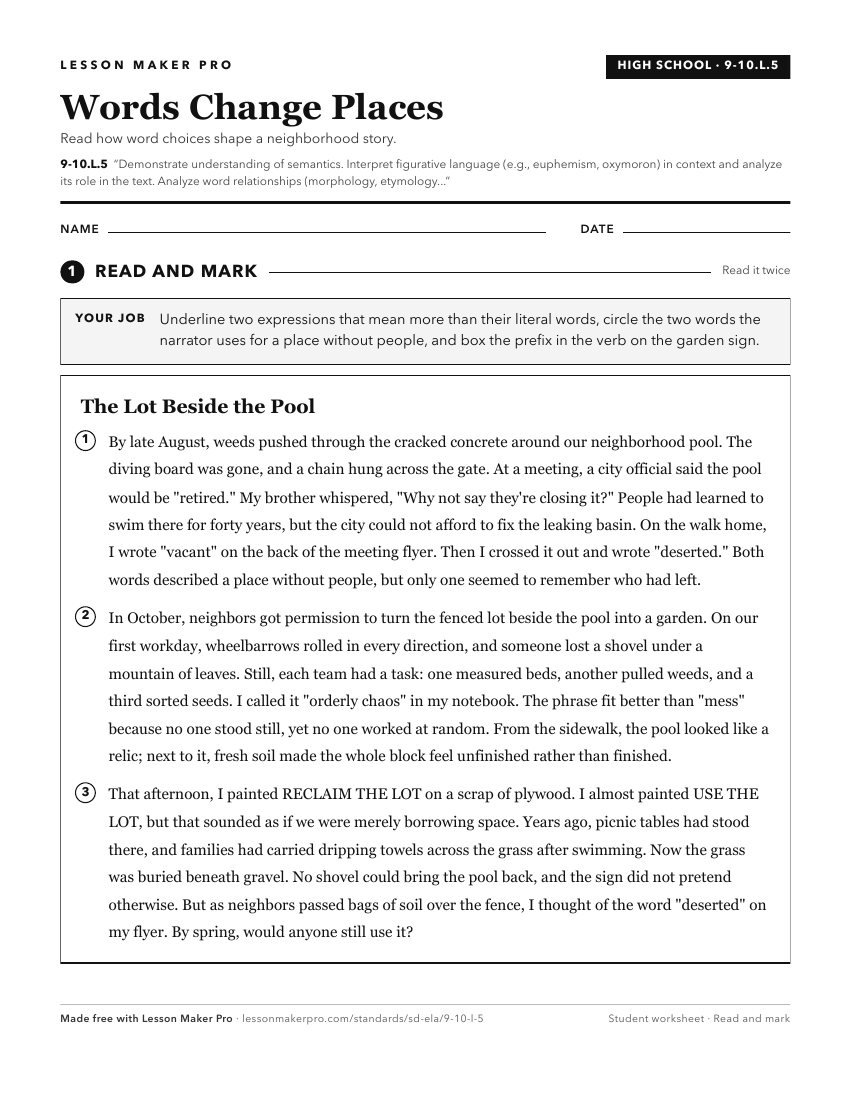
A ready-to-print activity worksheet aligned to 9-10.L.5, with an answer key for the teacher on its own page. No account needed.
PDF, US Letter, prints cleanly in black and white.
Download the worksheetKeep exploring
Related Standards
Turn this cluster into a lesson
Grade, subject, topic, and the complete cluster are prefilled. Create one free, no account needed.
Also for this cluster:Make a WorksheetMake a QuizMake a Sub Lesson