South Dakota ELA 6.RL.3
The Standard
Explain how the plot of a story or drama progresses through its series of events and analyze how characters respond or change as the story moves towards its resolution.
South Dakota English Language Arts Standards (2025)
Teacher's field guide
What This Standard Means
What Students Need to Do
- Students track the events that cause the next problem or choice in a story or play. They explain how a character responds and what changes by the ending.
What Mastery Looks Like
- A student can put key events in order and explain how one leads to the next. They use text details to show how a character's actions or thinking change.
Common Misconceptions
- Students may list events without explaining how they connect. They may mistake a change in the character's situation for a change in the character.
How to Assess It
- After reading "Thank You, Ma'am," ask students to name two events between Roger's attempted theft and his goodbye. Have them explain how he responds to each and what changes, using one text detail.
Lesson moves
Ways to Teach It
Write five events from "Thank You, Ma'am" on index cards, put them in order, and add Roger's response under each card.
Ask partners: Which action by Mrs. Jones most changes Roger's behavior? Point to a line that supports your choice.
Play plot dominoes with event and reaction cards from "Thank You, Ma'am"; match each pair and explain how it leads to the ending.
Write a three-event scenario about a student given a second chance after breaking a rule, then compare its ending with Roger's.
Free download
Printable 6.RL.3 Worksheet
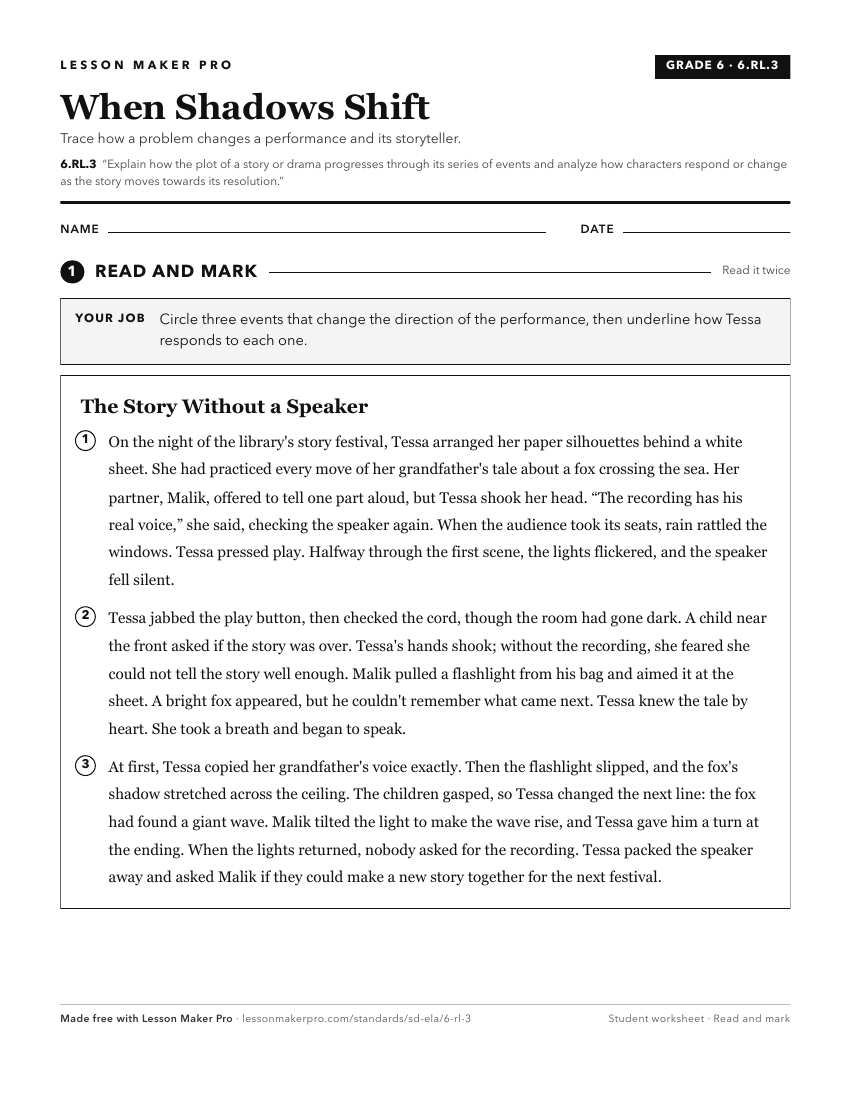
A ready-to-print activity worksheet aligned to 6.RL.3, with an answer key for the teacher on its own page. No account needed.
PDF, US Letter, prints cleanly in black and white.
Download the worksheetKeep exploring
Related Standards
Turn this exact standard into a lesson
Grade, subject, topic, and the complete standard are prefilled. Create one free, no account needed.
Also for this standard:Make a WorksheetMake a QuizMake a Sub Lesson