South Dakota ELA 2.RI.3
The Standard
Explain the relationships between historical events, scientific ideas, or technical procedures in a text.
South Dakota English Language Arts Standards (2025)
Teacher's field guide
What This Standard Means
What Students Need to Do
- Students read a nonfiction text and connect two events, science ideas, or steps. They explain what happened next, what caused a change, or why one step comes before another.
What Mastery Looks Like
- A student points to two details in the text and explains how they connect. They can say whether the text shows a sequence or gives a reason.
Common Misconceptions
- Students may say one event caused another just because it happened first. They may put steps in order without explaining how the steps work together.
How to Assess It
- Give students a short text about planting a seed. Ask: “Why does the text say to water the seed after planting it? Point to a detail that helps you explain.”
Lesson moves
Ways to Teach It
Give pairs water cycle picture cards and yarn; have them connect evaporation and condensation, then explain each link using a short text.
Read a short account of the Wright brothers' first flight; ask, “How did their earlier tests help them?”
Give teams sentence strips from seed-planting instructions; have them race to order the steps and explain one pair.
Read a handwashing poster together; ask why washing with soap comes before rinsing.
Free download
Printable 2.RI.3 Worksheet
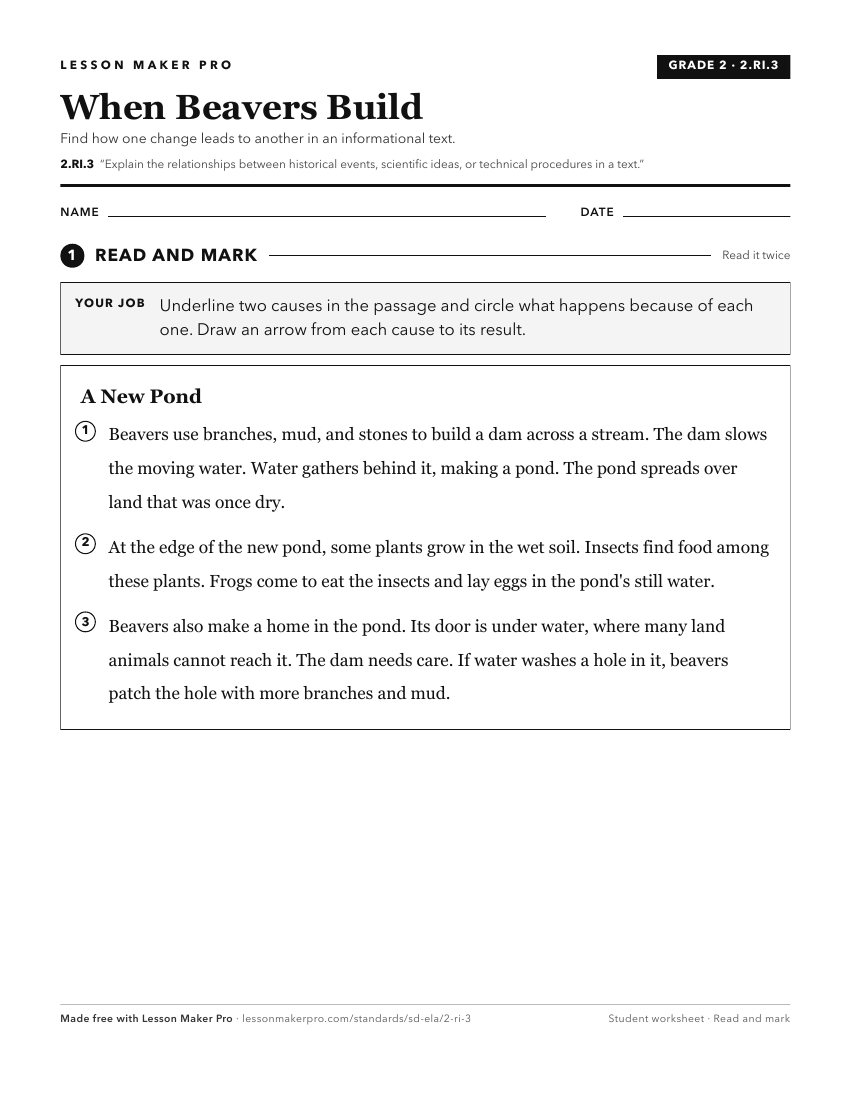
A ready-to-print activity worksheet aligned to 2.RI.3, with an answer key for the teacher on its own page. No account needed.
PDF, US Letter, prints cleanly in black and white.
Download the worksheetKeep exploring
Related Standards
- 4.RI.3
Explain the relationship between events, ideas, or concepts in a historical, scientific, or technical procedures text, using evidence from the text.
- 3.RI.3
Explain the relationship between events, ideas, or concepts in a historical, scientific, or technical procedures text.
- 5.RI.3
Explain the relationships and interactions between individuals, events, ideas, concepts, or steps in procedures in historical, scientific, or technical text usi...
Turn this exact standard into a lesson
Grade, subject, topic, and the complete standard are prefilled. Create one free, no account needed.
Also for this standard:Make a WorksheetMake a QuizMake a Sub Lesson