South Dakota ELA 11-12.SL.1
The Standard
Initiate and participate effectively in a range of collaborative discussions (one- on-one, in groups, and teacher-led) on grades 11–12 topics, texts, and issues, building on others’ ideas and expressing their own clearly and persuasively. Come to discussions prepared, having read and researched material under study; explicitly draw on that preparation by referring to evidence from texts and other research on the topic or issue to stimulate a thoughtful, well-reasoned exchange of ideas. Collaborate with peers to promote civil, democratic discussions and decision-making, set clear goals and deadlines, and establish individual roles as needed. Propel conversations by posing and responding to questions that probe reasoning and evidence; ensure a hearing for a full range of positions on a topic or issue; clarify, verify, or challenge ideas and conclusions; and promote divergent and creative perspectives. Respond thoughtfully to diverse perspectives; synthesize comments, claims, and evidence made on all sides of an issue; resolve contradictions when possible; and determine what additional information or research is required to deepen the investigation or complete the task.
South Dakota English Language Arts Standards (2025)
Teacher's field guide
What This Standard Means
What Students Need to Do
- Students bring notes from reading or research to a group discussion. They use evidence to make a case, question claims, and respond to different views. They help the group reach a decision or identify what needs more research.
What Mastery Looks Like
- A student cites a specific fact and asks a follow-up question about someone else's evidence. They help set a goal and roles, invite a different view, and keep disagreement respectful. They summarize where the group agrees, where it does not, and what fact to check next.
Common Misconceptions
- Students may say 'I agree' without adding evidence or a new idea. Some treat a challenge to their claim as a personal attack, or think a vote settles a factual dispute. Others summarize only their own side and skip unresolved questions.
How to Assess It
- After students read a short article on later school start times, run a four-minute partner discussion: 'Should our school start later?' Collect an exit slip with one fact from the article, a fair summary of the partner's view, and one question that needs more research.
Lesson moves
Ways to Teach It
Assign a facilitator and evidence checker, then have groups sort two school start-time articles into a paper T-chart and draft a recommendation.
Ask, 'Which point from a classmate changes your view on school start times, and what evidence would you need before agreeing?'
Run a question relay: each speaker must cite a source, ask a follow-up question, and invite someone with a different view.
Use a local school board agenda to draft a one-minute public comment on an agenda item, citing evidence and acknowledging one objection.
Free download
Printable 11-12.SL.1 Worksheet
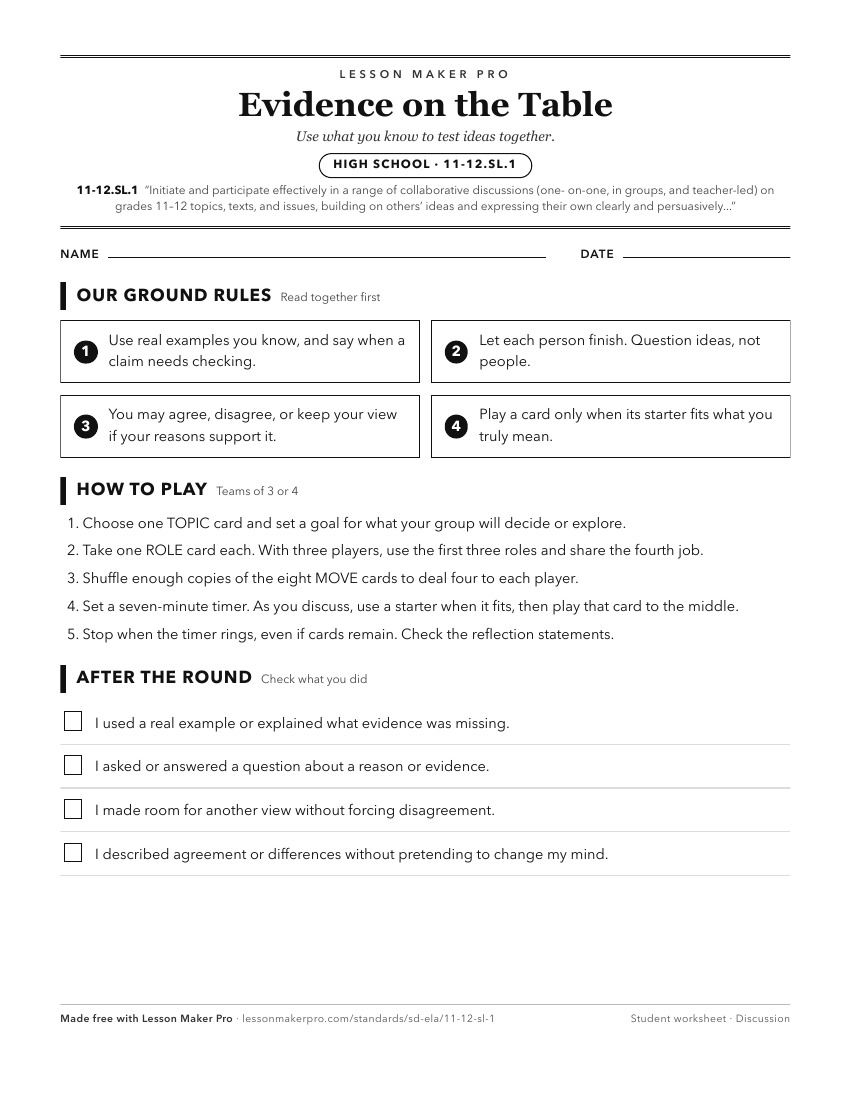
A ready-to-print activity worksheet aligned to 11-12.SL.1, with an answer key for the teacher on its own page. No account needed.
PDF, US Letter, prints cleanly in black and white.
Download the worksheetKeep exploring
Related Standards
- 6.SL.1
Engage effectively in a range of collaborative discussions (one-on-one, in groups, and teacher-led) with partners on grade 6 topics, texts, and issues, building...
- 9-10.SL.1
Initiate and participate effectively in a variety of collaborative discussions (one-on-one, in groups, and teacher-led) on grades 9–10 topics, texts, and issues...
Turn this exact standard into a lesson
Grade, subject, topic, and the complete standard are prefilled. Create one free, no account needed.
Also for this standard:Make a WorksheetMake a QuizMake a Sub Lesson