South Dakota ELA 1.RI.3
The Standard
Compare individuals, events, ideas, or pieces of information in a text.
South Dakota English Language Arts Standards (2025)
Teacher's field guide
What This Standard Means
What Students Need to Do
- Students read a short nonfiction text and pick two people, events, ideas, or facts in it. They explain how those parts are alike or different using details from the text.
What Mastery Looks Like
- After reading about ducks and frogs, a student says both swim, but ducks have feathers and frogs have smooth skin. They point to the sentences that support their answer.
Common Misconceptions
- Some students list two facts without explaining how they relate. Others compare only the pictures or use facts they know that are not in the text.
How to Assess It
- Give students this passage: “Ducks and frogs swim in ponds. Ducks have feathers. Frogs have smooth skin.” Ask them to name one way the animals are alike and one way they are different.
Lesson moves
Ways to Teach It
Give pairs duck and frog picture cards and three fact strips from a short passage, then have them sort facts into alike and different.
Ask, “How are the duck and frog alike in the passage, and what detail tells you they are different?”
Play a matching game with duck and frog fact cards, asking students to pair facts that show a likeness or difference.
Make a visitor sign for a pond using the duck-and-frog passage, with one shared trait and one difference.
Free download
Printable 1.RI.3 Worksheet
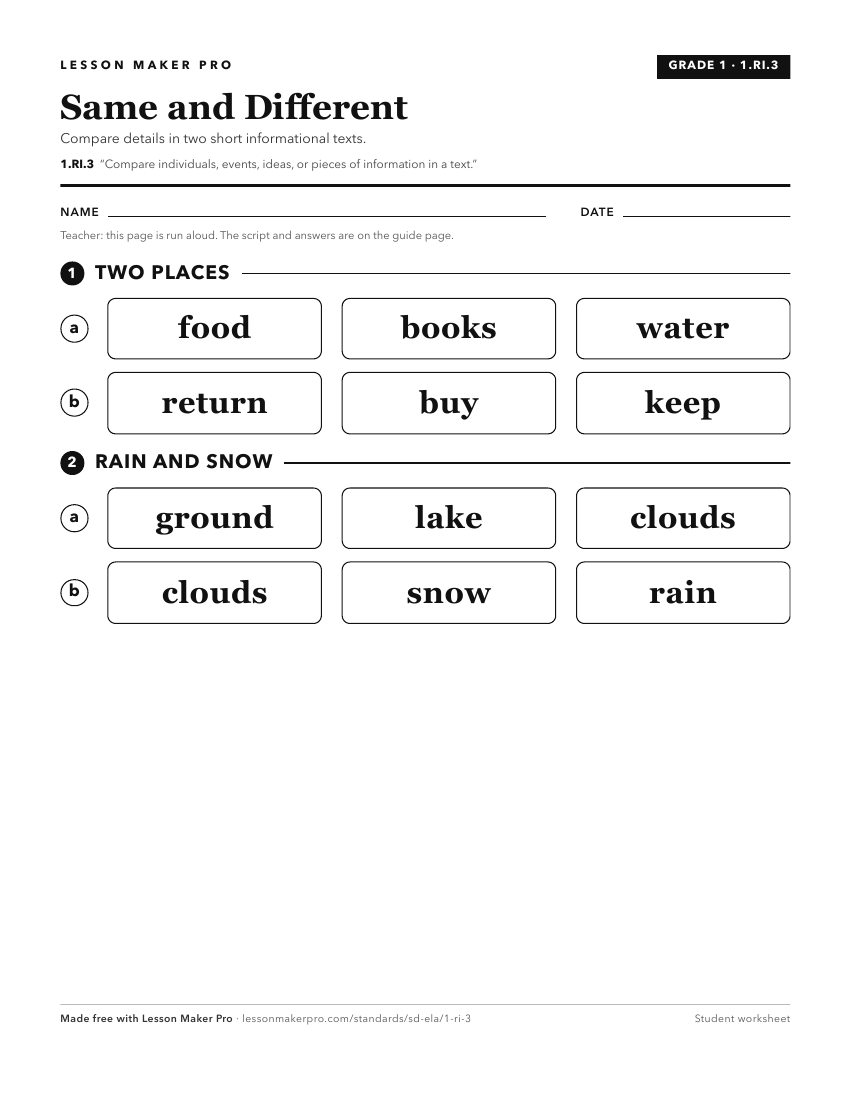
A ready-to-print activity worksheet aligned to 1.RI.3, with an answer key for the teacher on its own page. No account needed.
PDF, US Letter, prints cleanly in black and white.
Download the worksheetKeep exploring
Related Standards
Turn this exact standard into a lesson
Grade, subject, topic, and the complete standard are prefilled. Create one free, no account needed.
Also for this standard:Make a WorksheetMake a QuizMake a Sub Lesson