Oklahoma Science EN.ESS3.2
The Standard
Evaluate competing design solutions for developing, managing, and utilizing energy and mineral resources based on cost-benefit ratios on large and small scales.*
Oklahoma Academic Standards for Science (2026)
Teacher's field guide
What This Standard Means
What Students Need to Do
- Students compare plans for getting and using energy or minerals. They calculate benefits per dollar spent at household and town scales. They weigh pollution, land use, and who pays before recommending a plan.
What Mastery Looks Like
- A student calculates benefit-to-cost ratios using the same time period for each plan. They use figures to explain their choice and name a cost, such as mine cleanup, that the ratio may leave out.
Common Misconceptions
- Students may pick the cheapest plan without checking its benefits. They may compare lifetime savings with one year's costs. They may leave cleanup costs out because they fall on someone else.
How to Assess It
- Exit ticket: Roof panels cost $600 per year and yield $900 in benefits; a town solar array costs $60,000 per year and yields $120,000 in benefits. Calculate each benefit-to-cost ratio, then recommend one for a town project and name one impact the dollar figures miss.
Lesson moves
Ways to Teach It
Give pairs cost, energy, and land-use cards for rooftop and shared solar; have them sort the cards and calculate benefit-to-cost ratios.
Post cost and output figures for recycled copper and new mining; ask students to defend a choice when land damage is included.
Run a budget game: teams select copper sourcing bids, calculate benefit-to-cost ratios, then revise their choices after receiving cleanup-cost cards.
Have students read the rate on a sample electric bill and compare yearly costs with a printed rooftop solar estimate.
Free download
Printable EN.ESS3.2 Worksheet
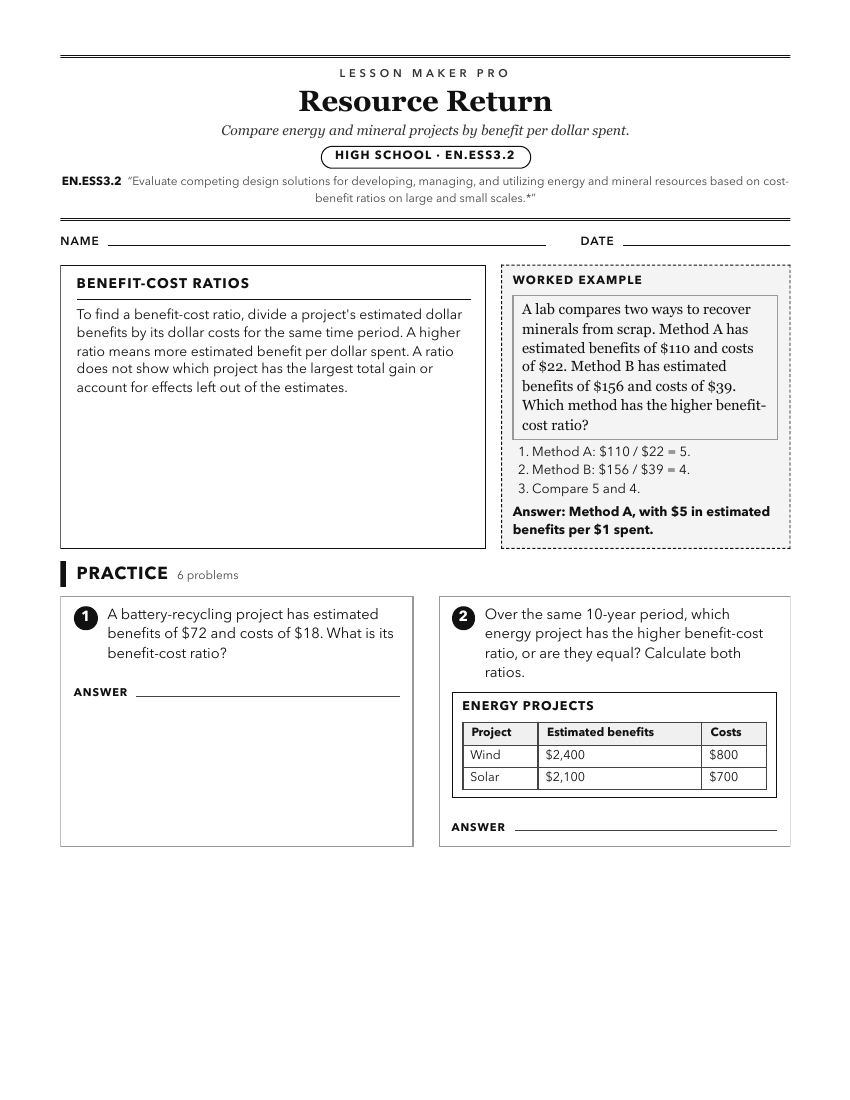
A ready-to-print activity worksheet aligned to EN.ESS3.2, with an answer key for the teacher on its own page. No account needed.
PDF, US Letter, prints cleanly in black and white.
Download the worksheetKeep exploring
Related Standards
Turn this exact standard into a lesson
Grade, subject, topic, and the complete standard are prefilled. Create one free, no account needed.
Also for this standard:Make a WorksheetMake a QuizMake a Sub Lesson