Oklahoma Science 7.PS1.2
The Standard
Analyze and interpret patterns of data related to the properties of substances before and after the substances interact to determine if a chemical reaction has occurred.
Oklahoma Academic Standards for Science (2026)
Teacher's field guide
What This Standard Means
What Students Need to Do
- Students compare observations and measurements from before and after substances interact. They use patterns in the data to decide whether new substances likely formed.
What Mastery Looks Like
- A student can point to changes such as gas production and a temperature shift, then explain why the combined evidence suggests a reaction. They can also explain why sugar dissolving in water is not enough evidence of one.
Common Misconceptions
- Students may think any bubbles prove a reaction, even when dissolved gas is simply escaping. They may also mistake dissolving or a temperature change alone for proof that a new substance formed.
How to Assess It
- Exit ticket: Sugar dissolves in water with no gas produced. Baking soda and vinegar produce bubbles and the mixture cools 3°C. Which interaction likely formed new substances? Use two observations to explain.
Lesson moves
Ways to Teach It
Mix baking soda with vinegar and sugar with water in separate cups; record temperature, pH, and gas production before and after.
Ask students to write why bubbles alone may not prove a reaction, using a freshly opened soda as an example.
Give pairs cards showing before-and-after data; have them sort the cards into likely reaction or not, then defend one choice.
Test an effervescent antacid tablet in water; compare its label claims with the bubbles and temperature change students observe.
Free download
Printable 7.PS1.2 Worksheet
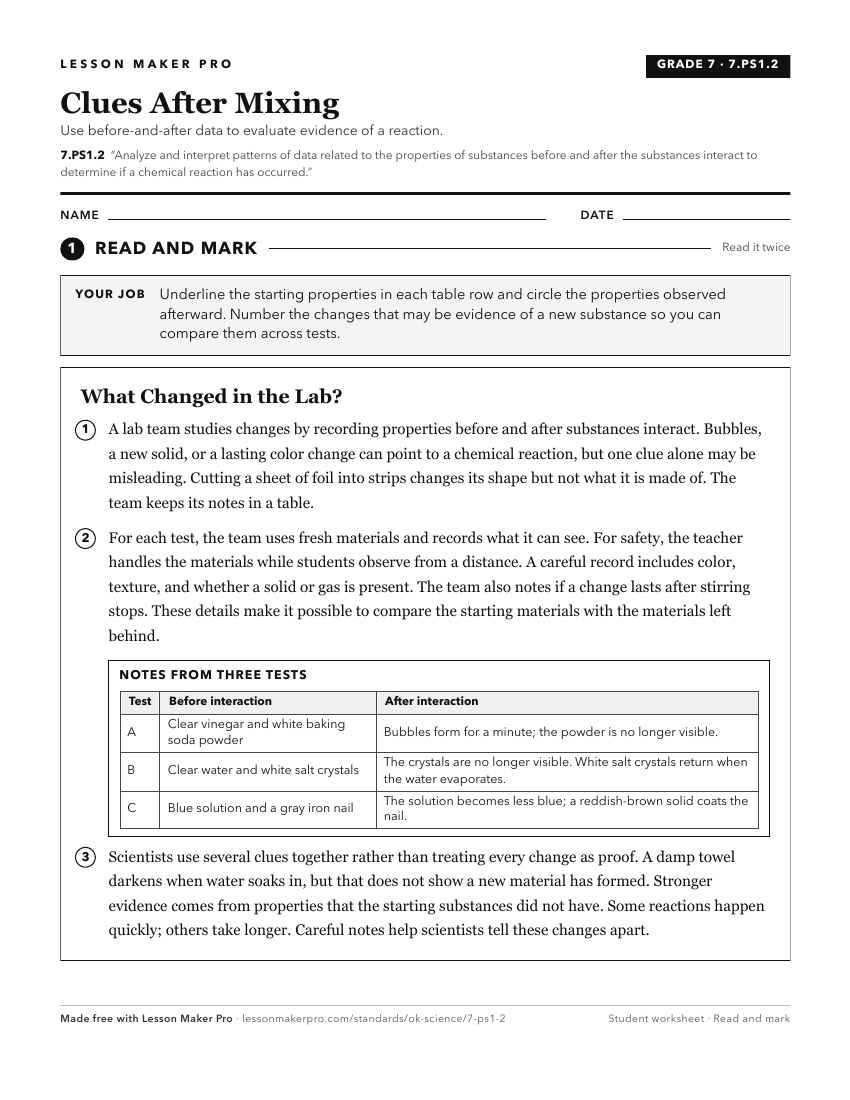
A ready-to-print activity worksheet aligned to 7.PS1.2, with an answer key for the teacher on its own page. No account needed.
PDF, US Letter, prints cleanly in black and white.
Download the worksheetKeep exploring
Related Standards
- CH.PS1.2
Construct and revise an explanation for the outcome of a simple chemical reaction based on the outermost electron states of atoms, trends in the periodic table,...
- PS.PS1.2
Construct and revise an explanation for the outcome of a simple chemical reaction based on the outermost electron states of atoms, trends in the periodic table,...
Turn this exact standard into a lesson
Grade, subject, topic, and the complete standard are prefilled. Create one free, no account needed.
Also for this standard:Make a WorksheetMake a QuizMake a Sub Lesson