Oklahoma Science 7.ESS3.5
The Standard
Obtain, evaluate, and communicate evidence of the factors that have caused changes in global temperatures over the past century.
Oklahoma Academic Standards for Science (2026)
Teacher's field guide
What This Standard Means
What Students Need to Do
- Students compare global temperature records with records of carbon dioxide, solar energy, and volcanic eruptions from the past century. They explain which factors best account for long-term warming, using evidence from the records.
What Mastery Looks Like
- Students identify the warming trend despite year-to-year dips. They use the rise in carbon dioxide and the lack of a similar rise in solar energy to support their explanation. They recognize that eruptions can cause brief cooling.
Common Misconceptions
- Students may treat one cold winter as proof that global warming stopped. They may assume the Sun or volcanoes caused all the warming because both can affect temperature. Some treat two rising lines as proof of cause without checking other evidence.
How to Assess It
- Give students three labeled graphs showing global temperature, carbon dioxide, and solar energy from 1920 to 2020. Ask: “Which factor best explains the long-term warming? Cite two patterns in the graphs.”
Lesson moves
Ways to Teach It
Give pairs printed global temperature and carbon dioxide data from 1920 to 2020, then have them plot both trends on graph paper.
Ask, “Can a cold year disprove long-term warming?” Have students write an answer using a temperature graph, then discuss it with a partner.
Use cards labeled rising carbon dioxide, flat solar output, and volcanic eruptions; sort them under lasting warming, brief cooling, or neither.
Show a weather app's weekly temperatures beside a century-long global temperature graph; have students explain why the two show different patterns.
Free download
Printable 7.ESS3.5 Worksheet
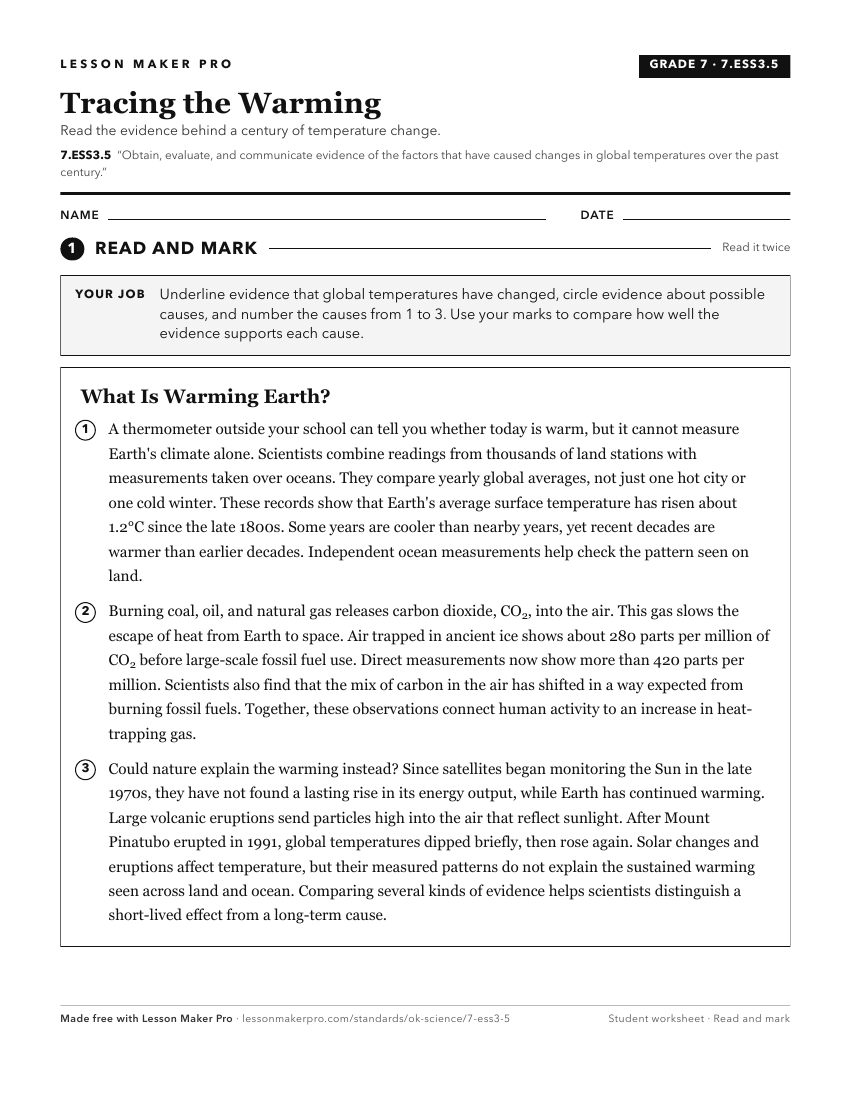
A ready-to-print activity worksheet aligned to 7.ESS3.5, with an answer key for the teacher on its own page. No account needed.
PDF, US Letter, prints cleanly in black and white.
Download the worksheetKeep exploring
Related Standards
Turn this exact standard into a lesson
Grade, subject, topic, and the complete standard are prefilled. Create one free, no account needed.
Also for this standard:Make a WorksheetMake a QuizMake a Sub Lesson