Oklahoma Science 5.ESS2.1
The Standard
Develop a model to describe ways the geosphere, biosphere, hydrosphere, and/or atmosphere interact.
Oklahoma Academic Standards for Science (2026)
Teacher's field guide
What This Standard Means
What Students Need to Do
- Students draw a model showing how air, water, land, and living things affect one another. They use arrows and short labels to explain what moves or changes.
What Mastery Looks Like
- A student can show rain soaking into soil and water moving from soil into a plant. They can explain each arrow and predict what might change if the rain stops.
Common Misconceptions
- Students may call soil a living thing because worms live in it. They may name all four parts but leave out the interactions, or draw arrows without explaining what moves.
How to Assess It
- Exit ticket: Draw air, falling rain, soil, and a plant in a garden. Add three arrows and label what moves or changes at each connection.
Lesson moves
Ways to Teach It
Pour water over a sod tray and a bare-soil tray; sketch arrows showing runoff and how grass changes its path.
Show a photo of a flooded garden and ask, “How could rain change the soil, and how could that affect the plants?”
Give pairs cards labeled air, rain, soil, and grass; have them link the cards with arrows labeled with what moves or changes.
After rain, inspect a schoolyard puddle by a tree; sketch how water moves into soil or drains away from the roots.
Free download
Printable 5.ESS2.1 Worksheet
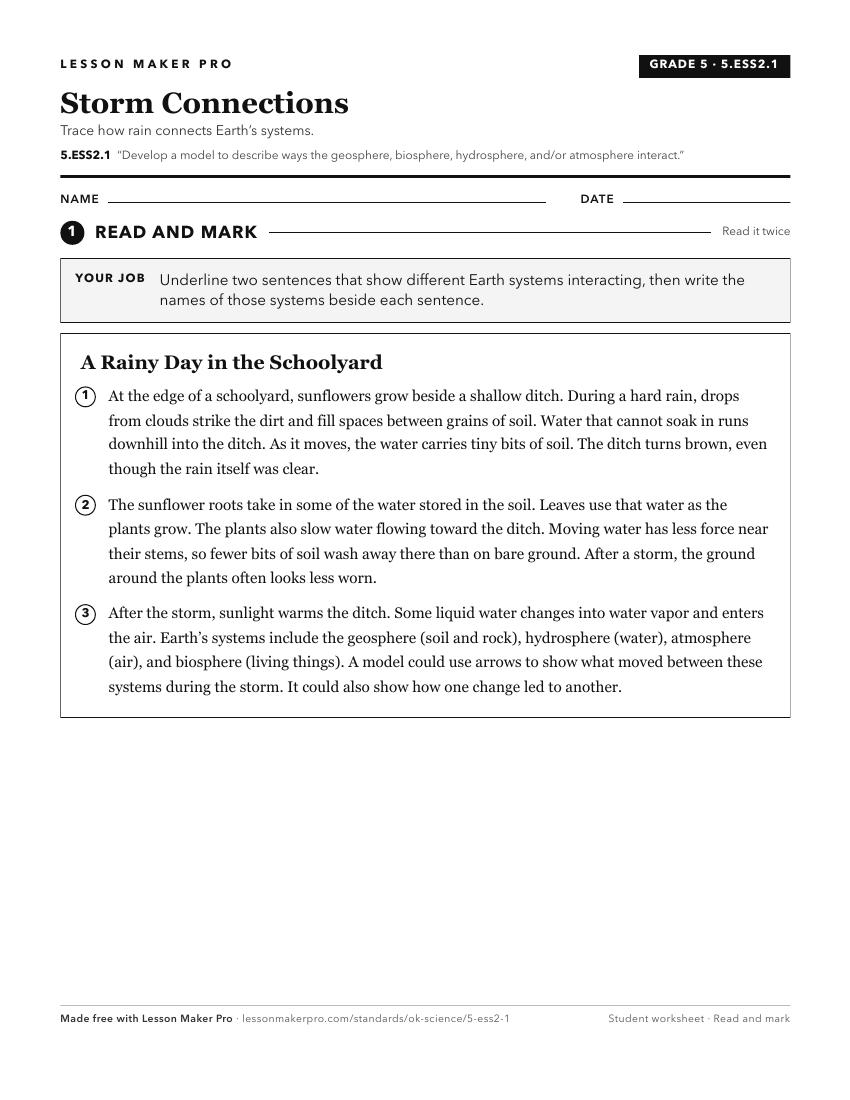
A ready-to-print activity worksheet aligned to 5.ESS2.1, with an answer key for the teacher on its own page. No account needed.
PDF, US Letter, prints cleanly in black and white.
Download the worksheetKeep exploring
Related Standards
Turn this exact standard into a lesson
Grade, subject, topic, and the complete standard are prefilled. Create one free, no account needed.
Also for this standard:Make a WorksheetMake a QuizMake a Sub Lesson