Oklahoma Math PA.D.2.2
The Standard
- PA.D.2
- Calculate experimental probabilities and reason about probabilities to model and solve problems.
Determine how samples are chosen (randomness) to draw and support conclusions about generalizing a sample to a population, including identifying limitations and biases.
Oklahoma Academic Standards for Mathematics (2022)
Teacher's field guide
What This Standard Means
What Students Need to Do
- Students identify how a sample was chosen and whether every member of the population had a fair chance to be picked. They decide whether the results can describe the whole population and name any groups left out.
What Mastery Looks Like
- A student can explain why picking names at random from a school roster gives a better picture of the school than asking students in the bus line. They can say who the bus-line sample misses and limit their conclusion to the group actually surveyed.
Common Misconceptions
- Students may think a large sample is automatically fair. They may also treat volunteers as a random sample or use results from one group to describe everyone.
How to Assess It
- Exit ticket: A student asks 40 people in the bus line how they get to school. Can the results describe all students at the school? Explain who is missing.
Lesson moves
Ways to Teach It
Stack 20 red and 10 blue cards; compare the first 10 cards with 10 cards drawn from a bag after mixing.
Ask students to write whether a survey of bus riders can describe how the whole school gets to school, and why.
Have pairs sort survey cards labeled random roster names, bus line, and volunteers into fair and biased samples.
Give students a school lunch survey plan and ask them to choose between random roster names and cafeteria suggestion-box comments.
Free download
Printable PA.D.2.2 Worksheet
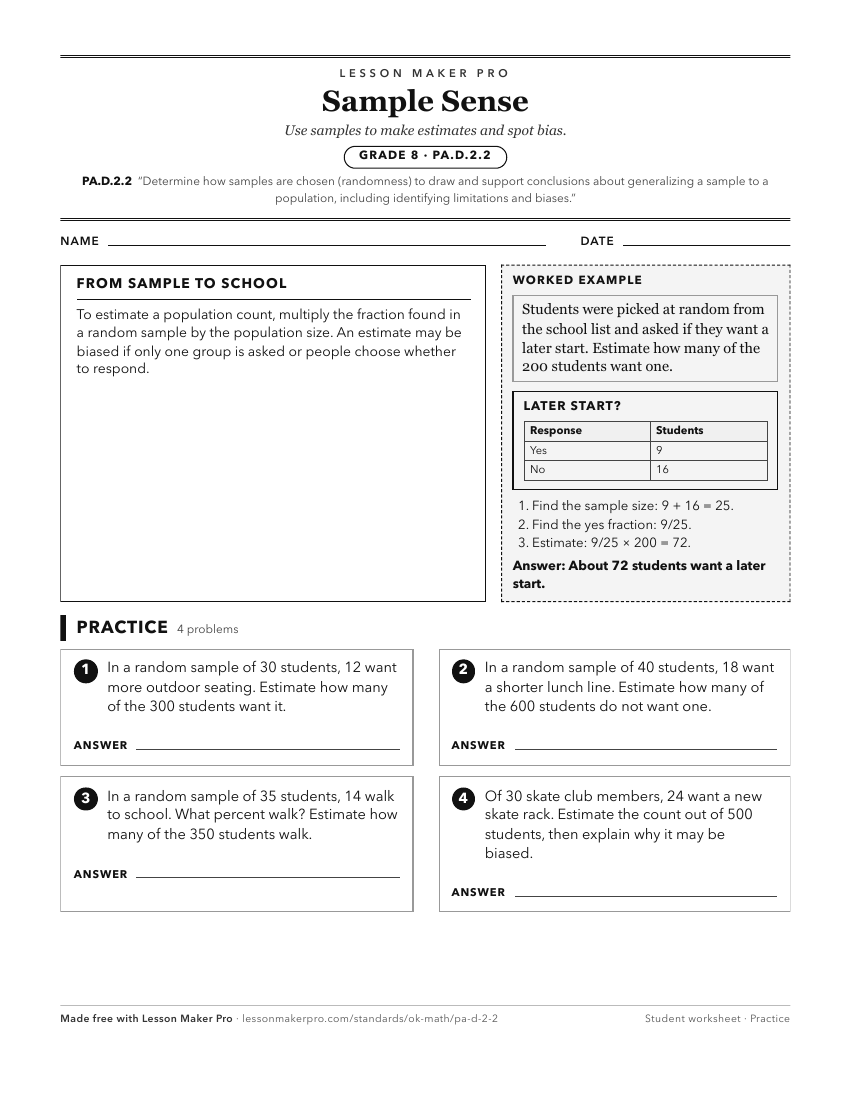
A ready-to-print activity worksheet aligned to PA.D.2.2, with an answer key for the teacher on its own page. No account needed.
PDF, US Letter, prints cleanly in black and white.
Download the worksheetKeep exploring
Related Standards
- S.DC.2
Identify common sources of bias and the role of randomization in study design.
- S.DC.2.1
Explain how randomization and sources of bias impact the results of a study.
- S.DC.2.2
Understand the different roles of random selection and random assignment in study design.
- S.IR.1.1
Recognize when the difference between two sample proportions or two sample means is due to random variation or if the difference is statistically significant.
Turn this exact standard into a lesson
Grade, subject, topic, and the complete standard are prefilled. Create one free, no account needed.
Also for this standard:Make a WorksheetMake a QuizMake a Sub Lesson