Oklahoma ELA 10.6.R.3
The Standard
Students will evaluate the relevance, reliability, and validity of the information gathered.
Oklahoma Academic Standards for English Language Arts (2021)
Teacher's field guide
What This Standard Means
What Students Need to Do
- Students decide whether information answers their question. They check who made a claim, when it was made, and whether the evidence supports it.
What Mastery Looks Like
- A student can choose a useful source and explain why it is trustworthy. They can also spot when a source makes a claim its evidence does not prove.
Common Misconceptions
- Students may treat a source as reliable just because it looks professional or ends in .org. They may assume a statistic proves a claim without checking where the number came from.
How to Assess It
- Exit ticket: A 2025 district report says attendance rose after later start times. An anonymous blog says grades soared. Which source helps answer a question about attendance, and what can neither source prove about the cause?
Lesson moves
Ways to Teach It
Give pairs three printed source cards with authors, dates, and evidence; have them sort the cards by usefulness and explain their choices.
Ask students to write: Would you cite an anonymous post with a striking statistic? What would you check first?
Run a source-check relay: teams flag missing authors, old dates, and unsupported numbers on four sample web pages.
Print tomorrow's school lunch menu and two anonymous posts about it; students mark which claims the menu confirms.
Free download
Printable 10.6.R.3 Worksheet
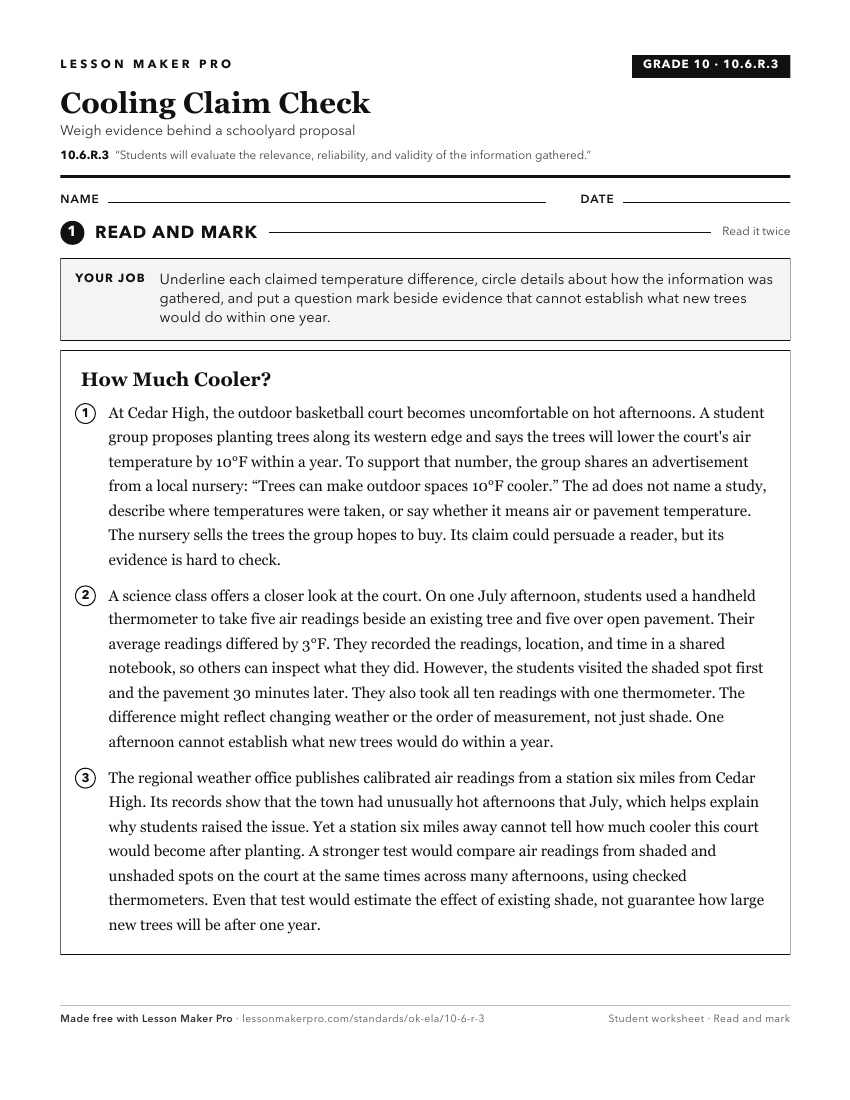
A ready-to-print activity worksheet aligned to 10.6.R.3, with an answer key for the teacher on its own page. No account needed.
PDF, US Letter, prints cleanly in black and white.
Download the worksheetKeep exploring
Related Standards
Turn this exact standard into a lesson
Grade, subject, topic, and the complete standard are prefilled. Create one free, no account needed.
Also for this standard:Make a WorksheetMake a QuizMake a Sub Lesson