NGSS K-PS3-1
The Standard
Make observations to determine the effect of sunlight on Earth's surface.
Next Generation Science Standards
Teacher's field guide
What This Standard Means
What Students Need to Do
- Students observe sand, soil, rocks, or water in sunlight and shade. They compare how warm each surface feels using words such as warmer and cooler.
What Mastery Looks Like
- Students correctly identify that a surface left in sunlight becomes warmer than the same surface in shade. They describe the change using words such as warmer and cooler.
Common Misconceptions
- Students may think sunlight makes every surface hot right away. They may also confuse light and warmth, or assume shaded surfaces receive the same heating as sunny surfaces.
How to Assess It
- Show pictures of two identical rocks, one in sunlight and one in shade. Ask students to circle the warmer rock and explain their choice.
Lesson moves
Ways to Teach It
Place two trays of soil, one in sunlight and one in shade, then have students feel and label each warmer or cooler.
Ask, "How does a sunny sidewalk feel different from a shaded sidewalk, and why?"
Sort picture cards of sunny and shaded surfaces into warmer and cooler groups, then explain each choice.
Compare sunny and shaded playground spots, then predict where an ice cube would melt faster and explain why.
Free download
Printable K-PS3-1 Worksheet
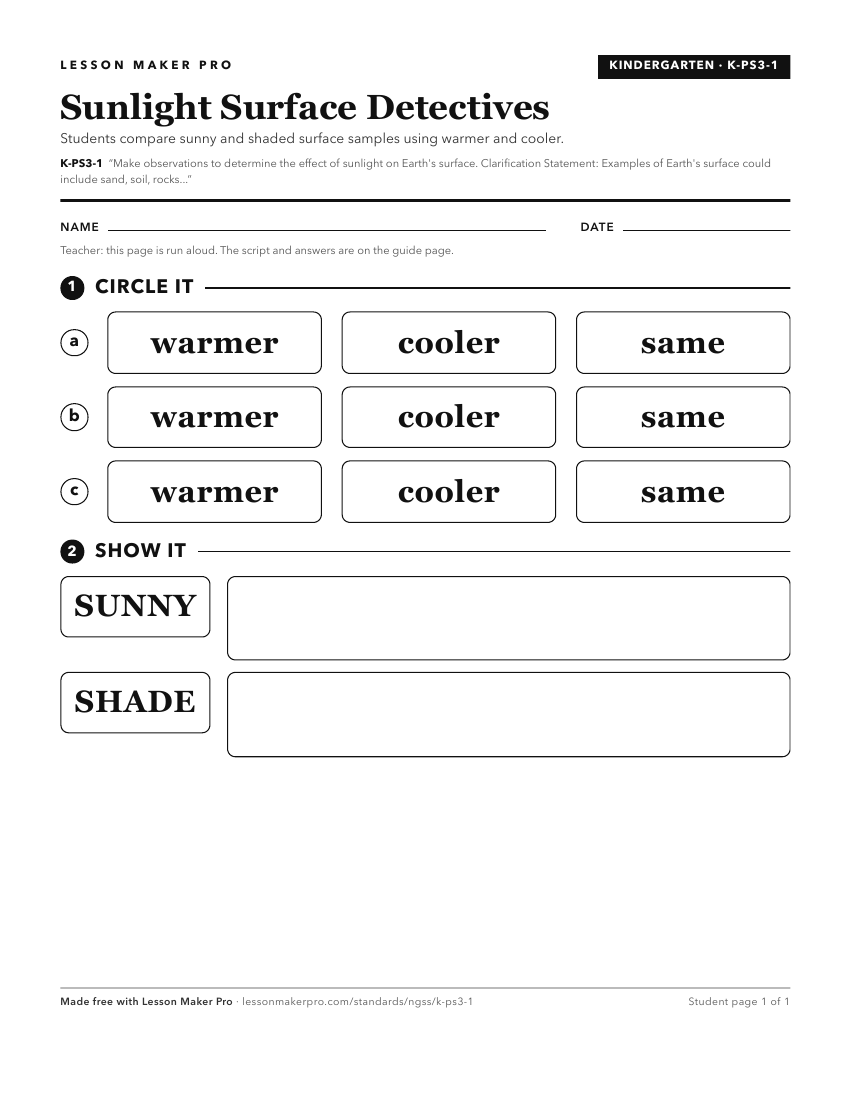
A ready-to-print activity worksheet aligned to K-PS3-1, with an answer key for the teacher on its own page. No account needed.
PDF, US Letter, prints cleanly in black and white.
Download the worksheetKeep exploring
Related Standards
- K-ESS2-1
Use and share observations of local weather conditions to describe patterns over time.
- 1-ESS1-1
Use observations of the sun, moon, and stars to describe patterns that can be predicted.
- 1-ESS1-2
Make observations at different times of year to relate the amount of daylight to the time of year.
- 4-ESS2-1
Make observations and/or measurements to provide evidence of the effects of weathering or the rate of erosion by water, ice, wind, or vegetation.
Turn this exact standard into a lesson
Grade, subject, topic, and the complete standard are prefilled. Create one free, no account needed.
Also for this standard:Make a WorksheetMake a QuizMake a Sub Lesson