NGSS 4-ESS2-1
The Standard
Make observations and/or measurements to provide evidence of the effects of weathering or the rate of erosion by water, ice, wind, or vegetation.
Next Generation Science Standards
Teacher's field guide
What This Standard Means
What Students Need to Do
- Students observe changes to rock or soil and measure how quickly material breaks down or moves. They change one variable, collect evidence, and compare the results.
What Mastery Looks Like
- A student can compare measurements from a fair test, such as the mass of soil moved by two water volumes. They can use the results to explain how one tested variable affected erosion.
Common Misconceptions
- Students often confuse weathering, which breaks material apart, with erosion, which moves it. They may treat deposited sediment as newly weathered material or assume faster water always causes the same amount of erosion.
How to Assess It
- Give students these results: 100 mL of water moved 8 g of soil, while 200 mL moved 17 g. Ask them to state a claim about water volume and support it with the measurements.
Lesson moves
Ways to Teach It
Build two soil trays at different slopes, pour equal amounts of water, then collect and weigh the soil carried away.
Ask students to write: Which slope eroded faster, and what observation or measurement supports your answer?
Play an evidence sort by matching photo and data cards to weathering, erosion, or deposition.
Inspect the schoolyard after rain, map soil channels and exposed roots, then suggest one way to reduce erosion.
Free download
Printable 4-ESS2-1 Worksheet
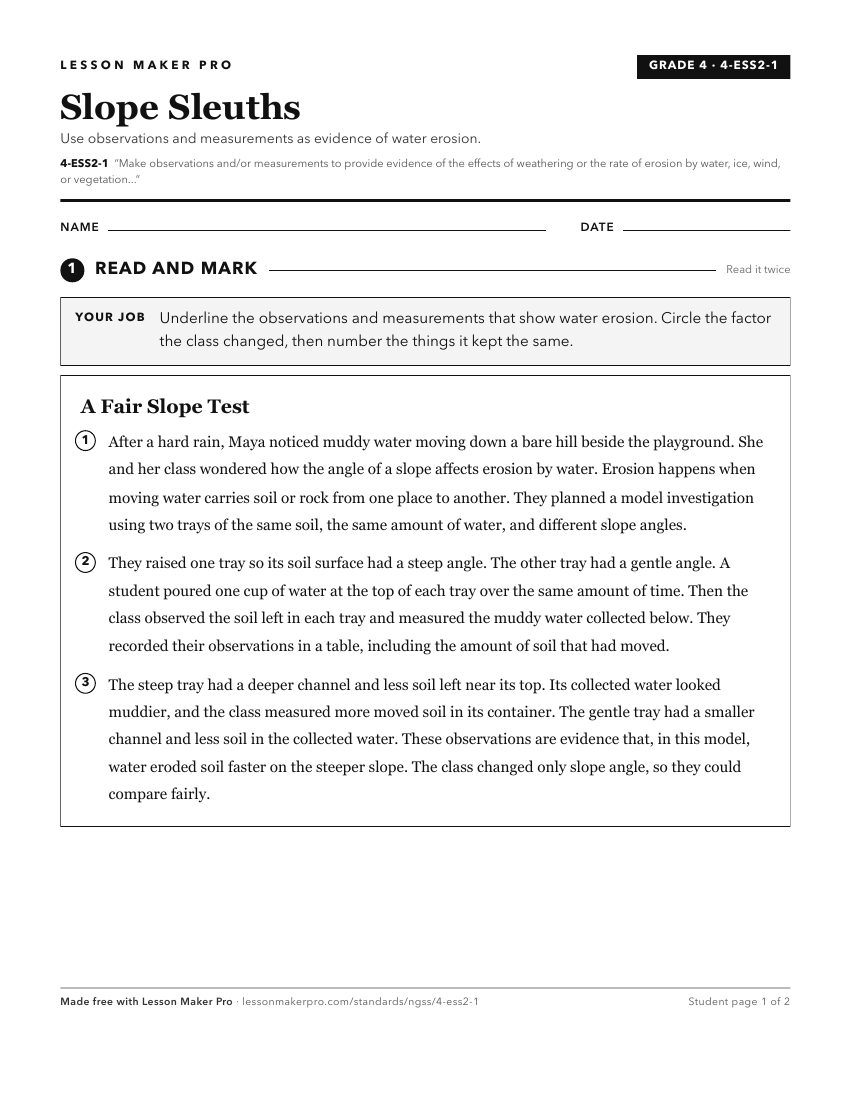
A ready-to-print activity worksheet aligned to 4-ESS2-1, with an answer key for the teacher on its own page. No account needed.
PDF, US Letter, prints cleanly in black and white.
Download the worksheetLearning progression
Where This Standard Sits
See the whole path on the Earth & Space Science progression map.
What This Unlocks
Mastery here sets students up for these next.
Keep exploring
Related Standards
- K-ESS2-1
Use and share observations of local weather conditions to describe patterns over time.
- 3-PS2-2
Make observations and/or measurements of an object's motion to provide evidence that a pattern can be used to predict future motion.
- MS-ESS2-5
Collect data to provide evidence for how the motions and complex interactions of air masses results in changes in weather conditions.
- K-PS3-1
Make observations to determine the effect of sunlight on Earth's surface.
Turn this exact standard into a lesson
Grade, subject, topic, and the complete standard are prefilled. Create one free, no account needed.
Also for this standard:Make a WorksheetMake a QuizMake a Sub Lesson