NGSS K-ESS2-1
The Standard
Use and share observations of local weather conditions to describe patterns over time.
Next Generation Science Standards
Teacher's field guide
What This Standard Means
What Students Need to Do
- Students observe nearby weather and record what they notice with pictures, words, or whole numbers. They share their records and use them to identify repeated changes or differences.
What Mastery Looks Like
- Students accurately record daily conditions with pictures, words, or whole numbers. They compare records and describe a simple pattern, such as afternoons being warmer than mornings.
Common Misconceptions
- Students may think one rainy day means every day that week was rainy. They may confuse weather with seasons or treat warmer and cooler as exact temperatures.
How to Assess It
- Show a five-day picture weather chart and ask, “Which weather happened most, and what evidence from the chart supports your answer?”
Lesson moves
Ways to Teach It
Create a two-week weather calendar using daily sky observations, wind ribbons, and warmer or cooler labels.
Ask, “What weather did we see most this week?” Have students support answers with dates from the class calendar.
Play Weather Sort by grouping picture cards into sunny, cloudy, rainy, and windy sets, then count and compare each set.
Choose outdoor clothing for today, then explain how the observed sky, wind, and temperature guided each choice.
Free download
Printable K-ESS2-1 Worksheet
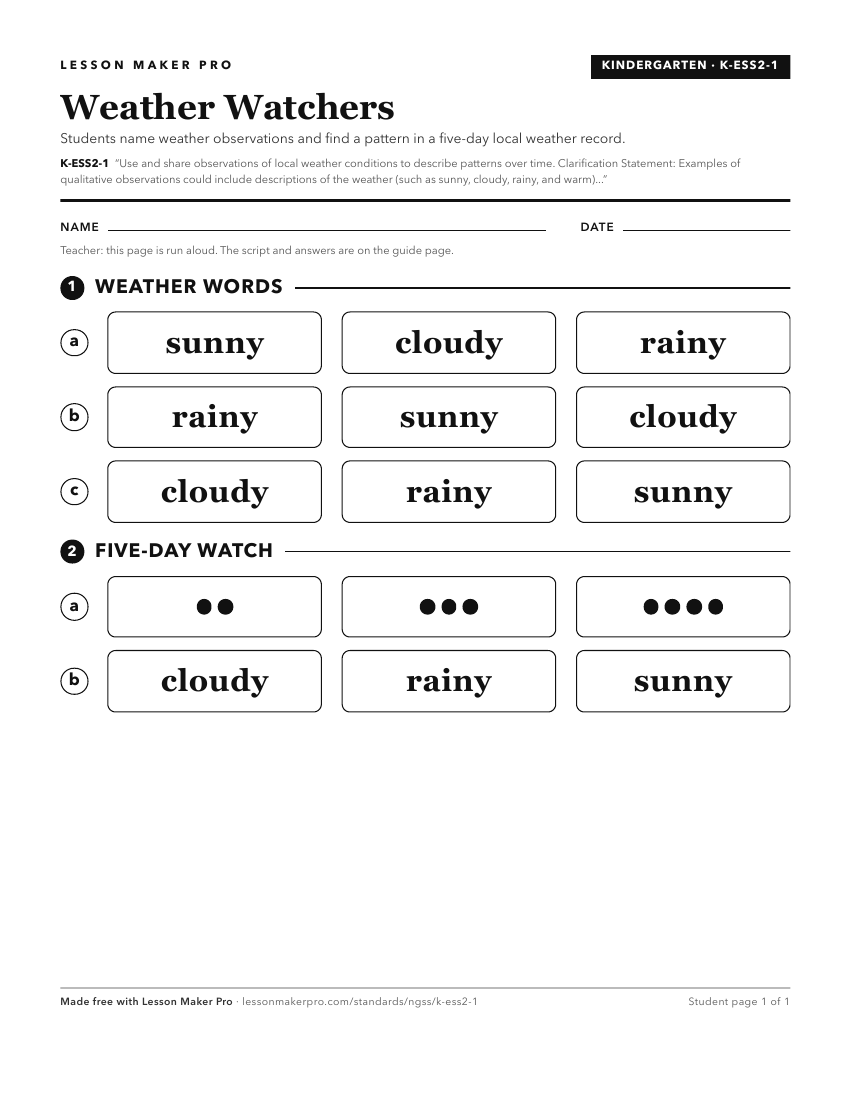
A ready-to-print activity worksheet aligned to K-ESS2-1, with an answer key for the teacher on its own page. No account needed.
PDF, US Letter, prints cleanly in black and white.
Download the worksheetKeep exploring
Related Standards
- MS-ESS2-5
Collect data to provide evidence for how the motions and complex interactions of air masses results in changes in weather conditions.
- 3-ESS2-2
Obtain and combine information to describe climates in different regions of the world.
- 1-ESS1-1
Use observations of the sun, moon, and stars to describe patterns that can be predicted.
- 3-ESS2-1
Represent data in tables and graphical displays to describe typical weather conditions expected during a particular season.
Turn this exact standard into a lesson
Grade, subject, topic, and the complete standard are prefilled. Create one free, no account needed.
Also for this standard:Make a WorksheetMake a QuizMake a Sub Lesson