NGSS 1-ESS1-2
The Standard
Make observations at different times of year to relate the amount of daylight to the time of year.
Next Generation Science Standards
Teacher's field guide
What This Standard Means
What Students Need to Do
- Students observe whether it is light or dark at the same daily checkpoints during different seasons. They compare seasons using words such as more, less, longer, and shorter.
What Mastery Looks Like
- A student can compare seasonal records and identify which season has more or less daylight. The student uses observations, such as light at arrival or dismissal, to explain the comparison.
Common Misconceptions
- Students may think cloudy weather means there is less daylight. They may also think every season has the same daylight length or use temperature instead of observations as evidence.
How to Assess It
- Show picture strips for winter, spring, and fall days. Ask, “Which season has the least daylight, and what in the pictures supports your answer?”
Lesson moves
Ways to Teach It
Sort dated photos of the same outdoor place into winter, spring, and fall groups, then compare which groups show daylight most often.
Write a response to the prompt, “How does daylight in winter compare with daylight in spring or fall?”
Play Daylight Sort by matching seasonal picture cards to labels reading more daylight or less daylight.
Compare seasonal daylight records with activities such as walking to school, eating dinner, or playing outside after school.
Free download
Printable 1-ESS1-2 Worksheet
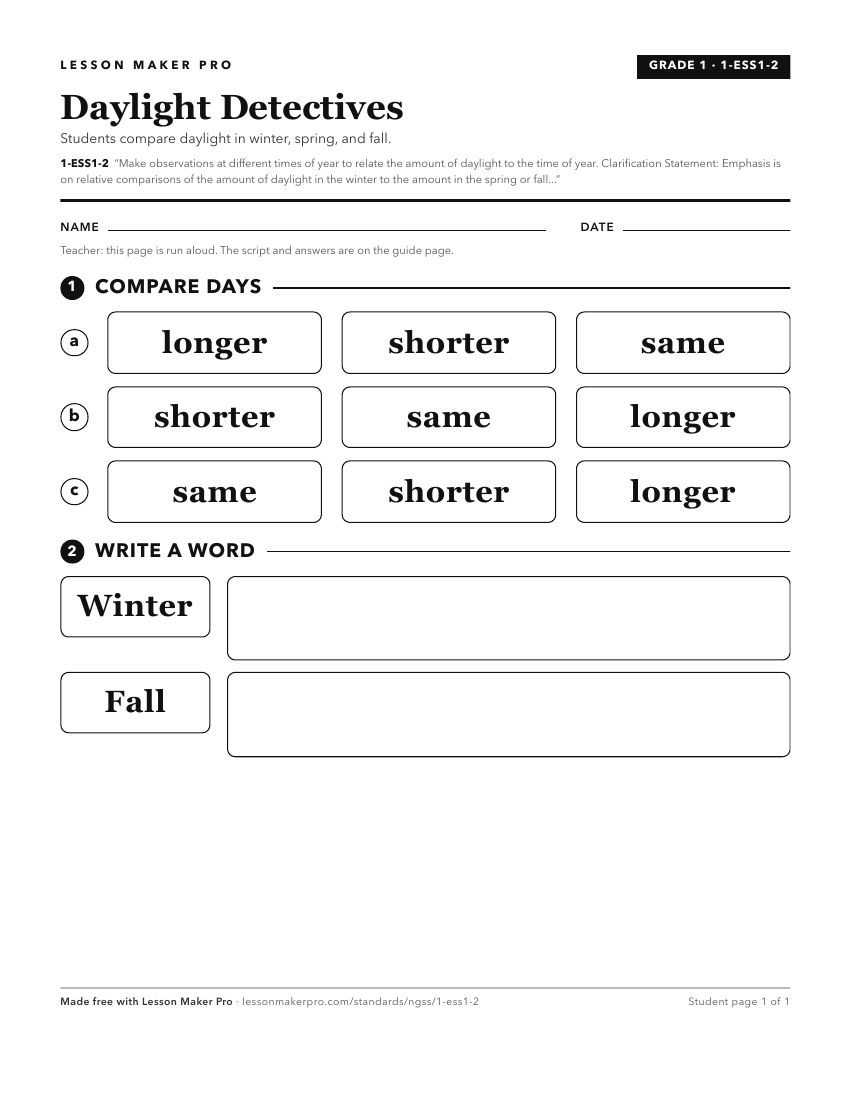
A ready-to-print activity worksheet aligned to 1-ESS1-2, with an answer key for the teacher on its own page. No account needed.
PDF, US Letter, prints cleanly in black and white.
Download the worksheetKeep exploring
Related Standards
- K-ESS2-1
Use and share observations of local weather conditions to describe patterns over time.
- K-PS3-1
Make observations to determine the effect of sunlight on Earth's surface.
- 5-ESS1-2
Represent data in graphical displays to reveal patterns of daily changes in length and direction of shadows, day and night, and the seasonal appearance of some ...
- 1-ESS1-1
Use observations of the sun, moon, and stars to describe patterns that can be predicted.
Turn this exact standard into a lesson
Grade, subject, topic, and the complete standard are prefilled. Create one free, no account needed.
Also for this standard:Make a WorksheetMake a QuizMake a Sub Lesson