NGSS 4-ESS1-1
The Standard
Identify evidence from patterns in rock formations and fossils in rock layers to support an explanation for changes in a landscape over time.
Next Generation Science Standards
Teacher's field guide
What This Standard Means
What Students Need to Do
- Students examine rock layers, fossils, and landforms to work out how a place changed over time. They compare relative order and connect each explanation to a specific clue.
What Mastery Looks Like
- Students can use layer order, fossil types, and erosion features to describe what happened first and later. They support each claim with a visible clue from a diagram, model, or photograph.
Common Misconceptions
- Students may assume upper layers are older because they see them first. They may treat fossils as exact dates or claim a river appeared only after the canyon formed.
How to Assess It
- Show a diagram with plant fossils in a lower layer, shell fossils above, and a river cutting through both. Ask students to describe two landscape changes and cite one clue for each.
Lesson moves
Ways to Teach It
Build layers of sand, soil, leaves, and shells in a clear container, then cut a channel and record the sequence of events.
Ask students to write: What story do these rock layers tell, and which two clues support your explanation?
Play a card sort matching rock layer diagrams, landscape change claims, and evidence cards, then have partners defend each match.
Compare photographs of a local riverbank or road cut over time, and identify clues showing erosion, deposition, or changing environments.
Free download
Printable 4-ESS1-1 Worksheet
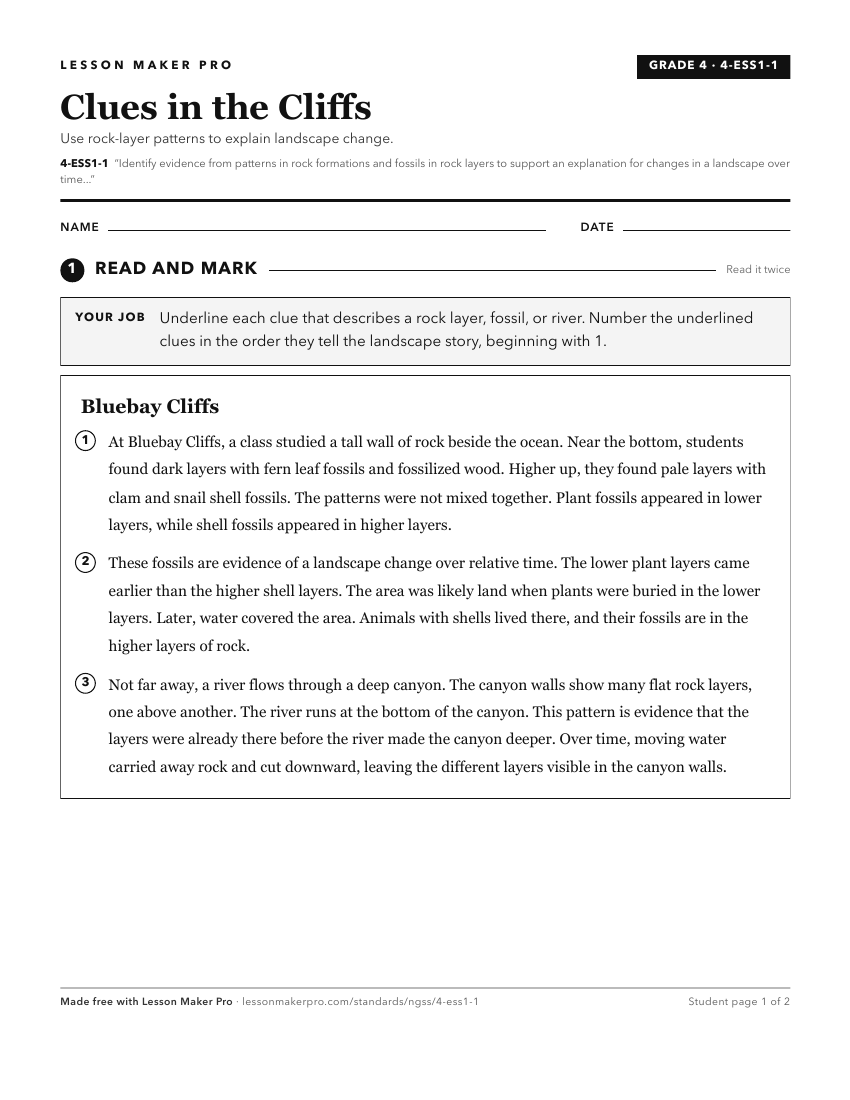
A ready-to-print activity worksheet aligned to 4-ESS1-1, with an answer key for the teacher on its own page. No account needed.
PDF, US Letter, prints cleanly in black and white.
Download the worksheetLearning progression
Where This Standard Sits
See the whole path on the Earth & Space Science progression map.
What This Unlocks
Mastery here sets students up for these next.
Keep exploring
Related Standards
- MS-ESS2-2
Construct an explanation based on evidence for how geoscience processes have changed Earth's surface at varying time and spatial scales.
- 3-LS4-1
Analyze and interpret data from fossils to provide evidence of the organisms and the environments in which they lived long ago.
- HS-ESS1-5
Evaluate evidence of the past and current movements of continental and oceanic crust and the theory of plate tectonics to explain the ages of crustal rocks.
Turn this exact standard into a lesson
Grade, subject, topic, and the complete standard are prefilled. Create one free, no account needed.
Also for this standard:Make a WorksheetMake a QuizMake a Sub Lesson