NGSS 2-ESS2-1
The Standard
Compare multiple solutions designed to slow or prevent wind or water from changing the shape of the land.
Next Generation Science Standards
Teacher's field guide
What This Standard Means
What Students Need to Do
- Students test ways to protect soil from moving in wind or water. They compare results and use observations to decide which design works better.
What Mastery Looks Like
- A student can use test results to compare two or more designs. They can identify which design reduced soil movement most and explain why using observations.
Common Misconceptions
- Students may think the tallest or thickest barrier always works best. They may also think plants block water only with their leaves, missing how roots hold soil in place.
How to Assess It
- Show two pictures, a bare soil bank with a wall and a planted soil bank. Ask, “Which design would reduce erosion better, and what evidence would you collect to check?”
Lesson moves
Ways to Teach It
Build sand slopes in trays, add grass, sticks, or stones, then pour equal cups of water and measure moved sand.
Ask, “Which design protected the hill best, and what test evidence supports your claim?”
Run a design-match game where pairs choose a windbreak, dike, or plants for each pictured erosion problem and defend their choice.
Photograph a bare slope and a planted slope near school, then compare signs of soil movement after rain.
Free download
Printable 2-ESS2-1 Worksheet
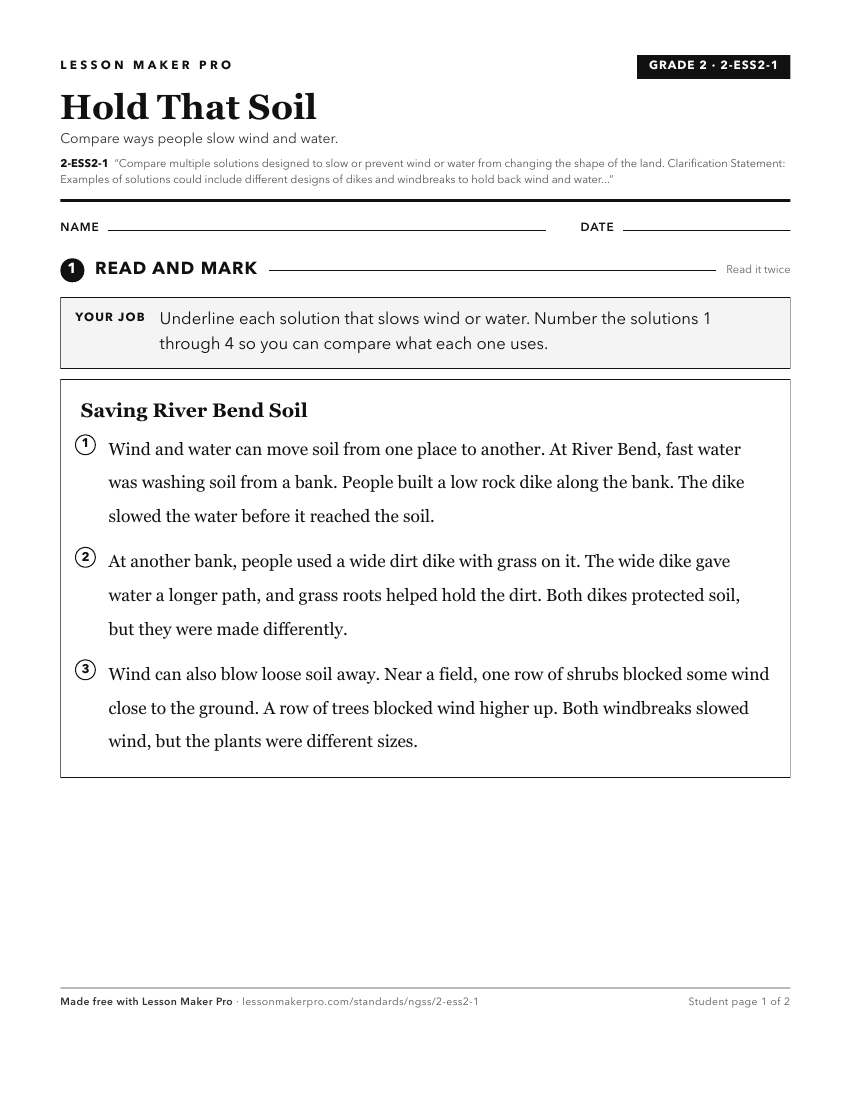
A ready-to-print activity worksheet aligned to 2-ESS2-1, with an answer key for the teacher on its own page. No account needed.
PDF, US Letter, prints cleanly in black and white.
Download the worksheetKeep exploring
Related Standards
- K-ESS3-3
Communicate solutions that will reduce the impact of humans on the land, water, air, and/or other living things in the local environment.
- 3-ESS3-1
Make a claim about the merit of a design solution that reduces the impacts of a weather-related hazard.
- MS-LS2-5
Evaluate competing design solutions for maintaining biodiversity and ecosystem services.
- 4-ESS3-2
Generate and compare multiple solutions to reduce the impacts of natural Earth processes on humans.
Turn this exact standard into a lesson
Grade, subject, topic, and the complete standard are prefilled. Create one free, no account needed.
Also for this standard:Make a WorksheetMake a QuizMake a Sub Lesson