NGSS 3-ESS3-1
The Standard
Make a claim about the merit of a design solution that reduces the impacts of a weather-related hazard.
Next Generation Science Standards
Teacher's field guide
What This Standard Means
What Students Need to Do
- Students evaluate a design meant to reduce damage from floods, strong winds, lightning, or another weather hazard. They make a claim about how well it works and support that claim with evidence.
What Mastery Looks Like
- Students identify a weather hazard and explain how a specific design reduces harm. They make a clear claim, support it with evidence, and name one strength or limitation of the design.
Common Misconceptions
- Students may think a design stops the weather event instead of reducing its damage. They may choose a solution because it looks strong, without using test results or facts as evidence.
How to Assess It
- Give students this prompt: “A town floods during heavy rain. Should it build a flood wall? State your claim and support it with two facts.”
Lesson moves
Ways to Teach It
Build clay flood barriers in trays, pour equal amounts of water, and compare how much water reaches model houses.
Write a claim answering: Which roof design best protects a house from strong winds, and what evidence supports your choice?
Sort hazard and solution cards, then earn a point by explaining how each matched solution reduces damage.
Inspect the school for gutters, lightning rods, drains, or roof features, then explain which weather hazard each feature addresses.
Free download
Printable 3-ESS3-1 Worksheet
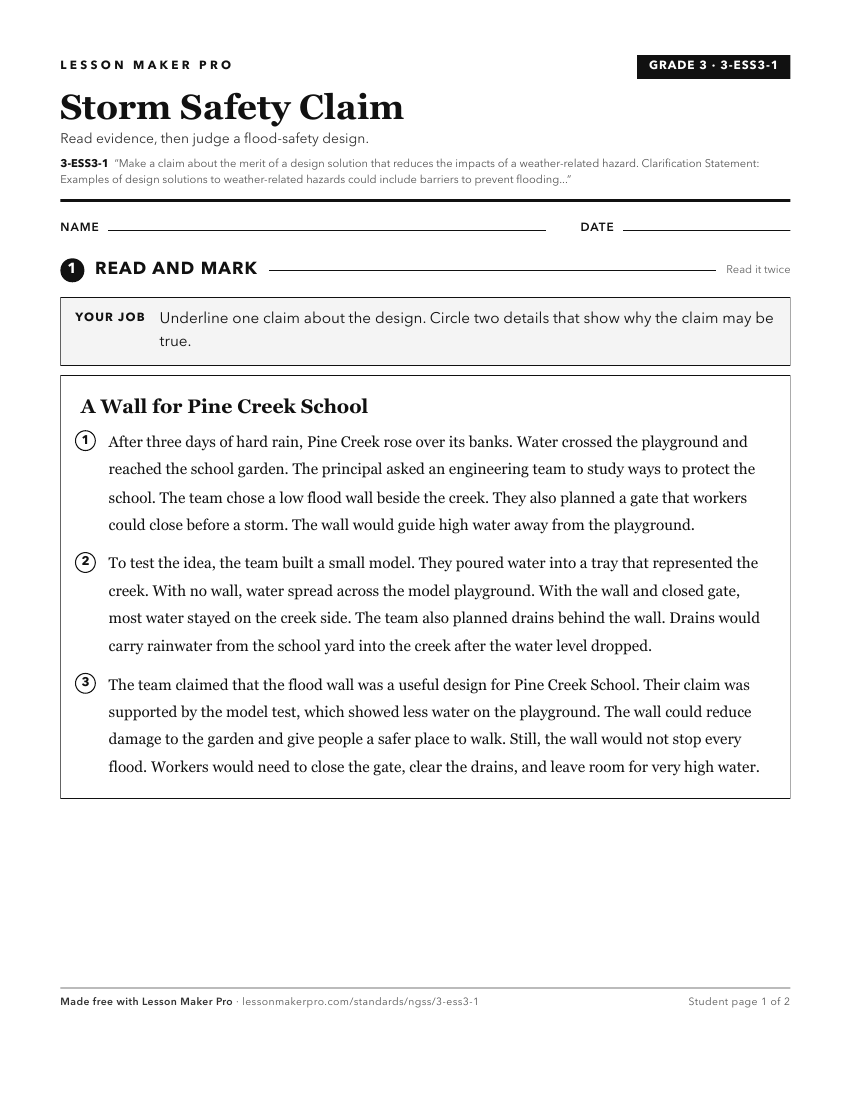
A ready-to-print activity worksheet aligned to 3-ESS3-1, with an answer key for the teacher on its own page. No account needed.
PDF, US Letter, prints cleanly in black and white.
Download the worksheetKeep exploring
Related Standards
- 3-LS4-4
Make a claim about the merit of a solution to a problem caused when the environment changes and the types of plants and animals that live there may change.
- K-PS3-2
Use tools and materials to design and build a structure that will reduce the warming effect of sunlight on an area.
- 2-ESS2-1
Compare multiple solutions designed to slow or prevent wind or water from changing the shape of the land.
- 4-ESS3-2
Generate and compare multiple solutions to reduce the impacts of natural Earth processes on humans.
Turn this exact standard into a lesson
Grade, subject, topic, and the complete standard are prefilled. Create one free, no account needed.
Also for this standard:Make a WorksheetMake a QuizMake a Sub Lesson