Indiana ELA 9-10.W.2.a
The Standard
- 9-10.W
- Students compose writing and presentations for various genres which demonstrate a command of English grammar and usage through the writing and research processes; compositions will include correct use of standard formatting (e.g., MLA, APA) with correctly cited sources.
- 9-10.W.2
- Write informative compositions on a variety of topics that: a. Introduce a topic and organize complex ideas, concepts, and information to make important connections and distinctions. b. Develop the topic utilizing credible sources with relevant, and sufficient facts, extended definitions, concrete details, quotations, or other information and examples appropriate to the audience’s knowledge of the topic. c. Use appropriate transitions to link the major sections of the text, create cohesion, and clarify the relationships among complex ideas and concepts. d. Choose language and content-specific vocabulary that express ideas precisely and concisely to manage the complexity of the topic, recognizing and eliminating wordiness and redundancy. e. Establish and maintain a style appropriate for the purpose and audience. f. Provide a concluding statement or section that follows and supports the information or explanation presented (e.g., articulating implications or the significance of the topic). (E)
Introduce a topic and organize complex ideas, concepts, and information to make important connections and distinctions.
Indiana Academic Standards for English/Language Arts (2023)
Teacher's field guide
What This Standard Means
What Students Need to Do
- Students write an opening that gives readers a clear focus. They group related details into sections and show how those sections connect or differ.
What Mastery Looks Like
- A reader can tell what the piece will explain from the first paragraph. Each section has a clear purpose, and the writing shows how one section relates to another.
Common Misconceptions
- Students may list facts in the order they found them instead of grouping them by idea. They may name a broad subject in the opening but leave readers guessing about the focus.
How to Assess It
- Give students these notes: later school start times may improve sleep and reduce tardiness, but may complicate bus routes and sports schedules. Ask for a two-sentence opening, two section headings, and one sentence explaining a link or contrast between the sections.
Lesson moves
Ways to Teach It
Give pairs fact cards about sleep, tardiness, buses, and sports; have them group the cards under two headings and explain one trade-off.
Ask students to write: Why might grouping facts by benefits and challenges work better than grouping them by students and adults?
Play heading match: teams sort fact cards about cafeteria waste under food choices or serving routines, then defend a card that fits both.
Have students draft a school newsletter explainer about a schedule change, with sections on student effects and family effects.
Free download
Printable 9-10.W.2.a Worksheet
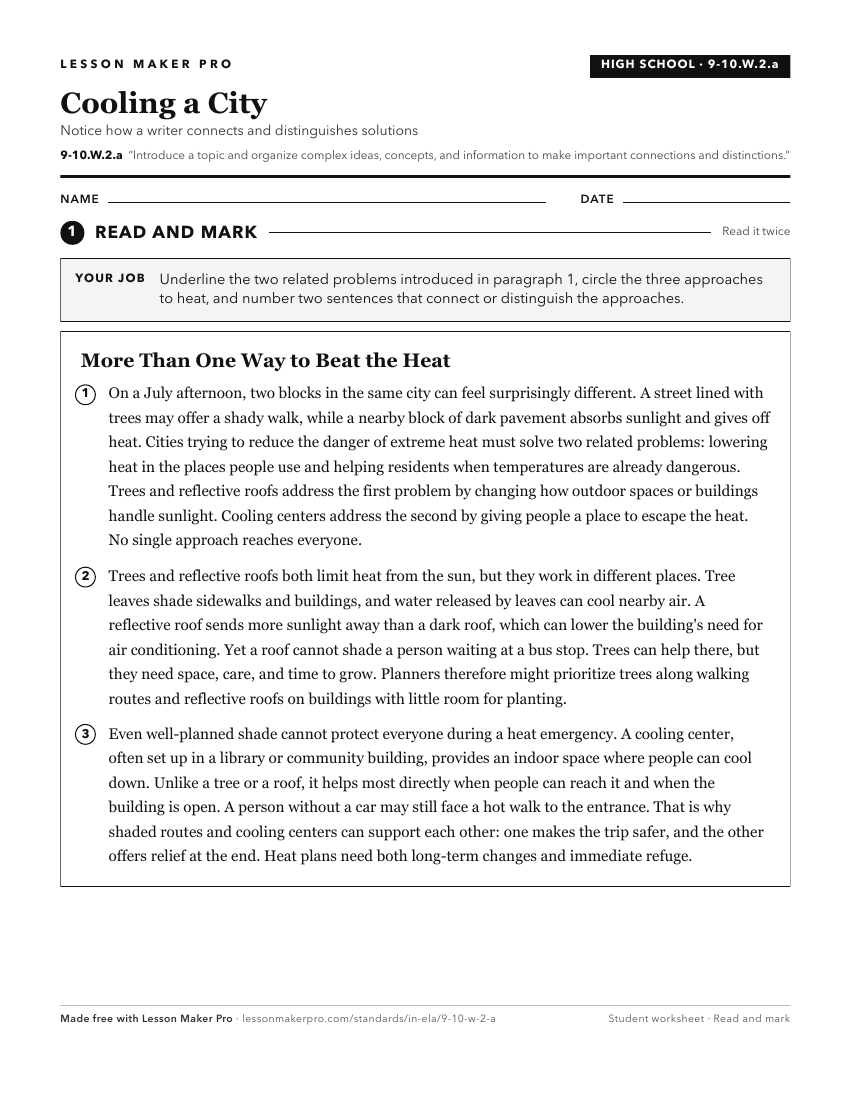
A ready-to-print activity worksheet aligned to 9-10.W.2.a, with an answer key for the teacher on its own page. No account needed.
PDF, US Letter, prints cleanly in black and white.
Download the worksheetKeep exploring
Related Standards
Turn this exact standard into a lesson
Grade, subject, topic, and the complete standard are prefilled. Create one free, no account needed.
Also for this standard:Make a WorksheetMake a QuizMake a Sub Lesson