Indiana ELA 11-12.W.1.e
The Standard
- 11-12.W
- Learning Outcome: Students compose writing and presentations for various genres which demonstrate a command of English grammar and usage through the writing and research processes; compositions will include correct use of standard formatting (e.g., MLA, APA) with sources correctly cited.
- 11-12.W.1
- Write arguments in a variety of forms that: a. Introduce precise claim(s), establish the significance of the claim(s), distinguish the claim(s) from alternate or opposing claims, and create an organization that logically sequences claim(s), counterclaims, reasons, and evidence. b. Use rhetorical strategies to enhance the effectiveness of the claim. c. Develop claim(s) and counterclaims fairly and thoroughly, supplying the most relevant evidence for each while pointing out the strengths and limitations of both in a manner that anticipates the audience’s knowledge level, concerns, values, and possible biases. d. Use effective and varied transitions as well as varied syntax to link the major sections of the text, create cohesion, and clarify the relationships between claim(s) and reasons, between reasons and evidence, and between claim(s) and counterclaims. e. Establish and maintain a consistent style and tone appropriate for the purpose and audience. f. Provide a concluding statement or section that follows and supports the argument presented. (E)
Establish and maintain a consistent style and tone appropriate for the purpose and audience.
Indiana Academic Standards for English/Language Arts (2023)
Teacher's field guide
What This Standard Means
What Students Need to Do
- Students choose words and sentences that fit the audience for their argument. They keep the same tone from the opening claim through the conclusion.
What Mastery Looks Like
- A student can write a firm, respectful letter to the school board. They can find and revise a sarcastic or overly casual line that breaks the letter's tone.
Common Misconceptions
- Students may think formal writing requires long words and complicated sentences. They may add jokes or insults to make an argument sound stronger, even when those choices could turn off the reader.
How to Assess It
- Exit ticket: Write a three-sentence argument to the school board for later library hours. Circle one phrase that fits the audience and explain why.
Lesson moves
Ways to Teach It
Give pairs a printed school board letter and sticky notes; have them cover three slang phrases with respectful, firm replacements.
Ask students how their argument for later library hours would change if they wrote to classmates instead of the school board.
Play tone detective: Show four lines from one argument, then have teams find and rewrite the line that sounds sarcastic.
Have students draft an email to the principal requesting a lunch schedule change, then check whether each sentence fits that reader.
Free download
Printable 11-12.W.1.e Worksheet
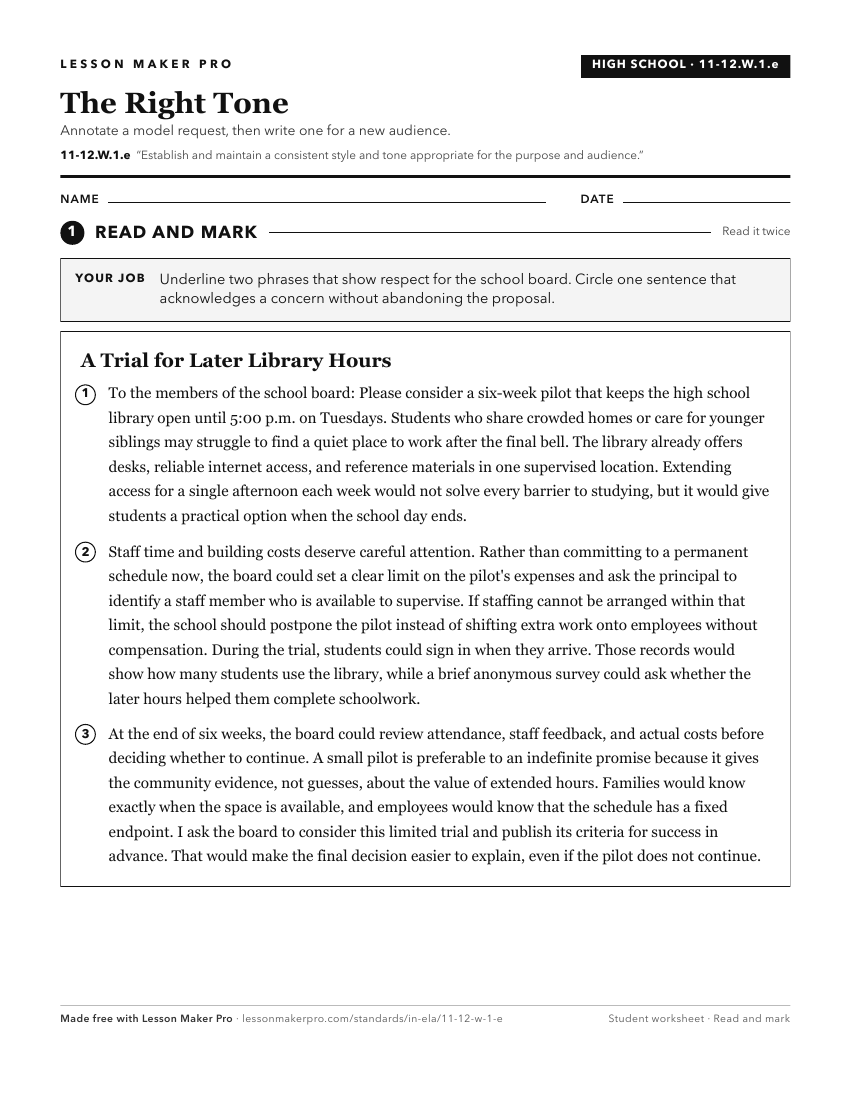
A ready-to-print activity worksheet aligned to 11-12.W.1.e, with an answer key for the teacher on its own page. No account needed.
PDF, US Letter, prints cleanly in black and white.
Download the worksheetKeep exploring
Related Standards
- 9-10.W.1.e
The Grades 9–10 version of this standard.
- 7.W.1.c
Establish and maintain a consistent style and tone appropriate for the purpose and audience.
- 8.W.1.d
Establish and maintain a consistent style and tone appropriate for the purpose and audience.
- 6.W.1.d
Establish and maintain a consistent style and tone appropriate to the purpose and audience.
Turn this exact standard into a lesson
Grade, subject, topic, and the complete standard are prefilled. Create one free, no account needed.
Also for this standard:Make a WorksheetMake a QuizMake a Sub Lesson