Indiana ELA 11-12.RC.3
The Standard
- 11-12.RC
- Students analyze the author's technique, purpose, and perspective in grade-level fiction and nonfiction text, using textual evidence to support analysis.
Analyze and evaluate how an author’s choices concerning how to structure specific parts of a work of literature (e.g., the choice of where to begin or end a story, the choice to provide a comedic or tragic resolution) contribute to its overall meaning and effect of a work.
Indiana Academic Standards for English/Language Arts (2023)
Teacher's field guide
What This Standard Means
What Students Need to Do
- Students explain how the placement of an opening, ending, or turning point shapes a story’s meaning and effect on readers. They use details from the text to judge whether that choice works.
What Mastery Looks Like
- A student can explain how the first line about heart trouble in “The Story of an Hour” sets up its final line. They can argue why moving that detail would weaken or strengthen the ending.
Common Misconceptions
- Students often retell what happens without explaining why it happens at that point in the story. They may call an ending surprising without noticing the earlier details that prepare it.
How to Assess It
- Exit ticket: Would “The Story of an Hour” work as well if the heart trouble were first mentioned at the end? Use one detail from the story to defend your answer.
Lesson moves
Ways to Teach It
Give pairs the opening and final lines of “The Story of an Hour” on strips; have them swap positions and note what changes.
Ask students: Why does Chopin mention Mrs. Mallard’s heart before readers know what happens to her?
Read the story’s ending with and without its final sentence; have students vote on which works better and cite a clue.
Play the first and last 15 seconds of a movie trailer; students explain how reversing the clips would change viewers’ expectations.
Free download
Printable 11-12.RC.3 Worksheet
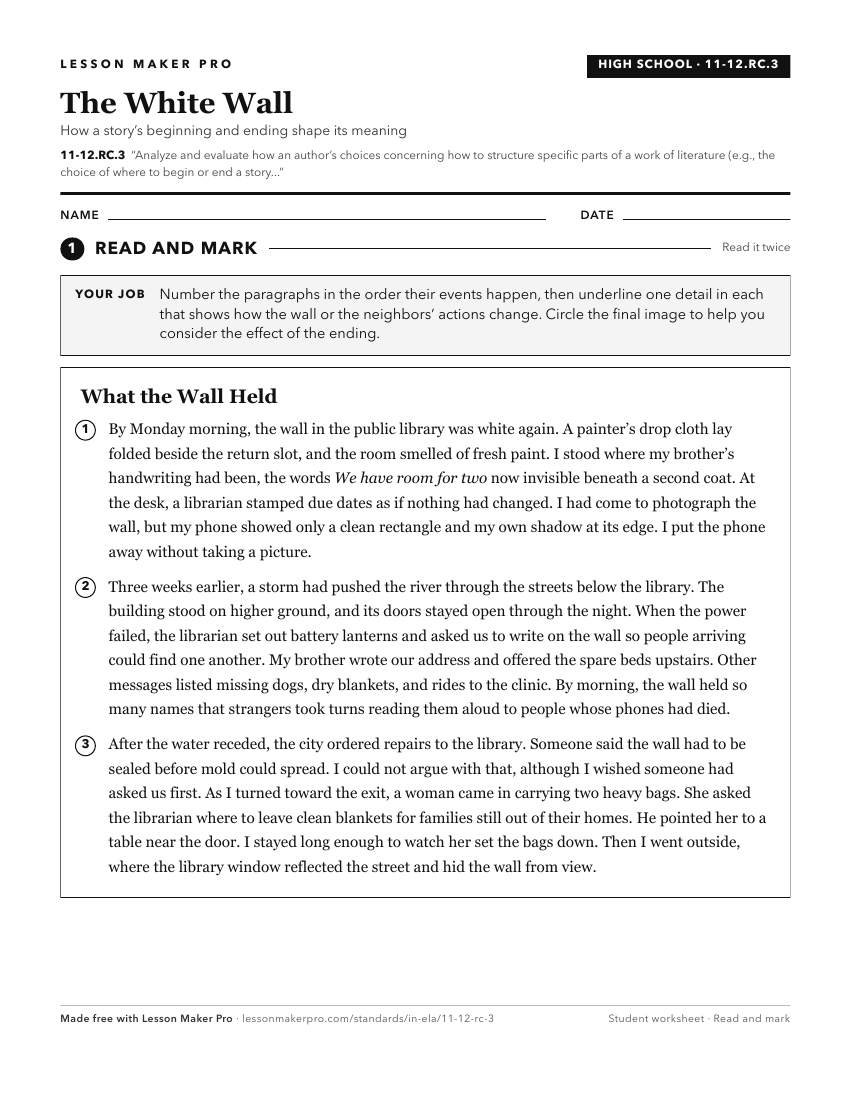
A ready-to-print activity worksheet aligned to 11-12.RC.3, with an answer key for the teacher on its own page. No account needed.
PDF, US Letter, prints cleanly in black and white.
Download the worksheetKeep exploring
Related Standards
- 9-10.RC.3
Analyze and evaluate how an author's choices concerning how to structure a work of literature, order events within it (e.g., parallel episodes), and manipulate ...
- 6.RC.3
Analyze how a particular sentence, chapter, scene, or stanza fits into the overall structure of a work of literature and contributes to the development of the t...
- 7.RC.3
Analyze how a work of literature's structural elements such as subplots, parallel episodes, climax, and conflicts contribute to its meaning and plot. (E)
- 8.RC.3
Compare and contrast the structure of two or more related works of literature (e.g., similar topic or theme), and analyze and evaluate how the differing structu...
Turn this exact standard into a lesson
Grade, subject, topic, and the complete standard are prefilled. Create one free, no account needed.
Also for this standard:Make a WorksheetMake a QuizMake a Sub Lesson