Georgia 6.T.SS.2.b
The Standard
Use figurative language or literary devices for intentional effects when creating texts to achieve specific purposes or appeal to the target audience. (C)
Georgia's K-12 English Language Arts Standards · Texts (T) · Structure & Style
Teacher's field guide
What This Standard Means
What Students Need to Do
- Students use figurative language and literary devices to shape a reader’s response. They choose techniques that match the text’s purpose and intended audience, rather than adding them randomly.
What Mastery Looks Like
- Students choose devices that fit the purpose, such as imagery for mood, repetition for emphasis, or personification for humor. They can explain how a specific phrase affects readers and revise it when the effect is unclear.
Common Misconceptions
- Students may add similes or metaphors only to make writing sound fancy, without considering the intended effect. They may mix comparisons, use clichés, or choose devices that do not fit the audience or purpose.
How to Assess It
- Use this exit ticket: “Rewrite ‘The hallway was crowded’ for a suspense story using one literary device. Name the device and explain its effect.”
Lesson moves
Ways to Teach It
Give pairs a plain four-sentence scene and device cards, then have them draw two cards and revise the scene to create suspense.
Compare two descriptions of a storm, then ask students which better suits young children and what words create that effect.
Play an effect-matching game where students pair figurative sentences with purpose cards labeled humor, suspense, emphasis, or sadness.
Rewrite a school event announcement for students and parents, using one literary device chosen to appeal to each audience.
Free download
Printable 6.T.SS.2.b Worksheet
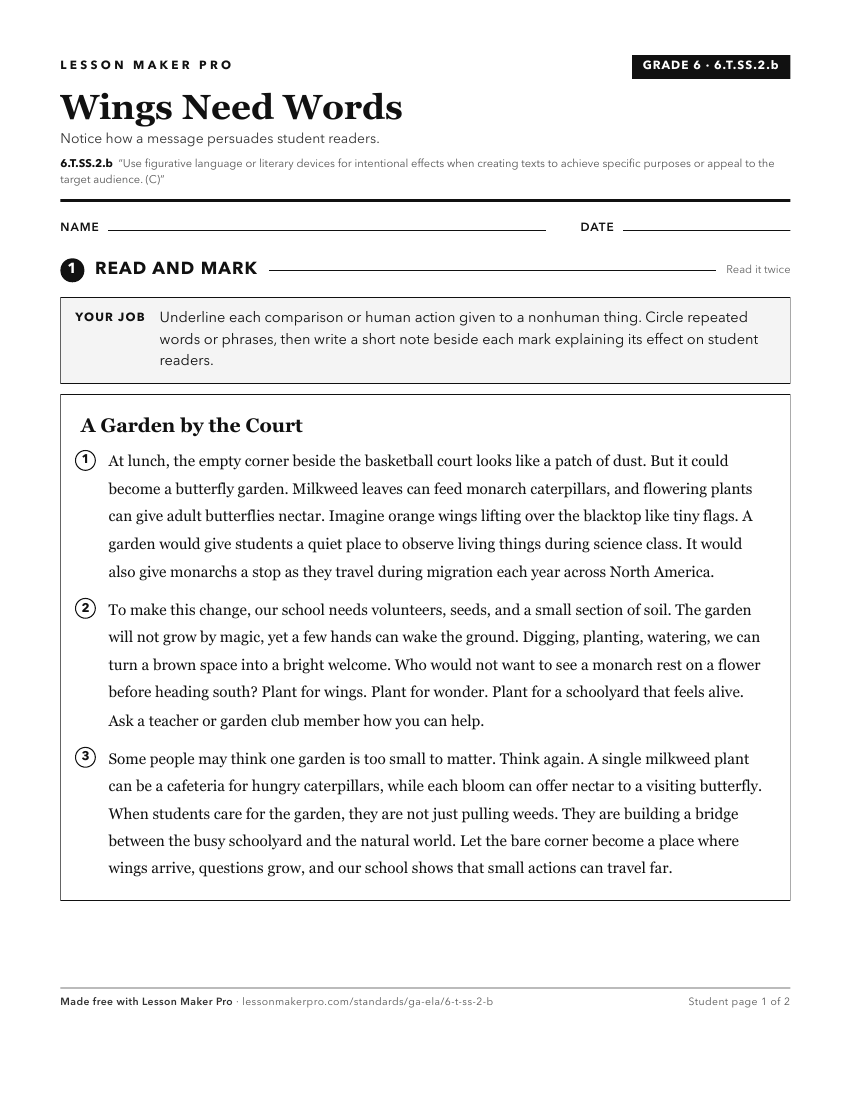
A ready-to-print activity worksheet aligned to 6.T.SS.2.b, with an answer key for the teacher on its own page. No account needed.
PDF, US Letter, prints cleanly in black and white.
Download the worksheetKeep exploring
Related Standards
- 9.T.SS.2.b
Use literary devices, figurative language, rhetorical language, and/or rhetorical appeals to create a variety of effects, as appropriate to intended purpose and...
- 8.T.SS.2.b
Use figurative language, literary devices, or connotative language for intentional effects when creating texts to achieve specific purposes or appeal to the tar...
- 7.T.SS.2.b
Use figurative language, literary devices, or connotative language for intentional effects when creating texts to achieve specific purposes or appeal to the tar...
- 12.T.SS.2.b
Use literary devices, figurative language, rhetorical language, and/or rhetorical appeals to create a variety of effects, as appropriate to intended purpose and...
Turn this exact standard into a lesson
Grade, subject, topic, and the complete standard are prefilled. Create one free, no account needed.
Also for this standard:Make a WorksheetMake a QuizMake a Sub Lesson