Georgia 5.T.RA.2.b
The Standard
Determine credibility and relevance by assessing the strengths and weaknesses of source texts to support a topic or message. (I)
Georgia's K-12 English Language Arts Standards · Texts (T) · Research & Analysis
Teacher's field guide
What This Standard Means
What Students Need to Do
- Students compare sources and decide which ones are trustworthy and useful for a research question. They identify specific strengths and weaknesses that affect whether a source supports their work.
What Mastery Looks Like
- Students can explain why a source is trustworthy, useful, both, or neither. They support their judgment with details such as the author, date, evidence, purpose, and connection to the research question.
Common Misconceptions
- Students may trust a source because it looks professional, appears first in search results, or agrees with them. They may confuse relevance with reliability. They may also overlook missing authors, old dates, weak evidence, or biased wording.
How to Assess It
- Give students two short source printouts about the same topic. Ask them to choose the better source and justify the choice with two details from the printouts.
Lesson moves
Ways to Teach It
Give groups printed source cards to highlight the author, date, evidence, and purpose, then sort them into trustworthy, questionable, or unusable piles.
Ask students to write: Which source would you use for a report, and what specific strengths make it a better choice?
Play Source Showdown: pairs compare two source cards, choose the better one, and earn a point after citing two specific clues.
Have students evaluate two websites advertising the same product, then decide which claims they would trust before spending their own money.
Free download
Printable 5.T.RA.2.b Worksheet
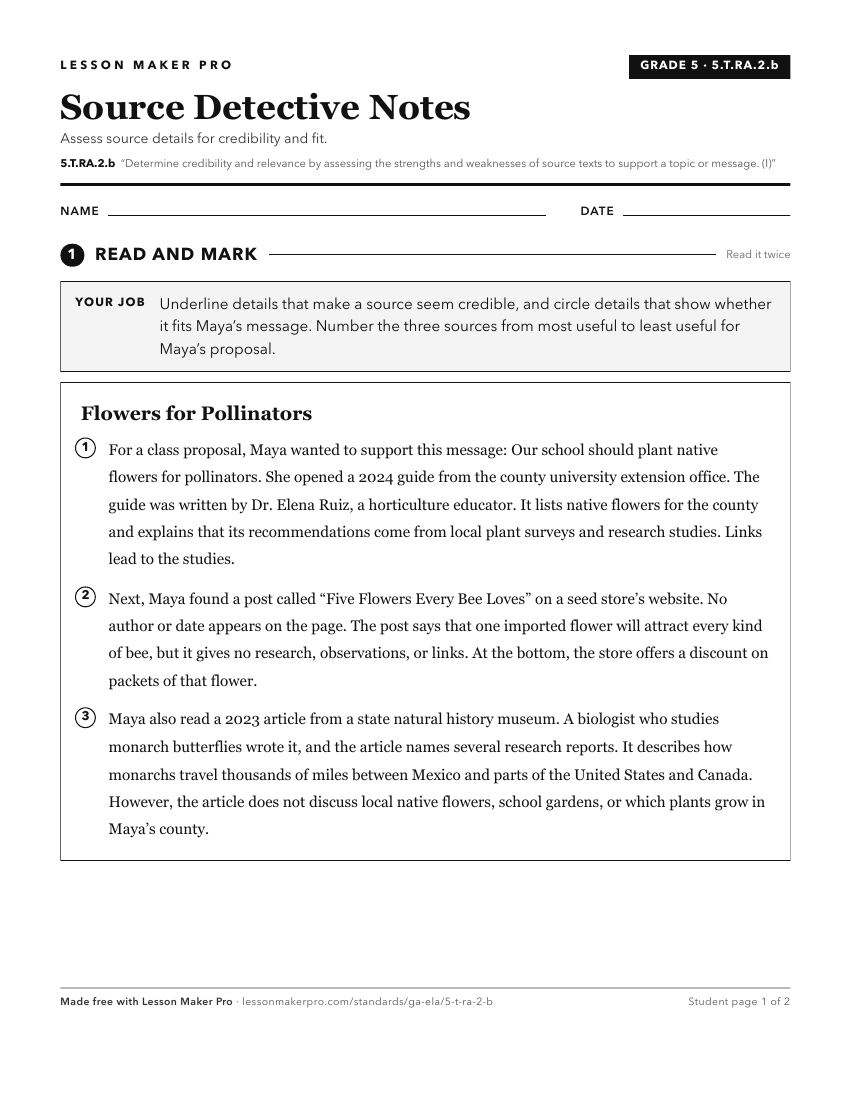
A ready-to-print activity worksheet aligned to 5.T.RA.2.b, with an answer key for the teacher on its own page. No account needed.
PDF, US Letter, prints cleanly in black and white.
Download the worksheetKeep exploring
Related Standards
- 3.T.RA.2.b
Determine what makes a source text credible and relevant and identify examples. (I)
- 7.T.RA.2.b
Analyze print and digital texts for credibility and relevance, determining whether the ideas and information support the topic under investigation. (I)
- 4.T.RA.2.b
Determine the credibility and relevance of a source text based on known information about the author and/or organization. (I)
- 6.T.RA.2.b
Analyze print and digital texts to identify features of credible, relevant sources and to determine indicators that might signal unreliable sources. (I)
Turn this exact standard into a lesson
Grade, subject, topic, and the complete standard are prefilled. Create one free, no account needed.
Also for this standard:Make a WorksheetMake a QuizMake a Sub Lesson