Georgia 4.P.EICC.2.d
The Standard
Interpret and construct texts to aid the analysis and evaluation of texts and ideas. (I/C)
Georgia's K-12 English Language Arts Standards · Practices (P) · Engagement & Intention for Comprehension & Composition
Teacher's field guide
What This Standard Means
What Students Need to Do
- Students read, view, or listen to a source, then make notes, charts, sketches, or summaries that organize its ideas. They use details from the source to compare ideas and judge how well each idea is supported.
What Mastery Looks Like
- A student can create a useful annotation, chart, or summary that identifies key ideas and supporting details. The student can compare claims, explain evidence, and give a reasoned judgment about a text.
Common Misconceptions
- Students may copy details without explaining what those details show. They may judge an idea using personal opinion instead of evidence, or treat every source as equally reliable.
How to Assess It
- Give students a short paragraph and ask: “What is the author’s main idea, and which detail best helps you judge whether it is convincing?”
Lesson moves
Ways to Teach It
Give pairs claim and evidence cards from a short article, then have them sort matches and explain each choice.
Ask students to write: “Which idea is best supported, and what evidence makes it stronger than the others?”
Play Evidence Detective by awarding points when teams find a detail and explain how it supports or weakens a claim.
Compare two school event flyers and decide which is more trustworthy based on dates, sources, details, and missing information.
Free download
Printable 4.P.EICC.2.d Worksheet
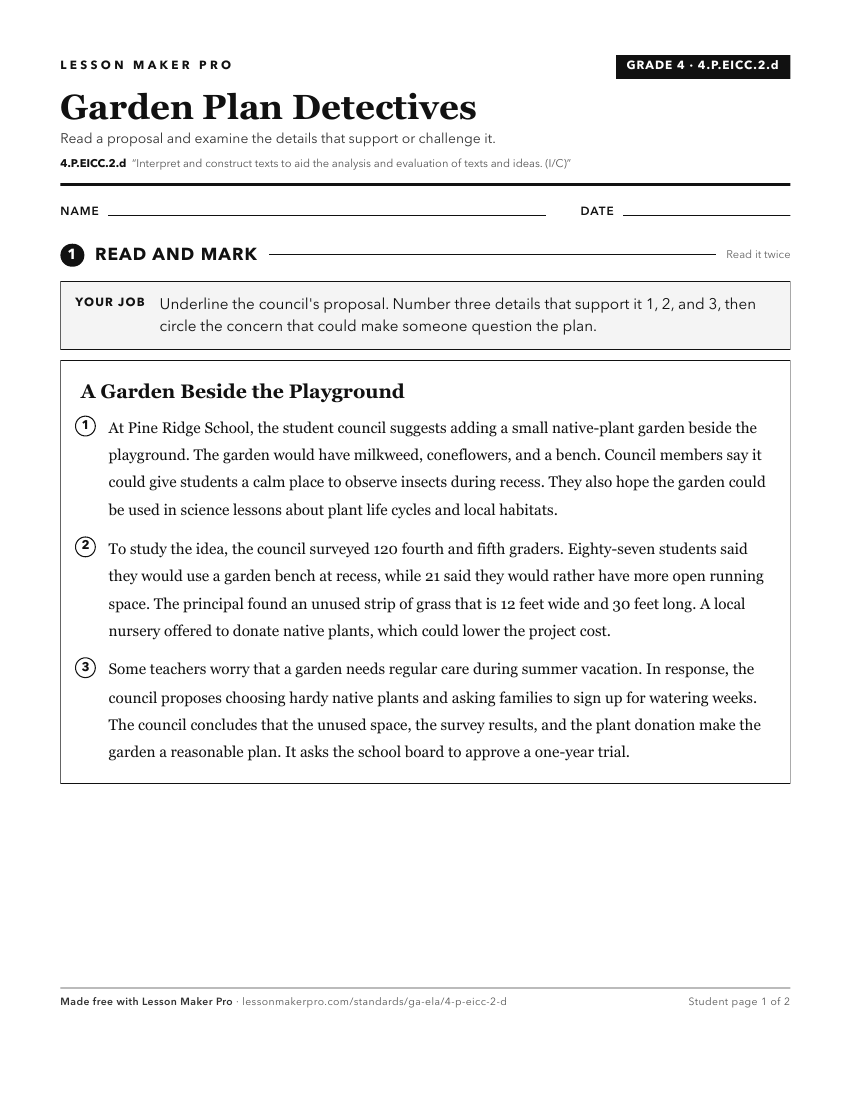
A ready-to-print activity worksheet aligned to 4.P.EICC.2.d, with an answer key for the teacher on its own page. No account needed.
PDF, US Letter, prints cleanly in black and white.
Download the worksheetKeep exploring
Related Standards
Turn this exact standard into a lesson
Grade, subject, topic, and the complete standard are prefilled. Create one free, no account needed.
Also for this standard:Make a WorksheetMake a QuizMake a Sub Lesson