Georgia 2.T.T.4.b
The Standard
Use poetic techniques to create poems using words and/or phrases that may or may not rhyme. (C)
Georgia's K-12 English Language Arts Standards · Texts (T) · Techniques
Teacher's field guide
What This Standard Means
What Students Need to Do
- Students write short poems using carefully chosen words, phrases, and line breaks. They use sound, repetition, rhythm, imagery, or rhyme to make an idea or feeling clear.
What Mastery Looks Like
- A student can create a focused poem with clear word choices and purposeful line breaks. The student uses a technique such as repetition, rhythm, sound words, or rhyme to strengthen an image or feeling.
Common Misconceptions
- Students may think every poem must rhyme or that any rhyming words will make a strong poem. They may break prose into lines without choosing sound, repetition, or descriptive words that support the meaning.
How to Assess It
- Exit ticket: Write a four-line poem about rain using repetition, a sound word, or rhyme. Underline the technique and explain what it adds.
Lesson moves
Ways to Teach It
Give pairs word cards about weather, then have them arrange the cards into a poem with repetition, rhyme, or sound words.
Read two short poems and ask, "Which words help you hear or picture the subject, and why?"
Play a technique hunt where students mark examples of rhyme, repetition, alliteration, and sound words in printed poems.
Examine a playground chant or advertising jingle, then rewrite it as a short poem that keeps one memorable sound pattern.
Free download
Printable 2.T.T.4.b Worksheet
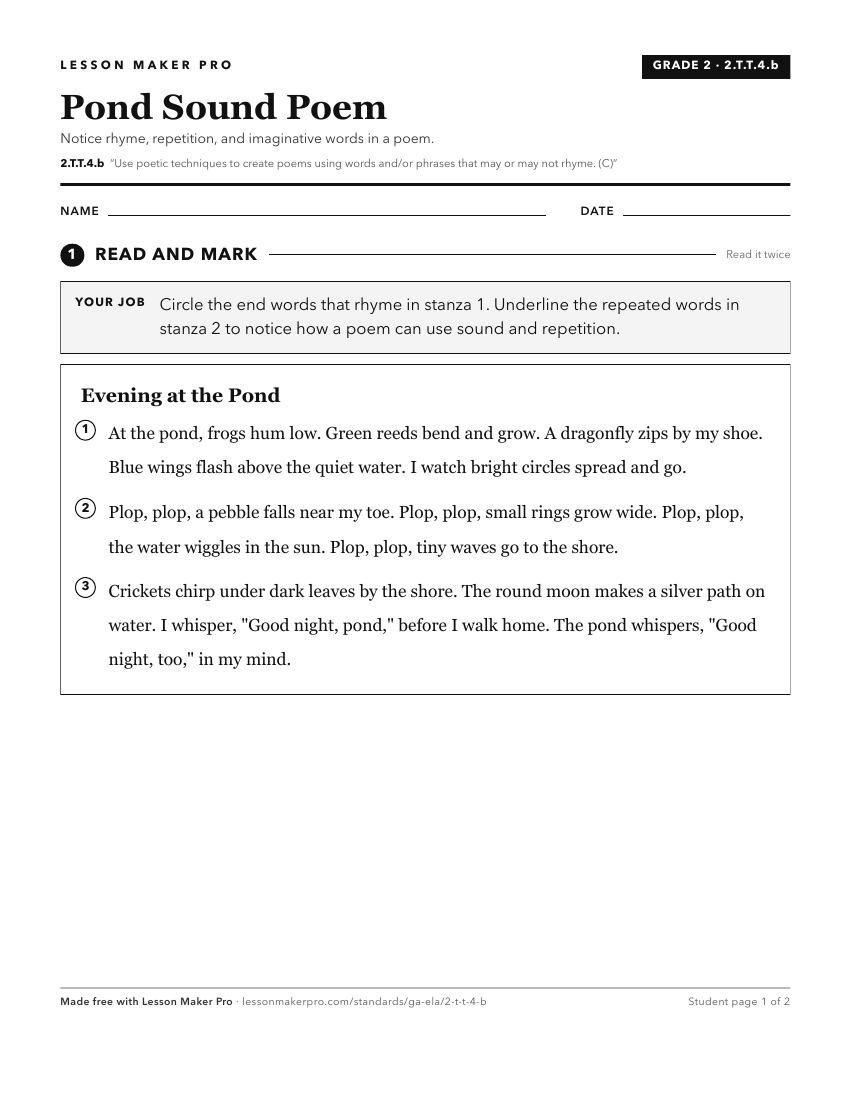
A ready-to-print activity worksheet aligned to 2.T.T.4.b, with an answer key for the teacher on its own page. No account needed.
PDF, US Letter, prints cleanly in black and white.
Download the worksheetKeep exploring
Related Standards
- 1.T.T.4.b
Use poetic techniques to create poems using simple words and/or phrases that may or may not rhyme. (C)
- 5.T.T.4.b
Apply poetic techniques (e.g., rhyme, rhyme scheme, structure) to produce different types of poetry (e.g., free verse, rhymed verse, haiku, limerick). (C)
- 4.T.T.4.b
Apply poetic techniques to produce poetry and engage audiences that use a predetermined rhyme scheme to achieve an intended effect. (C)
- K.T.T.4.b
With adult support, use poetic techniques to create poems that may or may not rhyme. (C)
Turn this exact standard into a lesson
Grade, subject, topic, and the complete standard are prefilled. Create one free, no account needed.
Also for this standard:Make a WorksheetMake a QuizMake a Sub Lesson