Florida B.E.S.T. ELA.6.R.1.1
The Standard
Analyze how the interaction between characters contributes to the development of a plot in a literary text.
Florida B.E.S.T. Standards for English Language Arts
Teacher's field guide
What This Standard Means
What Students Need to Do
- Students track what characters say, do, and decide when they interact. They explain how those moments cause later events, conflicts, or turning points in the plot.
What Mastery Looks Like
- Students identify a key interaction and connect it to a later conflict, decision, or outcome. They support the connection with accurate details from the text.
Common Misconceptions
- Students may summarize an interaction without explaining its effect on later events. They may also focus on one character’s traits or confuse the plot effect with the theme.
How to Assess It
- Give students a short scene and ask: “Which character interaction changes what happens next? Cite one detail and explain the change.”
Lesson moves
Ways to Teach It
Give pairs event cards from a story to arrange into a cause-and-effect chain linking one character interaction to later plot events.
Ask students to write: “How would the plot change if one character responded differently during the key conflict?”
Play Plot Dominoes, where students match character interaction cards to the plot events those interactions cause.
Use a team disagreement scenario and have students map how each response could lead to a different outcome.],
Free download
Printable ELA.6.R.1.1 Worksheet
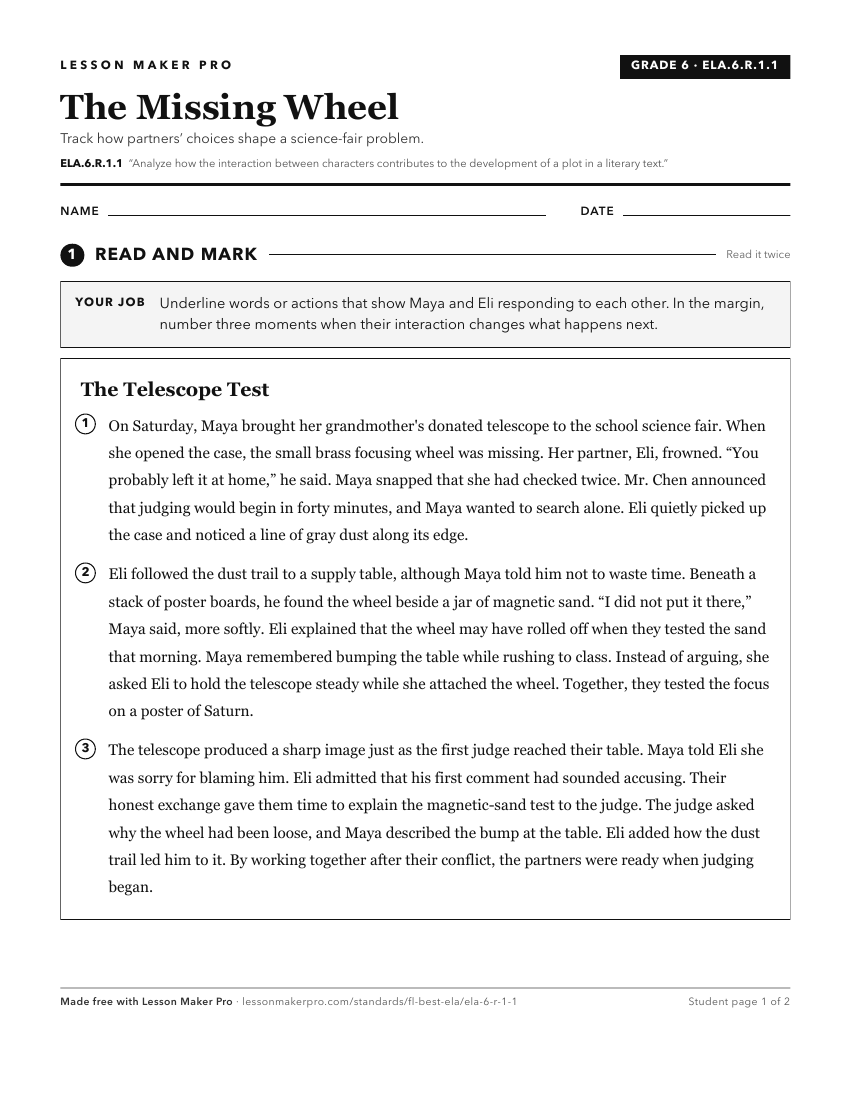
A ready-to-print activity worksheet aligned to ELA.6.R.1.1, with an answer key for the teacher on its own page. No account needed.
PDF, US Letter, prints cleanly in black and white.
Download the worksheetKeep exploring
Related Standards
- ELA.7.R.1.1
Analyze the impact of setting on character development and plot in a literary text.
- ELA.4.R.1.1
Explain how setting, events, conflict, and character development contribute to the plot in a literary text.
- ELA.8.R.1.1
Analyze the interaction between character development, setting, and plot in a literary text.
- ELA.5.R.1.1
Analyze how setting, events, conflict, and characterization contribute to the plot in a literary text.
Turn this exact standard into a lesson
Grade, subject, topic, and the complete standard are prefilled. Create one free, no account needed.
Also for this standard:Make a WorksheetMake a QuizMake a Sub Lesson