Alabama Science K.3
The Standard
Use data from observations to distinguish characteristics of living and nonliving things.
2023 Alabama Course of Study: Science · Ecosystems: Interactions, Energy, and Dynamics
Teacher's field guide
What This Standard Means
What Students Need to Do
- Students observe plants, animals, and objects, then record what they notice with pictures or words. They use those observations to tell which things are living and which are not.
What Mastery Looks Like
- A student points to new growth in two photos of a plant and explains that the plant is living. They identify a rolling toy car as nonliving, even though it moves.
Common Misconceptions
- Students may think anything that moves is living, so they call a toy car living. They may think plants are nonliving because plants do not walk.
How to Assess It
- Show two dated pictures of a sprout growing taller beside an unchanged rock. Ask, "Which is living? Point to the change that helped you decide."
Lesson moves
Ways to Teach It
Set a seedling, rock, and toy car on a tray; children inspect them with hand lenses and draw what they notice.
Show photos of a seedling on Monday and Friday; ask, "What changed, and what does that tell you?"
Give pairs picture cards of a puppy, rolling ball, plant, and rock; have them sort the cards and explain each choice.
Walk the schoolyard with clipboards; children sketch a tree with new buds and a fence, then explain which can grow.
Free download
Printable K.3 Worksheet
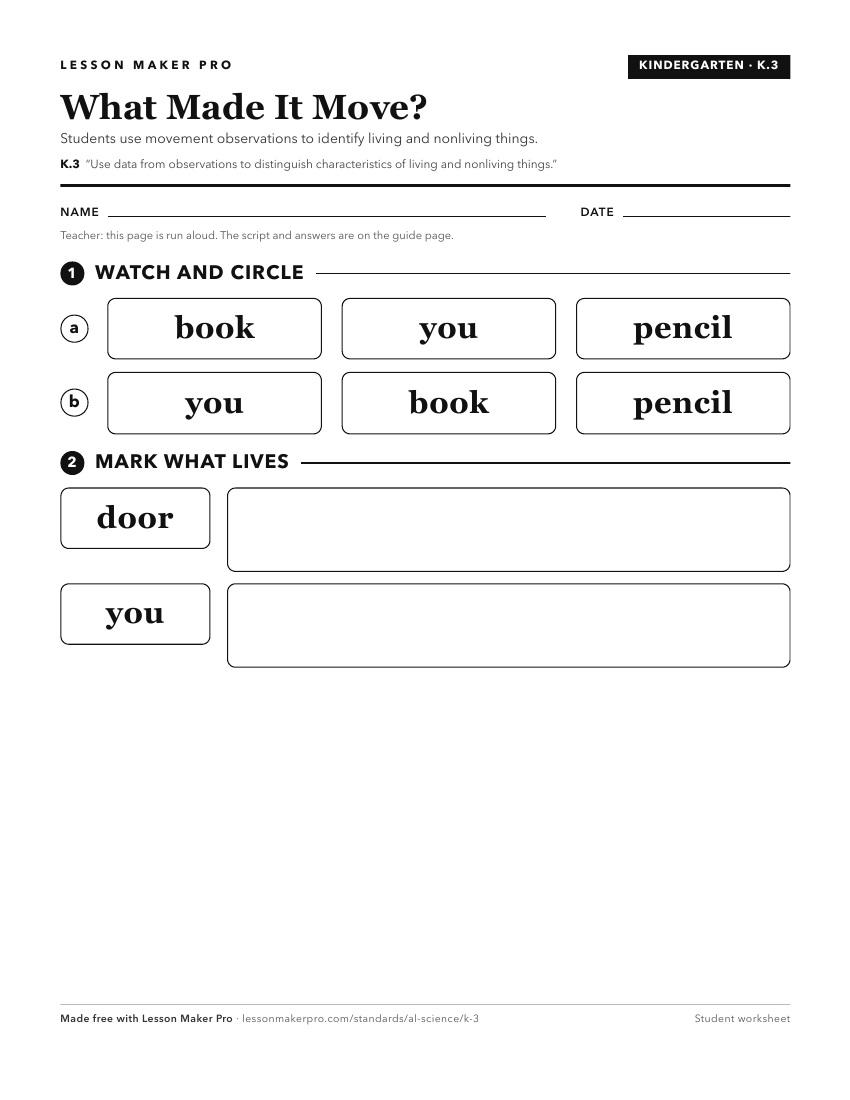
A ready-to-print activity worksheet aligned to K.3, with an answer key for the teacher on its own page. No account needed.
PDF, US Letter, prints cleanly in black and white.
Download the worksheetKeep exploring
Related Standards
- 3.6
Use data to provide evidence that plants and animals have observable traits inherited from parents and that variations of these traits exist in groups of simila...
- 1.5
Use information from observations to explain how various external features help living things survive, grow, and meet their needs.
- K.4
Use observations to determine patterns of what plants and animals (including humans) need to survive, including light, water, and nutrients.
- 2.7
Obtain information to explain that there are many different kinds of living things that exist in habitats on land and in water.
Turn this exact standard into a lesson
Grade, subject, topic, and the complete standard are prefilled. Create one free, no account needed.
Also for this standard:Make a WorksheetMake a QuizMake a Sub Lesson