Alabama ELA K.LF.25
The Standard
With prompting and support, identify the topic of texts, using titles, headings, illustrations, and text clues.
2021 Alabama Course of Study: English Language Arts · Literacy Foundations K-3
Teacher's field guide
What This Standard Means
What Students Need to Do
- With a teacher's help, children tell what a short text is about. They use the title, headings, pictures, and words as clues.
What Mastery Looks Like
- A child names the topic in a few words, such as frogs or rain. When asked how they know, they point to a clue on the page.
Common Misconceptions
- Some children name a small picture detail, like a boot, when the page is about rain. Others tell what happens in one sentence instead of naming the topic.
How to Assess It
- Show a page titled "Pond Frogs" with a frog picture and the sentence "Frogs hop by the pond." Ask, "What is this page about? Point to clues that helped you."
Lesson moves
Ways to Teach It
Give children title, picture, and sentence cards about frogs and birds; have them sort the cards into two topic piles.
Read a page titled "Rainy Days" and ask, "What is it about? Which picture or word helped you?"
Play topic detective: read short pages aloud, then have pairs point to a heading or picture and name each topic.
Show a cafeteria menu with food pictures and ask children what the page is about and which clues helped.
Free download
Printable K.LF.25 Worksheet
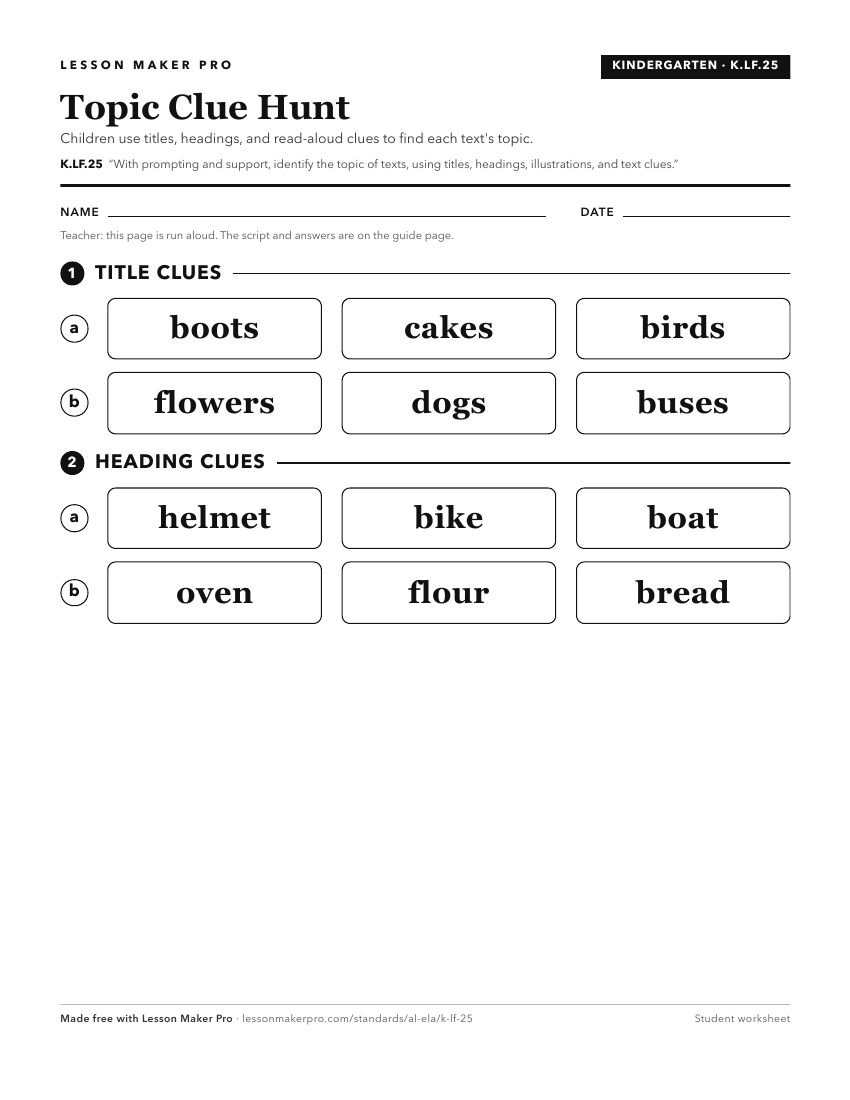
A ready-to-print activity worksheet aligned to K.LF.25, with an answer key for the teacher on its own page. No account needed.
PDF, US Letter, prints cleanly in black and white.
Download the worksheetKeep exploring
Related Standards
- K.LF.29
With prompting and support, identify the main topic and key details in an informational text.
- K.LF.28
With prompting and support, use text clues to determine main ideas and make predictions about an ending in a literary text.
- K.LF.30
With prompting and support, ask and answer questions about key details in literary and informational texts.
- K.LF.24
With prompting and support, identify common types of texts and their features, including literary, informational, fairy tale, and poetry.
Turn this exact standard into a lesson
Grade, subject, topic, and the complete standard are prefilled. Create one free, no account needed.
Also for this standard:Make a WorksheetMake a QuizMake a Sub Lesson