Alabama ELA 7.DL.13
The Standard
Interpret language through active listening to determine subject, occasion, audience, purpose, tone, and credibility of digital sources.
2021 Alabama Course of Study: English Language Arts
Teacher's field guide
What This Standard Means
What Students Need to Do
- Students listen to online audio or video and identify the topic, what prompted the message, and who it is meant for. They use spoken details and voice cues to work out the speaker’s goal and tone, then look for support for its claims.
What Mastery Looks Like
- A student names the topic, recent event, and likely listeners, using words from the clip as evidence. They explain the speaker’s goal and tone, then check the speaker’s identity and evidence before trusting a claim.
Common Misconceptions
- Students may treat the posting date as the reason the message was made. They may mistake a confident voice or polished video for proof. Some name a tone as “good” or “bad” without pointing to a spoken clue.
How to Assess It
- Record a worried voice memo: “After yesterday’s water main break, my friend says the cafeteria will close Monday, so pack lunch.” Ask students to name the topic, trigger, listeners, goal, tone clue, and a source that could verify the claim.
Lesson moves
Ways to Teach It
Play two recorded cafeteria updates, one naming a district notice and one citing a friend; pairs sort transcript strips into checkable and uncheckable claims.
Play a recorded storm warning and ask, “What happened, who needs this message, and which spoken words show the speaker’s goal?”
Play three 15-second teacher-recorded clips; teams match each clip to a goal card and defend the match with one phrase.
Play a grocery store’s online sale video; students compare its upbeat pitch with the posted price and return policy before recommending the deal.
Free download
Printable 7.DL.13 Worksheet
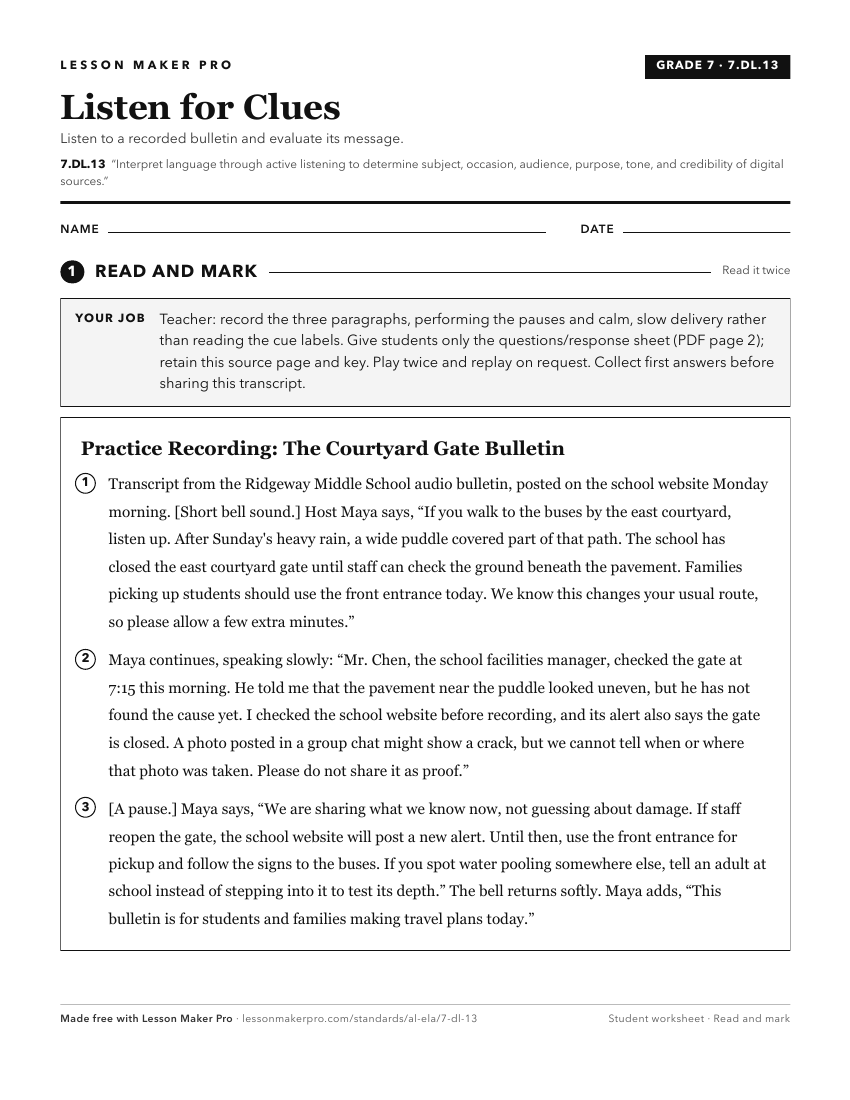
A ready-to-print activity worksheet aligned to 7.DL.13, with an answer key for the teacher on its own page. No account needed.
PDF, US Letter, prints cleanly in black and white.
Download the worksheetKeep exploring
Related Standards
- 8.DL.12
Interpret and evaluate language through active listening to determine subject, occasion, audience, purpose, tone, and credibility of digital sources.
- 6.DL.12
Interpret language to determine subject, occasion, audience, purpose, and credibility of digital sources, with guidance and support.
- 10.DL.12
Interpret digital texts to determine subject, occasion, audience, purpose, tone, and credibility.
- 9.DL.12
Interpret digital texts to determine their subject, occasion, audience, purpose, tone, and credibility.
Turn this exact standard into a lesson
Grade, subject, topic, and the complete standard are prefilled. Create one free, no account needed.
Also for this standard:Make a WorksheetMake a QuizMake a Sub Lesson