Alabama ELA 6.CL.7
Standard Cluster
Produce clear, coherent narrative, argument, and informative/explanatory writing in which the development, organization, style, and tone are relevant to task, purpose, and audience, using an appropriate command of language. a. Write narratives incorporating key literary elements, including characters, plot, setting, point of view, resolution of a conflict, dialogue, and sensory details. b. Write informative or explanatory texts with an organized structure and a formal style, incorporating a focused point of view, a clear purpose, credible evidence, and technical word meanings. c. Write an argument to convince the reader to take an action or adopt a position, stating a claim and supporting the claim with relevant, well-organized evidence from credible sources.
2021 Alabama Course of Study: English Language Arts
Cluster contents
Standards in This Cluster
6.CL.7 is a cluster heading. These are the individual standards under it.
- 6.CL.7.a
Write narratives incorporating key literary elements, including characters, plot, setting, point of view, resolution of a conflict, dialogue, and sensory detail...
- 6.CL.7.b
Write informative or explanatory texts with an organized structure and a formal style, incorporating a focused point of view, a clear purpose, credible evidence...
- 6.CL.7.c
Write an argument to convince the reader to take an action or adopt a position, stating a claim and supporting the claim with relevant, well-organized evidence ...
Teacher's field guide
What This Cluster Means
What Students Need to Do
- Students write stories, explanations, and arguments for different readers and purposes. They organize each piece so the ideas connect. They choose details, words, and tone that fit the task.
What Mastery Looks Like
- Their story has a clear conflict, a consistent narrator, dialogue, and an ending that settles the problem. Their explanation defines subject terms and uses facts from a named source. Their argument states a claim, uses relevant evidence, and asks readers to act.
Common Misconceptions
- Students may list events without a conflict or end a story before solving it. They may treat an opinion as proof or use a fact without naming its source. They may use casual language in a formal explanation or leave subject terms undefined.
How to Assess It
- Show a cafeteria survey: 72 of 100 students want a longer lunch. Ask for a four-sentence note to the principal with a claim, the survey result, and a specific request.
Lesson moves
Ways to Teach It
Give pairs six sticky notes to map a lost-key story's setting, conflict, dialogue, and resolution, then draft it in first person.
Ask students to write a museum label explaining how a pulley works, defining "load" and citing a page from the classroom science text.
Run a source-sort race with a school lunch survey, an anonymous comment, and a news article; teams pick evidence for a lunch-change claim.
Have students draft a field-trip request for the principal and an announcement for classmates, then underline changes in tone and detail.
Free download
Printable 6.CL.7 Worksheet
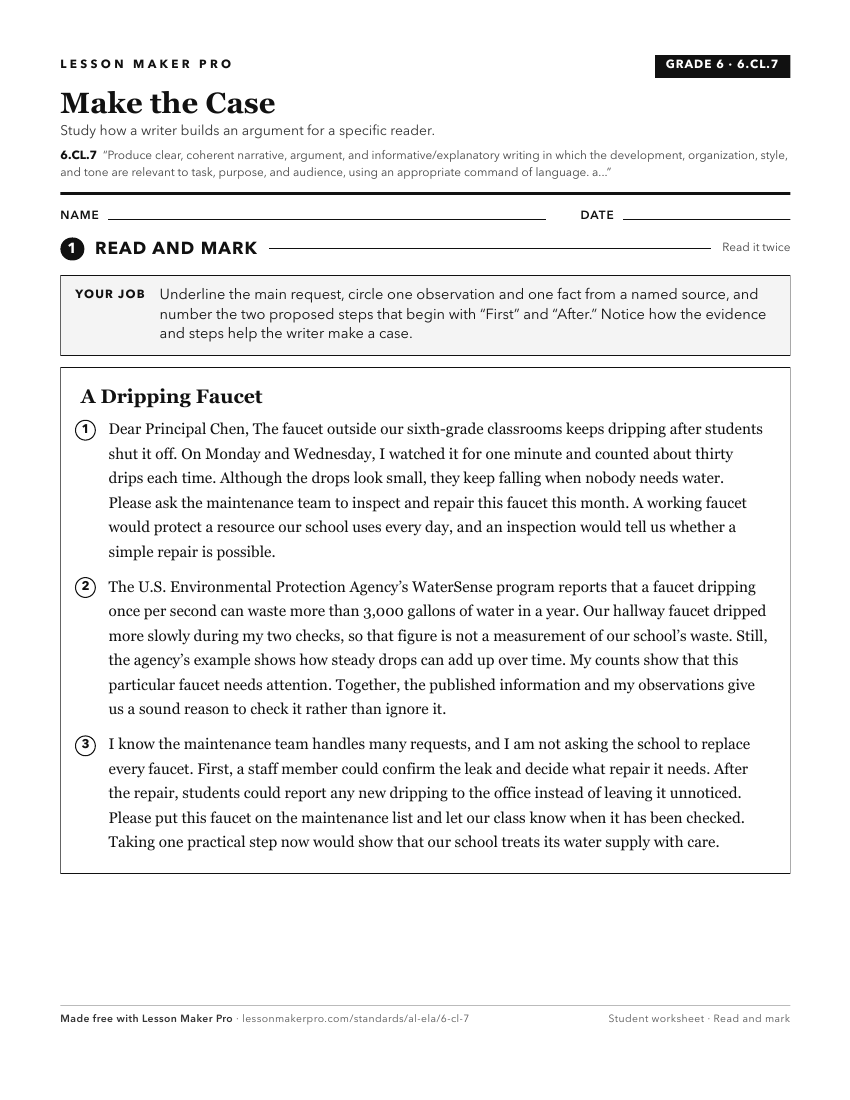
A ready-to-print activity worksheet aligned to 6.CL.7, with an answer key for the teacher on its own page. No account needed.
PDF, US Letter, prints cleanly in black and white.
Download the worksheetKeep exploring
Related Standards
- 8.CL.8
Produce clear, coherent narrative, argument, and informative/explanatory writing in which the development, organization, style, and tone are relevant to task, p...
- 7.CL.7
The 7th Grade version of this standard.
- 10.CL.9
Compose both short and extended narrative, informative/explanatory, and argumentative writings that are clear and coherent, use an appropriate command of langua...
- 9.CL.9
Compose both short and extended narrative, informative/explanatory, and argumentative writings that are clear and coherent, use an appropriate command of langua...
Turn this cluster into a lesson
Grade, subject, topic, and the complete cluster are prefilled. Create one free, no account needed.
Also for this cluster:Make a WorksheetMake a QuizMake a Sub Lesson