Alabama ELA 5.LF.26
Standard Cluster
Analyze how two or more texts address similar topics in diverse media and formats, including graphics, live and/or recorded performances, and written works. a. Explain how visual and multimedia elements contribute to the overall meaning and tone of a text. b. Compare and contrast the approaches to theme in several stories within a genre. c. Locate information quickly within a text and apply information from multiple sources to analysis of the topics. d. Explain how an author uses reasons and evidence to support particular points in a text. e. Compare the approaches of several authors of articles about the same or similar topics.
2021 Alabama Course of Study: English Language Arts · Literacy Foundations 4-5
Cluster contents
Standards in This Cluster
5.LF.26 is a cluster heading. These are the individual standards under it.
- 5.LF.26.a
Explain how visual and multimedia elements contribute to the overall meaning and tone of a text.
- 5.LF.26.b
Compare and contrast the approaches to theme in several stories within a genre.
- 5.LF.26.c
Locate information quickly within a text and apply information from multiple sources to analysis of the topics.
- 5.LF.26.d
Explain how an author uses reasons and evidence to support particular points in a text.
- 5.LF.26.e
Compare the approaches of several authors of articles about the same or similar topics.
Teacher's field guide
What This Cluster Means
What Students Need to Do
- Students compare stories, articles, maps, and recordings about one topic. They explain how images and sound shape tone and how stories in the same genre handle a shared theme. They find details quickly in multiple sources, then compare article writers' points, reasons, and evidence.
What Mastery Looks Like
- A student uses a scene from each of three stories to explain their different takes on courage. They explain how a map color or a speaker's voice changes the tone. They compare two articles' main points and show which reasons and evidence support each one.
Common Misconceptions
- Students may treat map colors or a speaker's voice as decoration, not clues to tone. They may confuse the topic of storms with a theme such as helping neighbors. They may treat a writer's point as evidence or use one article's facts to speak for both.
How to Assess It
- Show a 30-second weather forecast and hand out a short article about the same storm. Ask: “What does each source emphasize, what detail supports each point, and how does the map or speaker's voice affect the tone?”
Lesson moves
Ways to Teach It
Give pairs two storm articles and a weather map; have them mark each writer's point, supporting evidence, and map details that signal urgency.
Read three short storm stories; discuss how each treats courage, using one scene from each to show a difference.
Race to find the storm's date, location, and damage in two articles; combine details from both in one sentence.
Play a local weather forecast clip; compare its warning words and map colors with a written forecast before choosing a safe plan.
Free download
Printable 5.LF.26 Worksheet
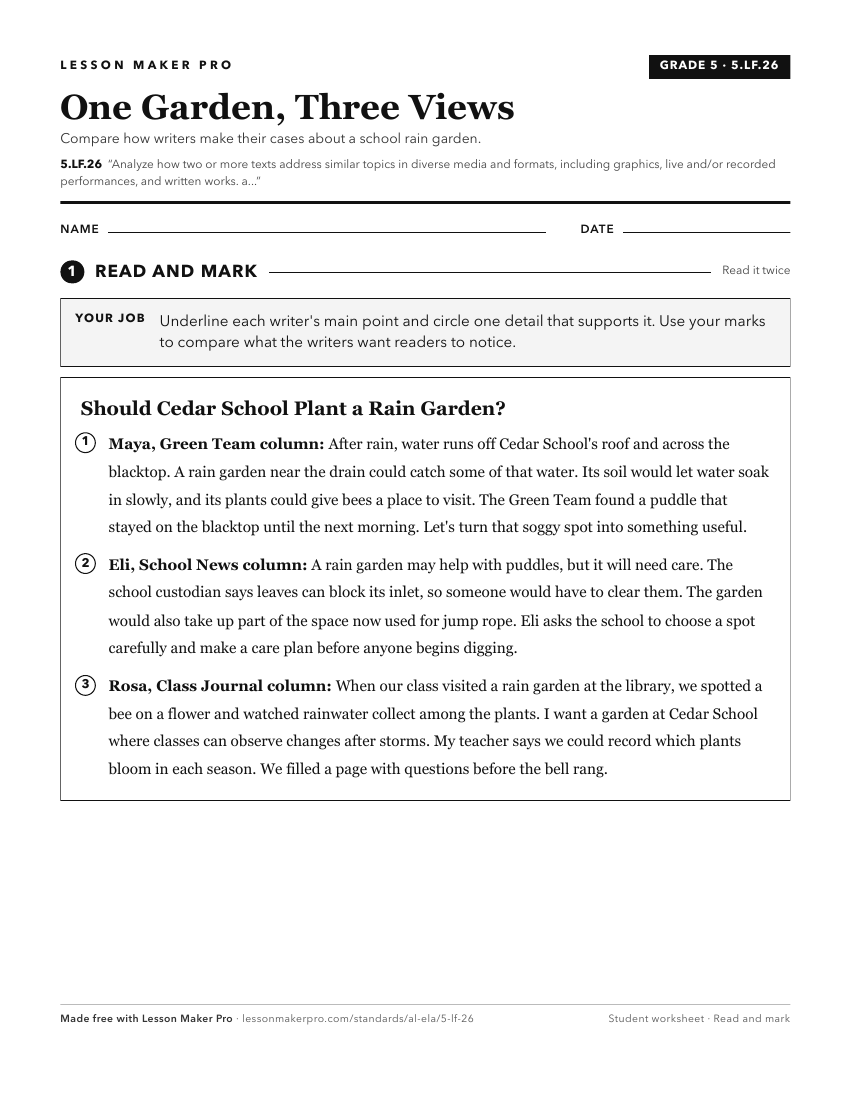
A ready-to-print activity worksheet aligned to 5.LF.26, with an answer key for the teacher on its own page. No account needed.
PDF, US Letter, prints cleanly in black and white.
Download the worksheetKeep exploring
Related Standards
- 1.LF.29.c
Point out similarities and differences between two texts on the same topic.
- 5.LF.23.a
Analyze common themes of diverse texts with support from textual evidence.
- 8.CL.5
Compare and contrast the perspectives in a variety of fiction, nonfiction, informational, digital, and multimodal texts produced from diverse historical, cultur...
Turn this cluster into a lesson
Grade, subject, topic, and the complete cluster are prefilled. Create one free, no account needed.
Also for this cluster:Make a WorksheetMake a QuizMake a Sub Lesson