Alabama ELA 2.LF.4
The Standard
Orally answer who, what, when, where, why, and how questions about a text or conversation, using complete sentences to provide key ideas and details.
2021 Alabama Course of Study: English Language Arts · Literacy Foundations K-3
Teacher's field guide
What This Standard Means
What Students Need to Do
- Students listen to a story or conversation and answer who, what, when, where, why, and how questions aloud. They use complete sentences and include details they heard.
What Mastery Looks Like
- After a read-aloud, a student answers each type of question in a complete sentence. Their answers give the right person, event, time, place, reason, or way something happened, with a detail from the story.
Common Misconceptions
- Students may give one-word answers, such as “Tuesday,” instead of a complete sentence. They may mix up why and how, or give a detail that does not answer the question.
How to Assess It
- Read aloud: “Mia left her hat on the bus, and the driver found it under a seat and returned it after school.” Ask, “How did Mia get her hat back?” and listen for a complete sentence that names the driver.
Lesson moves
Ways to Teach It
After reading a short story, have pairs place six question cards on a paper story map and answer each aloud in complete sentences.
Read The Snowy Day; ask partners, “Why does Peter put a snowball in his pocket?” Require a complete sentence with a story clue.
Play question bingo with six-box grids labeled who, what, when, where, why, how; read a paragraph and mark boxes after complete spoken answers.
Read tomorrow’s lunch menu aloud; ask, “What is for lunch tomorrow?” Have partners answer aloud in full sentences using the menu.
Free download
Printable 2.LF.4 Worksheet
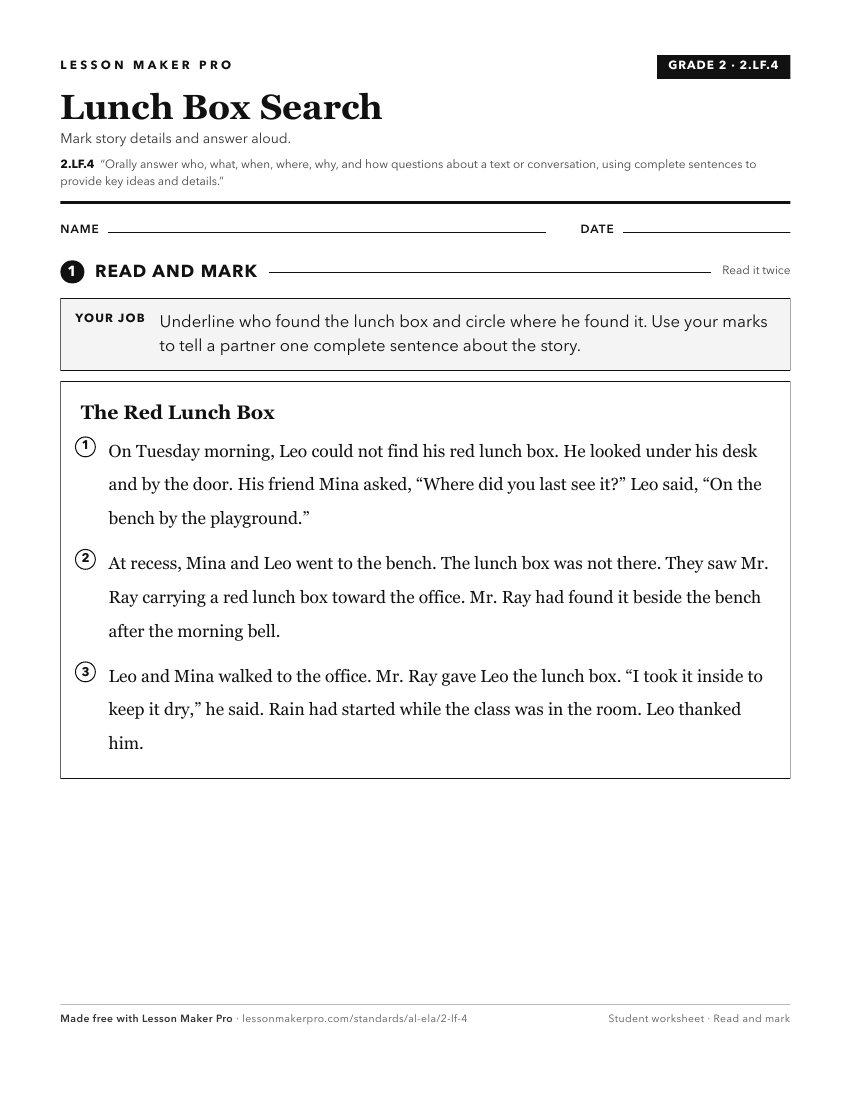
A ready-to-print activity worksheet aligned to 2.LF.4, with an answer key for the teacher on its own page. No account needed.
PDF, US Letter, prints cleanly in black and white.
Download the worksheetKeep exploring
Related Standards
- 1.LF.22
Ask and answer questions about key details in literary and informational texts.
- 1.LF.4.a
Orally describe people, places, things, and events, expressing ideas with relevant details.
- K.LF.30
With prompting and support, ask and answer questions about key details in literary and informational texts.
- 3.LF.4
Ask and answer questions using complete sentences and grade-level vocabulary.
Turn this exact standard into a lesson
Grade, subject, topic, and the complete standard are prefilled. Create one free, no account needed.
Also for this standard:Make a WorksheetMake a QuizMake a Sub Lesson