Alabama ELA 2.LF.33
The Standard
Read and identify types of poems, including free verse, rhymed verse, haiku, and limerick.
2021 Alabama Course of Study: English Language Arts · Literacy Foundations K-3
Teacher's field guide
What This Standard Means
What Students Need to Do
- Students read short poems and name each type: free verse, rhymed verse, haiku, or limerick. They use line count and rhyme patterns to explain their choices.
What Mastery Looks Like
- A student spots a three-line haiku and a five-line limerick, then points out where the limerick rhymes. They tell rhymed verse from free verse by checking for a regular rhyme pattern.
Common Misconceptions
- Students may call any short poem a haiku. They may call any funny rhyming poem a limerick without checking its five-line pattern. Some think free verse has no line breaks or cannot contain rhymes.
How to Assess It
- Print four short poems: a three-line nature haiku, a five-line limerick, a poem with regular end rhymes, and a free verse poem. Ask students to label each and circle one clue.
Lesson moves
Ways to Teach It
Give pairs four printed poem cards, one of each type, and have them sort the cards and mark line counts and rhyming words.
Read a limerick and a rhymed verse aloud, then have students write how their line counts and end rhymes differ.
Play poem detective with four short poem cards: students name each type and point to one clue before checking the answer.
Use an apple from the lunchroom as the subject of a three-line haiku, then ask students to add details that show the season.
Free download
Printable 2.LF.33 Worksheet
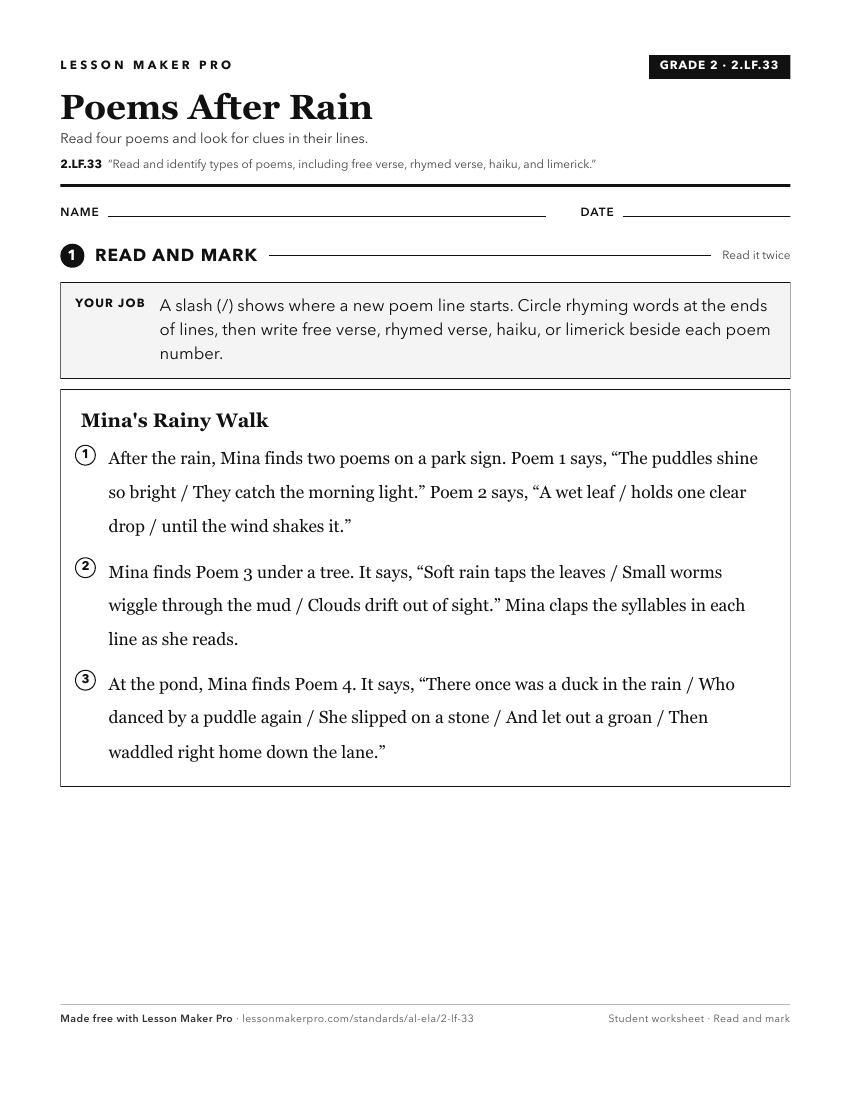
A ready-to-print activity worksheet aligned to 2.LF.33, with an answer key for the teacher on its own page. No account needed.
PDF, US Letter, prints cleanly in black and white.
Download the worksheetKeep exploring
Related Standards
- 2.LF.13
Read grade-appropriate poetry, noticing phrasing, rhythm, and rhyme.
- 1.LF.9.c
Participate in poetry reading, noticing phrasing, rhythm, and rhyme.
- 2.LF.32
Identify rhyme schemes in poems or songs.
- 1.LF.19
Identify common types of texts and their features, including literary, informational, fairy tale, and poetry.
Turn this exact standard into a lesson
Grade, subject, topic, and the complete standard are prefilled. Create one free, no account needed.
Also for this standard:Make a WorksheetMake a QuizMake a Sub Lesson