Virginia SOL K.RL.3.B
The Standard
With prompting and support, compare and contrast characters, plot events, or settings between two familiar stories
Virginia Standards of Learning for English · Integration of Concepts
Teacher's field guide
What This Standard Means
What Students Need to Do
- Students identify ways two known stories are alike and different. They compare characters, events, or settings using pictures, questions, and sentence frames.
What Mastery Looks Like
- With picture cues or questions, a student names a clear similarity and difference. The student refers to characters, events, or places from both stories.
Common Misconceptions
- Students may retell each story without naming how the stories are alike or different. They may also compare unrelated details or confuse the setting with the characters.
How to Assess It
- Show pictures from two stories read in class. Ask, “Name one way the stories are alike and one way they are different.”
Lesson moves
Ways to Teach It
Place character, event, and setting picture cards from two stories into hoops labeled same and different.
Ask partners, “How are the main characters alike, and how are they different?” Then record one shared response.
Play Story Match by having students pair cards from two books and explain whether each pair shows a similarity or difference.
Compare each story setting with a familiar place, such as home, school, or a park, using drawings and oral sentences.
Free download
Printable K.RL.3.B Worksheet
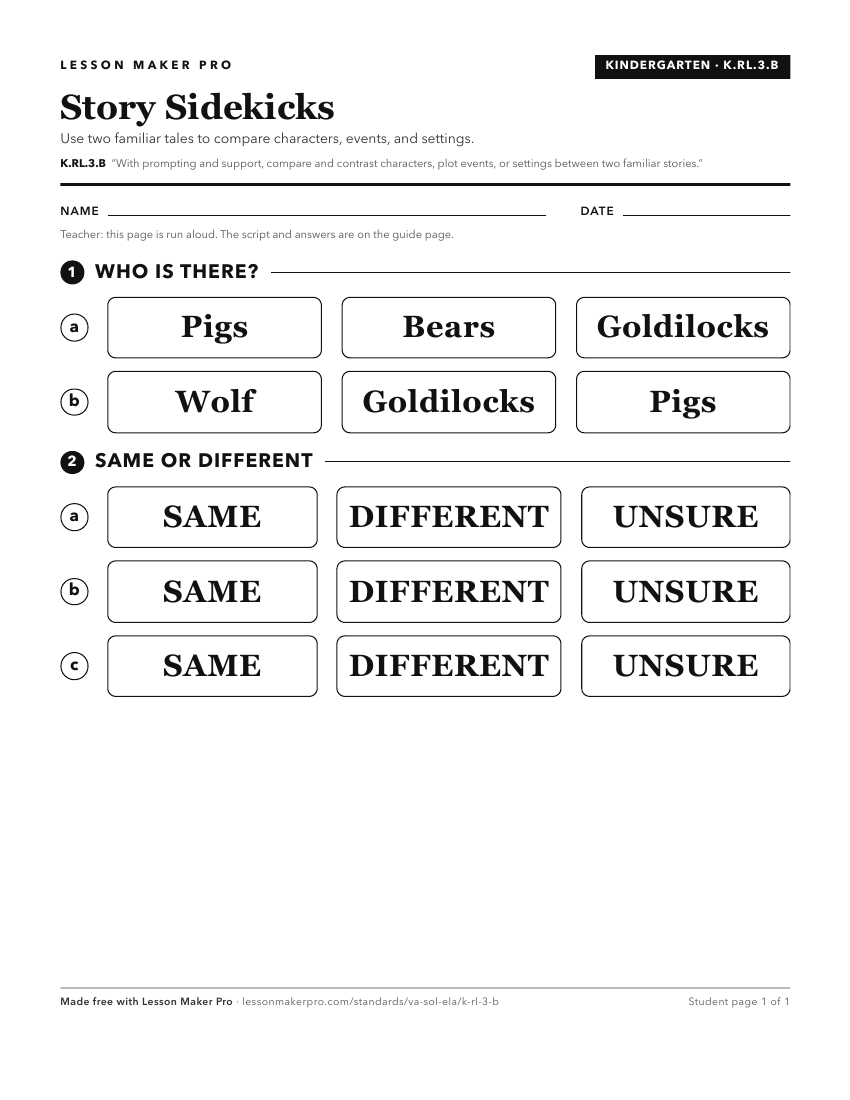
A ready-to-print activity worksheet aligned to K.RL.3.B, with an answer key for the teacher on its own page. No account needed.
PDF, US Letter, prints cleanly in black and white.
Download the worksheetKeep exploring
Related Standards
- K.RI.3.A
With prompting and support, identify basic similarities in and differences between two texts on the same topic
- 3.RL.3.C
Compare and contrast the themes, settings, and plots of stories written by the same author about the same or similar characters.
- 1.RL.3.C
Compare and contrast the adventures or experiences of characters in stories heard, using key details.
- 2.RL.3.C
Compare and contrast characters, settings, and plots in two versions of the same story from different cultures (e.g., Cinderella stories).
Turn this exact standard into a lesson
Grade, subject, topic, and the complete standard are prefilled. Create one free, no account needed.
Also for this standard:Make a WorksheetMake a QuizMake a Sub Lesson